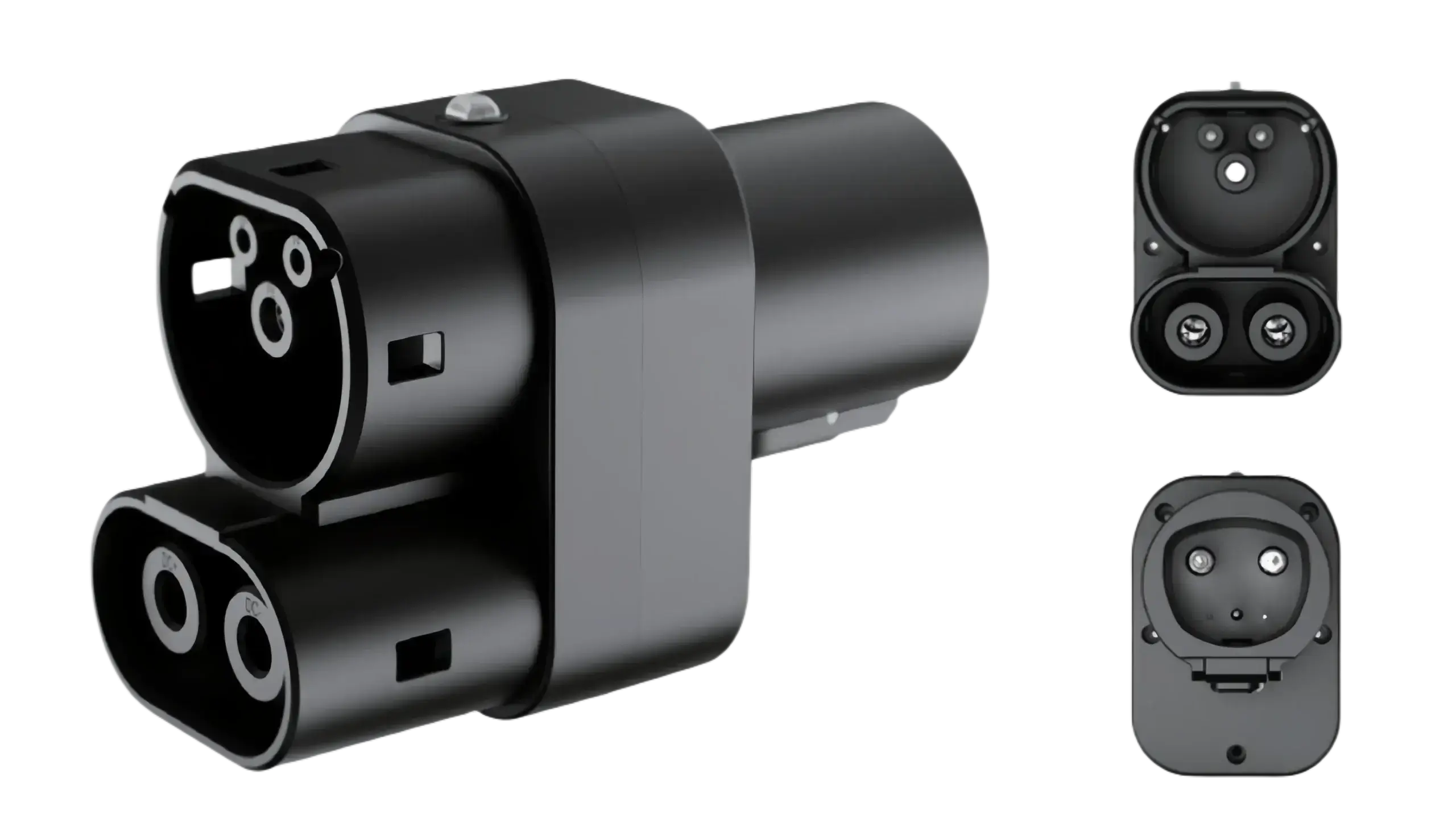
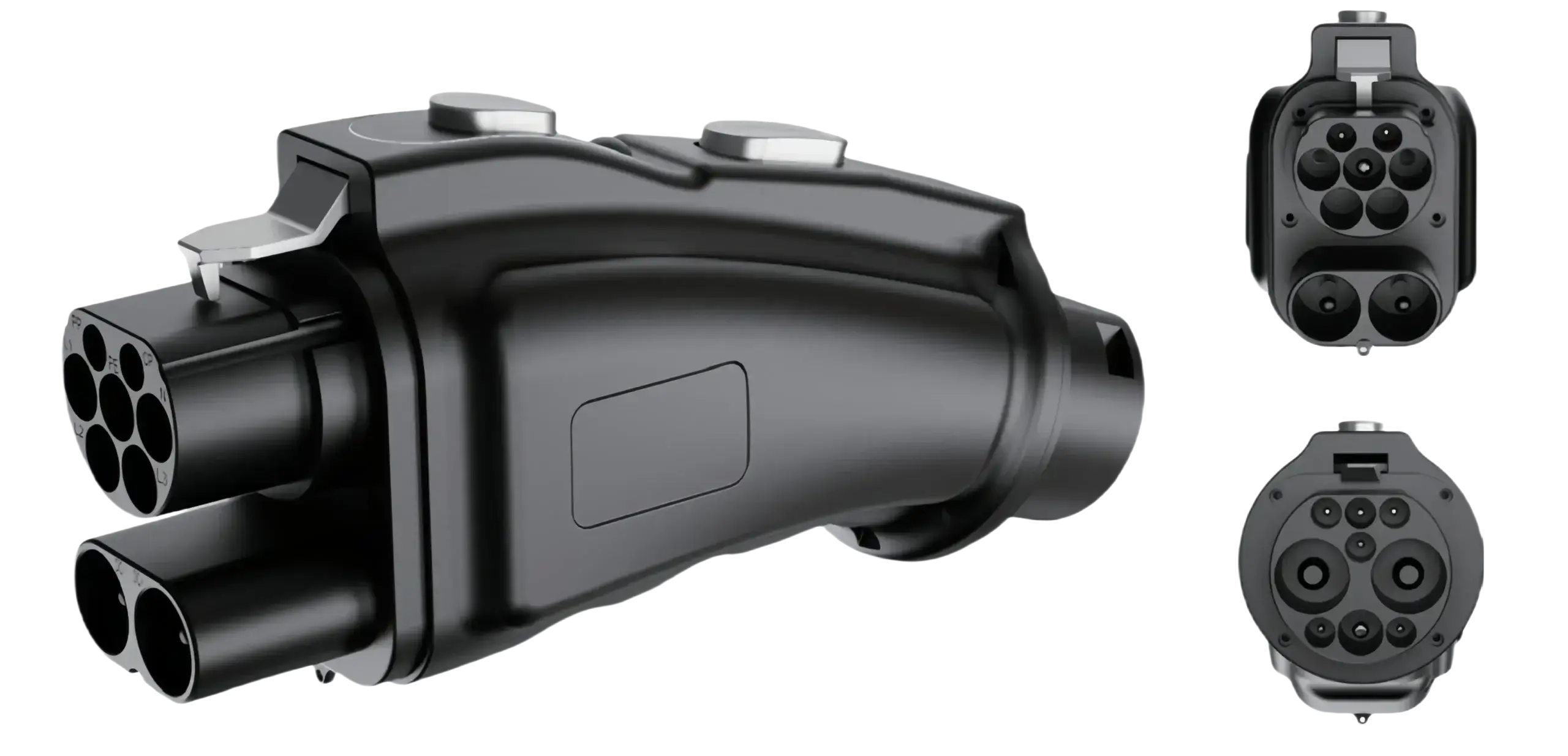
Electric car owners and charging network operators now work with two dominant fast-charging plugs: CCS2 across Europe and much of Asia and the Middle East and NACS in North America. As vehicles cross borders and charging networks expand, one small device keeps showing up in buyer searches: the CCS2 to NACS adapter. It promises to bridge the two standards, but confusion about what it actually does and which way it works is common. Anyone sourcing an EV charging adapter for a specific market needs to understand both standards before placing an order.
Yes, a CCS2 EV can use Tesla charging stations, but the answer depends on where the car is. In Europe, Tesla stations dispense power through native CCS2 connectors, so most CCS2 cars plug in directly with no adapter at all. In North America, Tesla stations output NACS connectors that a CCS2 port cannot accept, so you would need a reverse-direction NACS-to-CCS2 adapter and station support. The CCS2 to NACS adapter itself works the other way around: it lets NACS vehicles charge at CCS2 stations.
The sections below explain how each adapter direction works, which specifications matter, and where these products fit into real charging markets.
What Is a CCS2 to NACS Adapter?
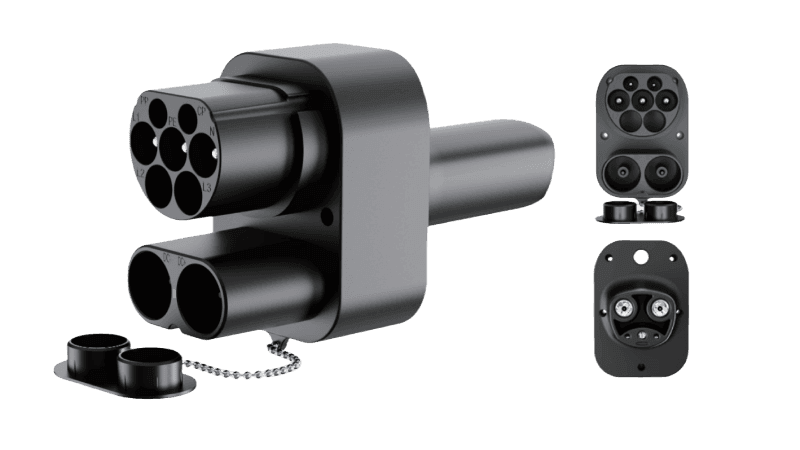
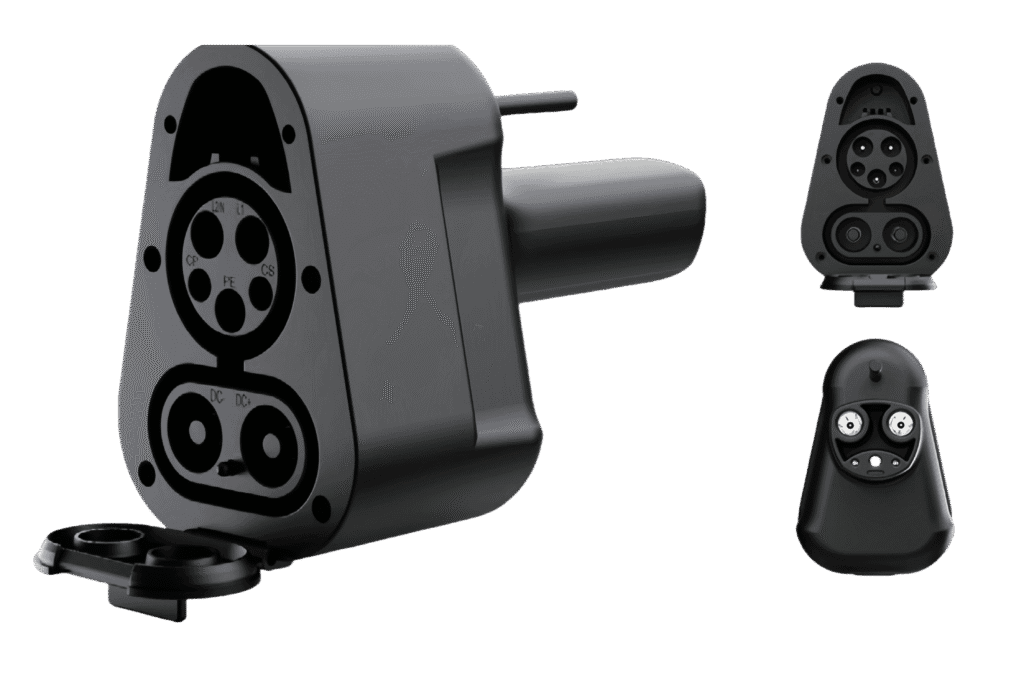
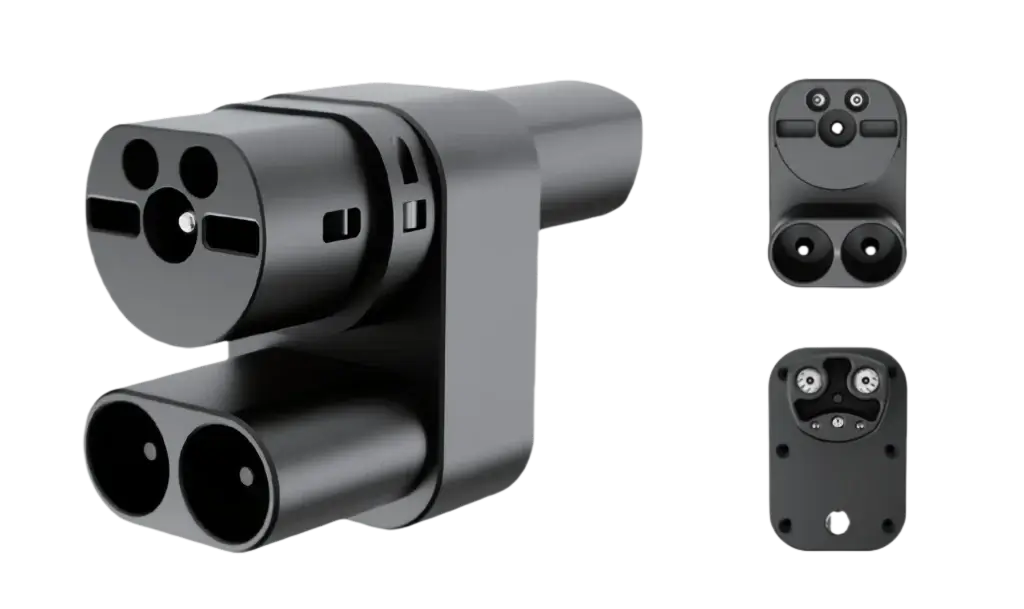
A CCS2 to NACS adapter is a connector converter that lets an electric vehicle with a NACS inlet draw power from a charging station fitted with a CCS2 connector. It bridges the physical plug interface so two otherwise incompatible standards can complete a charging session.
CCS2, short for Combined Charging System Type 2, is the required public fast-charging connector across the European Union. It is also widespread in the Middle East, parts of Asia, Australia, and several African markets. NACS, the North American Charging Standard, started as the connector used by one major EV maker and became the default port on most new vehicles sold in North America after other automakers announced adoption. The connector was later standardized by SAE as SAE J3400, which gave third-party manufacturers a common reference for building compliant plugs and adapters.
An adapter sits between the station-side cable and the vehicle inlet. It carries the power pins and the communication pins needed for a DC session, so the station and the vehicle can negotiate current, voltage, and safety limits. The housing, not the vehicle or the station, absorbs the mechanical difference between the two standards.
How CCS2 and NACS Differ
The two standards serve overlapping but separate jobs:
- Region: CCS2 dominates Europe, the Gulf region, and much of Asia and Oceania. NACS dominates North America.
- Connector geometry: CCS2 uses a round inlet with combined AC and DC pins. NACS uses a smaller, compact five-pin design. The two cannot physically mate.
- Communication: CCS2 stations rely on powerline communication protocols for DC sessions. NACS uses compatible signaling on its DC pins, which is why a well-built adapter can pass the handshake through without active electronics.
- AC and DC in one inlet: Both standards carry alternating current for destination charging and direct current for fast charging through a single port.
Which Direction Does the Adapter Work?
This is where most buyers get confused. Adapter names do not always follow one convention, so check both ends of the product, not just the label.
- CCS2 to NACS: The station side accepts a CCS2 connector. The vehicle side presents NACS pins. This is the mainstream version, built for NACS vehicles that need to charge at CCS2 stations, such as North American imports running in Eastern Europe or the Gulf region.
- NACS to CCS2: The reverse product. The station side accepts an NACS connector, and the vehicle side presents a CCS2 inlet. This direction serves the much rarer case of a CCS2 vehicle charging at a NACS station in North America.
A physical adapter is built for one path only. A CCS2 to NACS unit cannot be flipped or reversed to serve the opposite direction.
Can CCS2 EVs Use Tesla Charging Stations?
Yes, in Europe a CCS2 EV can use most Tesla charging stations directly, because those stations dispense power through native CCS2 connectors, and many sites are open to third-party CCS2 cars. In North America, a CCS2 EV cannot plug into a standard Tesla station without a reverse-direction adapter, and access also depends on network authorization.
In Europe
European fast-charging sites run CCS2 as the standard DC connector, and the same applies across the charging networks that Tesla operates in the region. A CCS2 vehicle plugs in with its own cable, authenticates through the network’s app or charging card, and starts the session. No adapter is involved, because the station connector already matches the vehicle inlet.
For AC destination charging, European sites use Type 2 connectors, which every CCS2 car also accepts natively. The practical takeaway for European drivers is simple: the CCS2 to NACS adapter is not part of their charging kit. Their infrastructure already speaks their connector language.
In North America
The situation reverses. Stations across North American networks output NACS connectors, and a CCS2 inlet has no way to accept one. CCS2 vehicles in North America are rare and mostly limited to imported units. Owners of those cars have two options: use stations that offer built-in CCS-compatible connectors alongside NACS cables, or use an NACS-to-CCS2 adapter where the network authorizes third-party sessions.
Reverse-direction adapters are harder to source than the mainstream CCS2 to NACS version, so an imported CCS2 vehicle should not be shipped to North America on the assumption that a suitable adapter will be easy to find on arrival. Verify station access and adapter availability first.
CCS2 vs NACS: Key Differences at a Glance
CCS2 and NACS both carry AC and DC charging through a single vehicle inlet, but they serve different regions, use different connector geometry, and cannot connect to each other without an adapter.
| Feature | CCS2 | NACS |
|---|---|---|
| Primary regions | Europe, the Middle East, parts of Asia, and Oceania | North America |
| Connector body | Round inlet, combined AC/DC pin layout | Compact five-pin design |
| DC fast charging | Widely deployed up to the 350 kW class | Widely deployed up to the 250 kW class, with higher-power hardware rolling out |
| AC charging | Three-phase common, typically 11–22 kW | Single-phase common adapter paths typically up to 19 kW |
| Governing standard | IEC 62196-3 | SAE J3400 |
| Vehicle adoption | Required on new cars sold in the EU | Default on new cars sold in North America |
The table explains why adapter demand exists at all. Neither standard is disappearing, and the two markets keep exchanging vehicles through trade, relocation, and fleet transfers. Every one of those vehicles carries an inlet that half the world’s charging stations cannot serve without conversion.
How a CCS2 to NACS Adapter Works
The adapter passes power and communication signals between a station’s CCS2 connector and a vehicle’s NACS inlet, letting the charging handshake complete as if both sides used the same plug.
The DC Fast-Charging Path
During a DC session, the station-side cable plugs into the adapter’s CCS2 input, and the adapter’s NACS output seats into the vehicle inlet. The communication pins carry the negotiation between charger and car: the vehicle requests a current and voltage target, the station confirms what it can deliver, and the session runs under continuous supervision. Adapter paths in this class are typically rated up to 250 kW DC at 250 A across a 500 to 1000 V range, which covers the output of most public fast chargers in CCS2 markets.
The adapter itself holds no firmware and makes no charging decisions. It is a passive bridge, which is why build quality, contact material, and thermal behavior matter more than any software feature.
The AC Charging Path
Dual-mode adapters also pass alternating current, so the same unit serves destination chargers, wallboxes, and public AC posts. AC paths on these adapters typically run up to 80 A, enough for overnight and workplace charging. DC-only units skip the AC path entirely, so buyers should confirm the supported modes before stocking a product for customers who expect one adapter to do both jobs.
Key Specifications to Check Before Buying
Focus on rated DC power and current, voltage range, AC support, ingress protection, operating temperature, contact material, and locking behavior. These specifications decide whether an adapter survives real duty cycles in public charging.
Distributors and fleet buyers who want one unit for both fast charging and destination charging usually stock a CCS2 to NACS DC+AC adapter, which covers both modes in a single housing. Typical published ratings across current products look like this:
| Specification | Typical published rating |
|---|---|
| DC power | Up to 250 kW |
| DC current and voltage | 250 A, 500–1000 V |
| AC current | Up to 80 A |
| Ingress protection | IP54 |
| Operating temperature | −30°C to +50°C |
| Contacts | Silver-plated copper alloy |
| Housing | Reinforced thermoplastic |
| Net weight | Around 1.1 kg |
Two checks matter more than the rest. First, confirm the voltage window. Modern 800 V vehicle platforms need adapters rated toward the 1000 V end; a unit rated only to 500 V will bottleneck or refuse high-voltage sessions. Second, treat every power figure as a ceiling, not a promise. Actual charging speed is limited by the station’s output, the vehicle’s charging curve, battery temperature, state of charge, and session authorization. An adapter rated at 250 kW will never push a 100 kW station past 100 kW, and a cold battery will throttle even the best hardware.
Safety and Certification Requirements
A safe adapter combines thermal protection, a lock that prevents disconnection under load, flame-retardant housing materials, and recognized certification marks such as CE for European and adjacent markets.
High-current DC sessions put real stress on a passive connector. Quality adapters address this in four ways:
- Thermal protection: Integrated sensors monitor contact temperature and interrupt the session if readings exceed a safe threshold, typically around 85°C.
- Locking mechanism: The adapter locks to the vehicle while charging, so nobody can unplug it under load. Breaking a 250 A circuit mid-session risks arcing at the contacts.
- Materials: Flame-retardant thermoplastic housings and silver-plated copper alloy contacts keep resistance low and heat manageable during sustained sessions.
- Ingress protection: An IP54 rating keeps dust and water out during outdoor use, which is where public charging happens.
Buyers importing adapters should request certification documents, including CE test reports where applicable, rather than relying on claims printed on a listing page. A supplier that can produce temperature-rise and EMC reports is easier to hold accountable than one that cannot.
Where These Adapters Are Used: B2B Use Cases
Demand concentrates where NACS vehicles meet CCS2 infrastructure: imported-car markets, cross-border fleets, and public charging networks in parts of Eastern Europe, the Gulf region, and Central Asia.
Four buyer groups drive recurring orders:
- EV importers and dealers who sell North American vehicles in CCS2 markets and need to hand every customer a working charging solution on delivery day.
- Accessory distributors who add adapters to catalogs alongside cables and portable chargers, since the products share logistics and end customers.
- Charging network operators who want existing CCS2 sites to serve NACS vehicles without waiting for station hardware upgrades.
- Fleet managers running mixed or transferred vehicles across borders, where a single adapter in each vehicle removes route-planning constraints.
For all four groups, the buying decision usually comes down to certification documentation, consistent build quality across repeat orders, and production capacity for bulk delivery. A plug that fails in the field costs far more in warranty handling than the margin saved on a cheaper unit.
FAQ
Do I need a separate adapter for AC and DC charging?
Not necessarily. DC-only units handle fast charging at CCS2 stations and nothing else. Dual DC+AC models cover fast charging and AC destination charging in one housing. Check the supported modes before ordering, because a DC-only unit will not seat on an AC post and vice versa.
Can I leave the adapter on the charge port between sessions?
No. Remove the adapter after each session and store it in its case. An adapter adds length and leverage to the connection, and leaving one mounted puts steady mechanical stress on the vehicle inlet, especially from curbside contact or car washes. It also makes the port an obvious target for theft or tampering in public parking.
How do I confirm which direction adapter my customers need?
Check two things before checking any product label: the connector on the stations your customers will use and the inlet on the vehicles they drive. If the stations are CCS2 and the vehicles are NACS, they need the CCS2 to NACS direction. If the stations are NACS and the vehicles are CCS2, they need the reverse. Naming conventions vary between sellers, so verifying both physical ends is the only reliable method.