Testing Equipment
Search
Product Category
Contact Us
What Is an EV Charger Tester
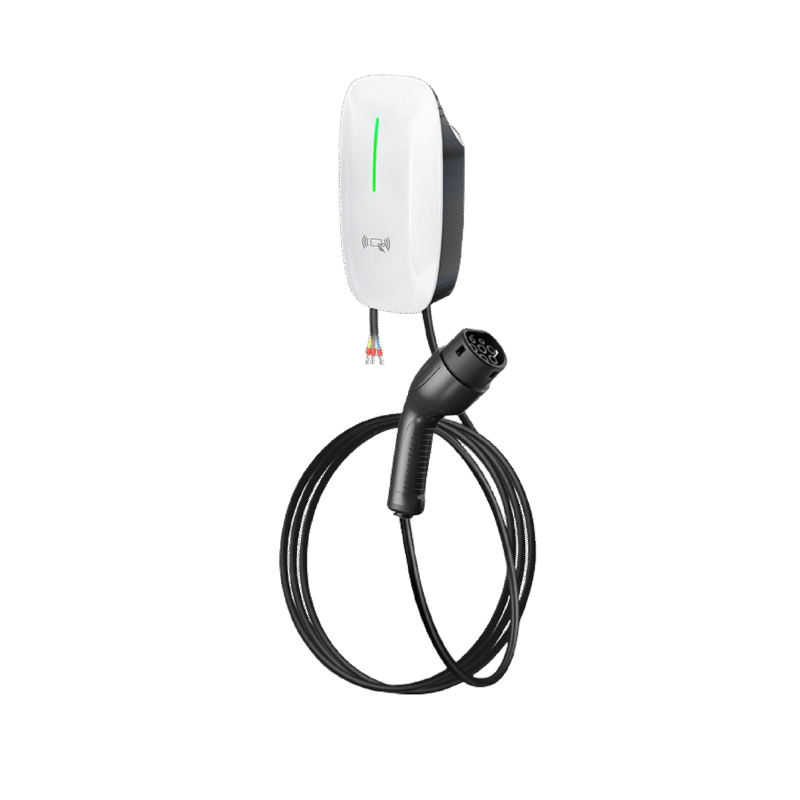
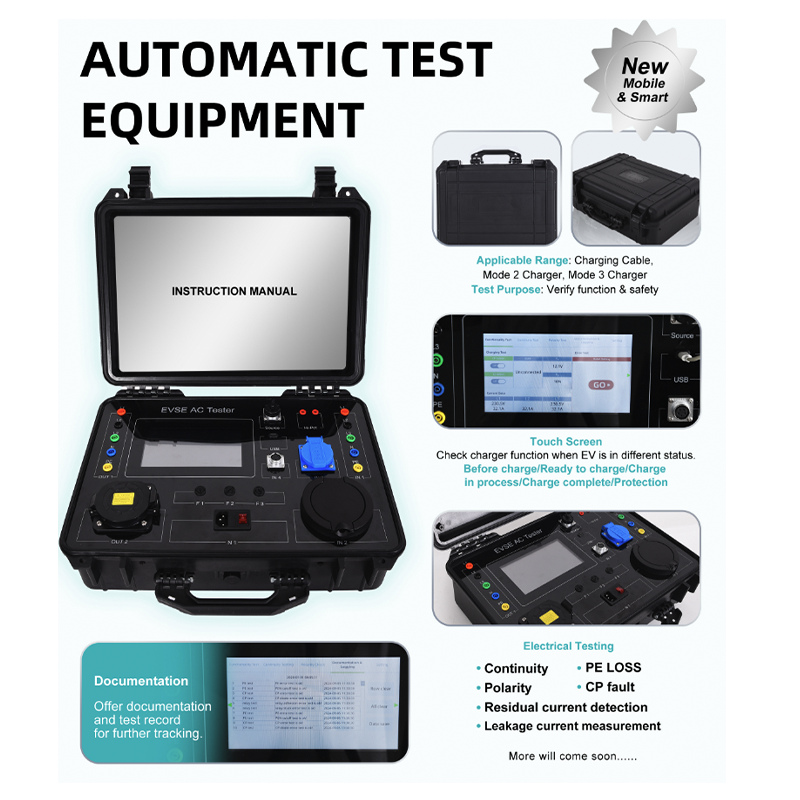
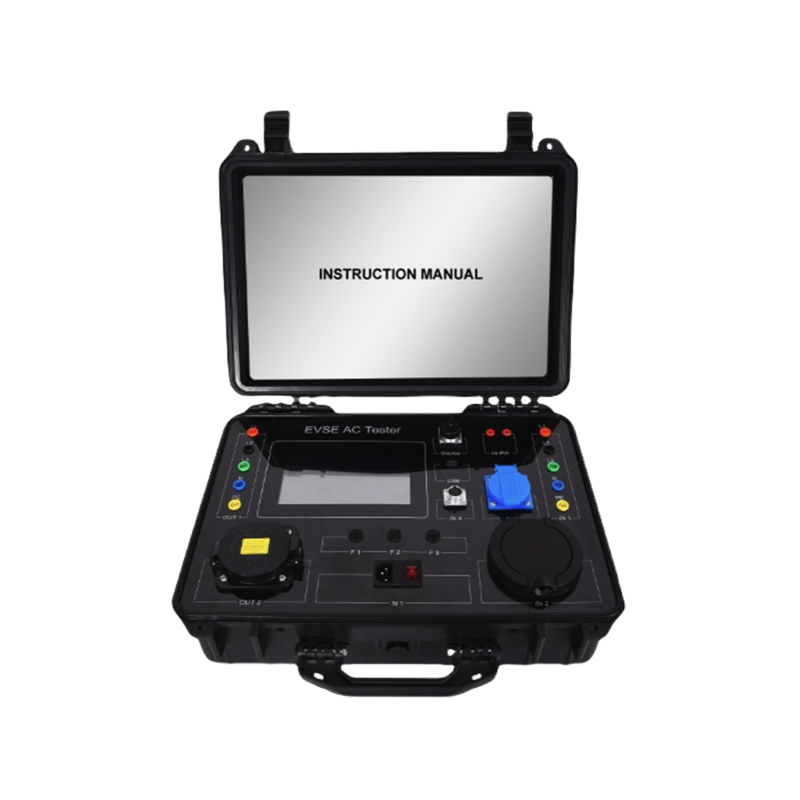
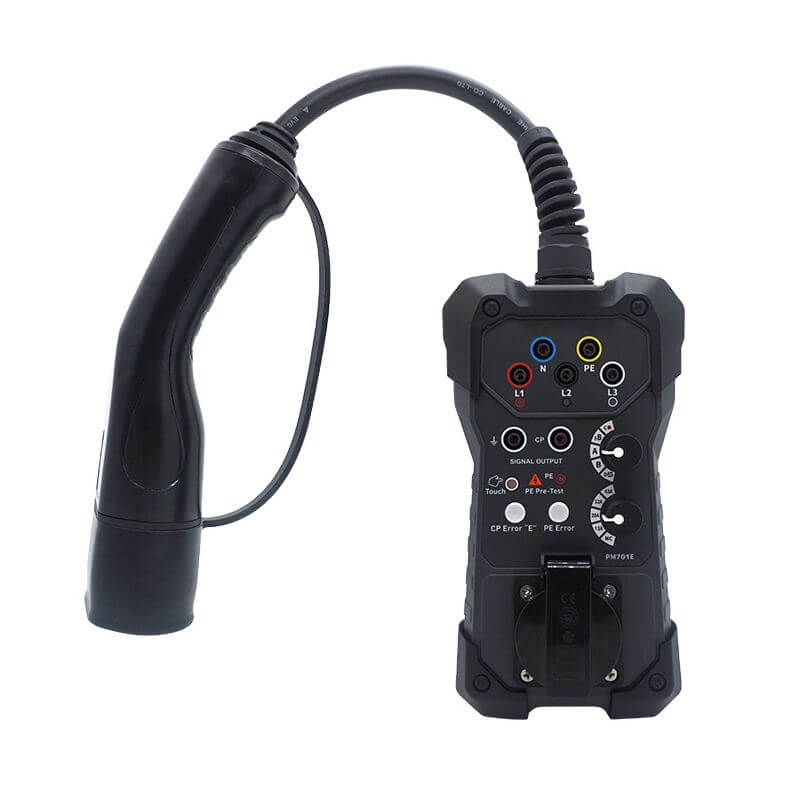
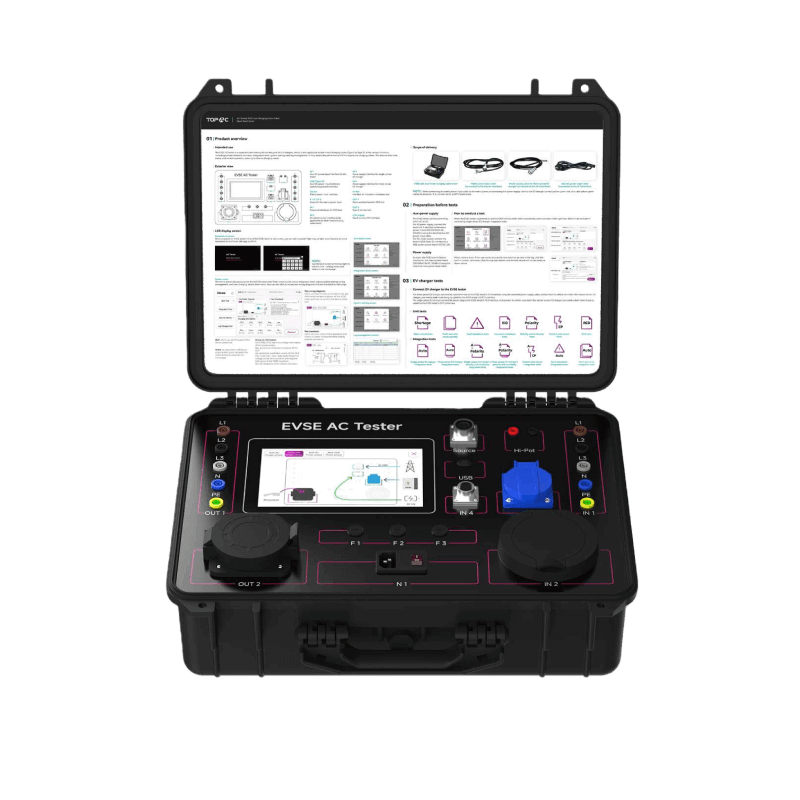
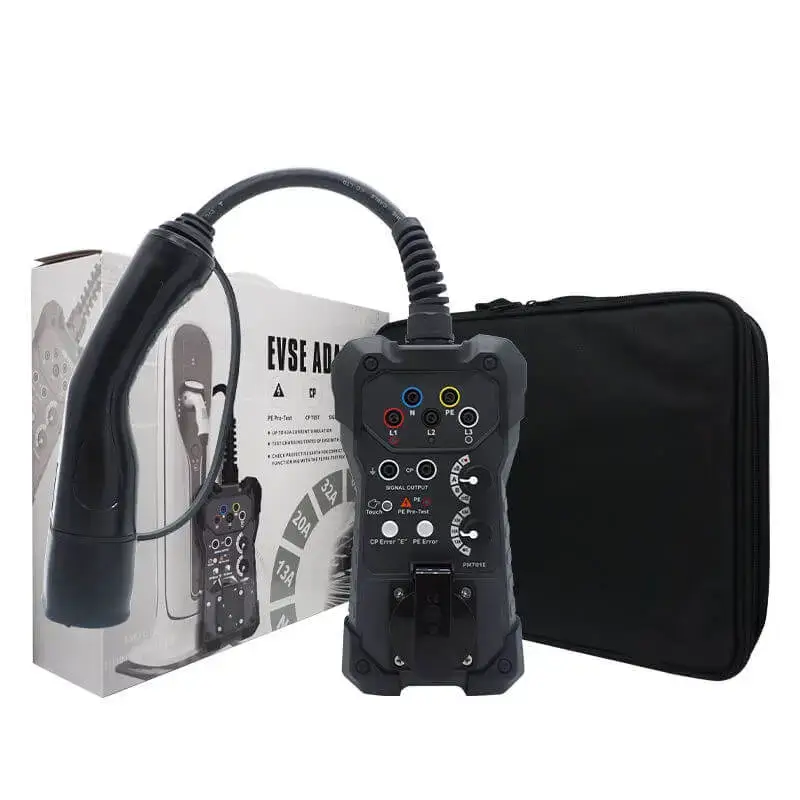
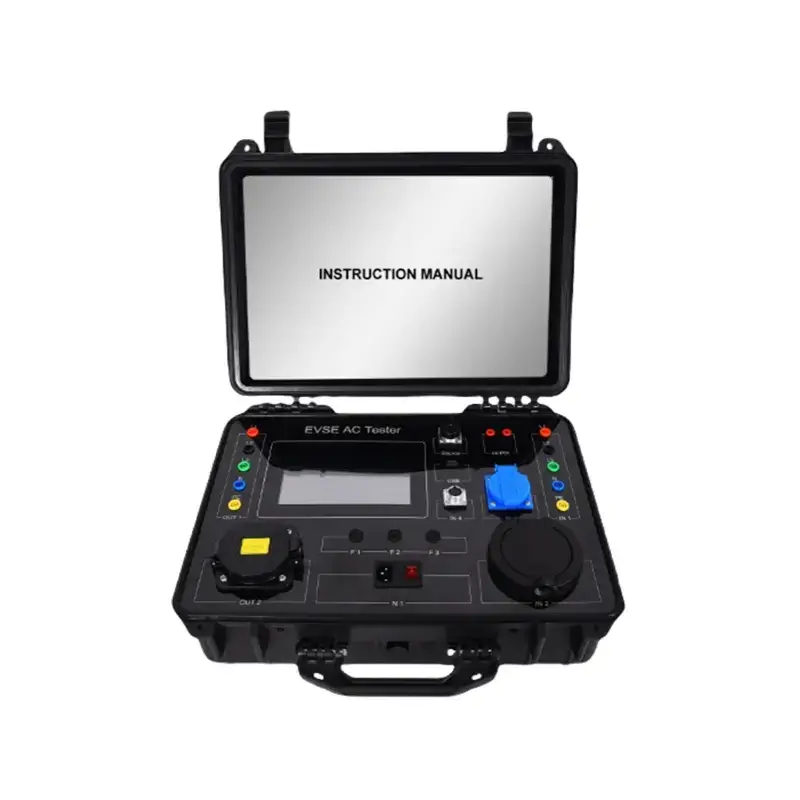
Mekel EV Charger Tester is an automatic test equipment (ATE) of high performance that has been designed to ensure the safety, reliability, and compliance of electric vehicle charging systems. Our test equipment applies to charging cables, Mode 2 portable chargers, and Mode 3 wall chargers; therefore, it can fully detect electrical and functional characteristics to ensure these products meet international safety and performance standards. The intuitive touchscreen interface with comprehensive test capabilities makes Mekel ATE an efficient solution for manufacturers and service providers. In addition, the automated reporting function places Mekel ATE as an essential tool in maintaining the highest standards of EV charging infrastructure.

Key Features of EV Charger Tester
Comprehensive Electrical Testing
Including continuity test, PE loss, polarity test, CP fault detection, residual current detection, leakage current measurement, insulation resistance test, and protective conductor resistance test.
Functional and Communication Testing
Verify the connection and communication protocol between the charging cable and the vehicle to ensure the reliability of the charger in actual use.
Residual Current Device (RCD) Test
Verify the functionality of the Residual Current Device (RCD) by using the EV charger tester's RCD trip test mode, thereby enhancing overall electrical safety during charging.
Automated Report Generation
Automatically generates detailed test report documents, supports USB data export and integration, and ensures traceability and compliance of test results.
User-friendly Interface
Equipped with an intuitive touch screen display, it simplifies test settings and result interpretation, and is suitable for operators of different skill levels.
Portable Design
Compact and lightweight, a single technician can carry it to the site, no external power supply is required, and it is suitable for rapid response to customer needs.
Parameter of EV Charger Tester
| Feature | Specification |
|---|---|
| Product Name | EV Charger Tester |
| Input Voltage | 3-Phase 380V/400V/480V AC (±15%) |
| Test Power Range | 0.1kW - 240kW (Adjustable load simulation) |
| Connector Types Supported | CCS Combo 1/2, CHAdeMO, GB/T, Type 2 (IEC 62196) |
| Test Functions | Protocol simulation, RCD trip test, Insulation resistance, PE grounding test |
| RCD Test Type | AC, A, B (DC 6mA sensitive) |
| Measurement Accuracy | Class 0.5 (Voltage/Current) / Class 0.2 (Resistance) |
| User Interface | 7-inch LCD Touchscreen + Physical Control Knob |
| Cable Length (Test leads) | 5m (Standard) / 10m (Customizable) |
| Communication | Ethernet / 4G / Wi-Fi / OCPP 1.6J / CAN bus |
| Enclosure Material | Galvanized Steel / Aluminum Alloy (IP54 Protection) |
| Operating Temperature | -20°C to +50°C |
Scale Your EV Infrastructure with High-Efficiency Charging Solutions
Why Choose Mekel's EV Charger Tester
Ensure Product Compliance
By doing thorough electrical and functional tests, make sure that charging equipment follows international rules (like IEC 61851 and SAE J1772) and lower safety dangers.
Improve Production Efficiency
Using automated test steps and real-time result feedback greatly shortens test time and makes production and service more efficient.
Portability and Flexibility
The compact design and portability make it suitable for production lines, after-sales service centers, and field services to meet diverse testing needs.
Global Market Applicability
Can be used in Europe, North America, and other global markets for the regulatory requirements of different countries and regions.
Application
Mekel’s EV charger testers are versatile and engineered for high-traffic environments:

Fleet charging management and operation
Provide systematic testing and monitoring of charging facilities for large electric logistics fleets, passenger fleets, etc., to ensure the stable operation of centralized charging stations, optimize fleet charging strategies through regular testing and data analysis, and improve operational efficiency.

Mode 2 portable charger verification
Comprehensively test the RCD function, PE loss and leakage current of portable chargers to ensure the safety and reliability of consumers when using portable charging devices at home and in public places, and effectively prevent electric shock and fire risks.
Electric vehicle charging accessories R&D testing
During the R&D stage of new charging accessories, use the tester to perform prototype verification and safety performance evaluation, accelerate product iteration, and ensure that the newly launched charging solutions are compatible with various types of vehicles and meet the latest safety regulations.
FAQ
What types of electric vehicle charging products can the Mekel EV Charger Tester test?
The Mekel EV Charger Tester is suitable for testing charging cables, Mode 2 portable chargers, and Mode 3 wall-mounted chargers, covering a wide range of electric vehicle charging components.
How does the Mekel EV Charger Tester ensure compliance with safety standards?
The Mekel EV Charger Tester ensures that charging equipment meets international safety standards through key tests such as insulation resistance testing, RCD verification, and leakage current measurement.
Can the Mekel EV Charger Tester be used in production and service environments?
Yes. The Mekel EV Charger Tester features a compact design and user-friendly interface, making it suitable for high-volume production lines as well as field service and certification tasks. Its automated reporting functions improve efficiency in both environments.
Does the Mekel EV Charger Tester support customized services?
Yes. The Mekel EV Charger Tester supports customized services, and Mekel can provide OEM/ODM solutions based on specific customer requirements to meet different specifications or custom needs.
How long is the delivery time for the Mekel EV Charger Tester?
The delivery time for the Mekel EV Charger Tester depends on the customer’s geographical location and order volume. Mekel has an extensive global logistics network that can quickly deliver products to major ports worldwide by sea, air, or land transportation to ensure fast product delivery.