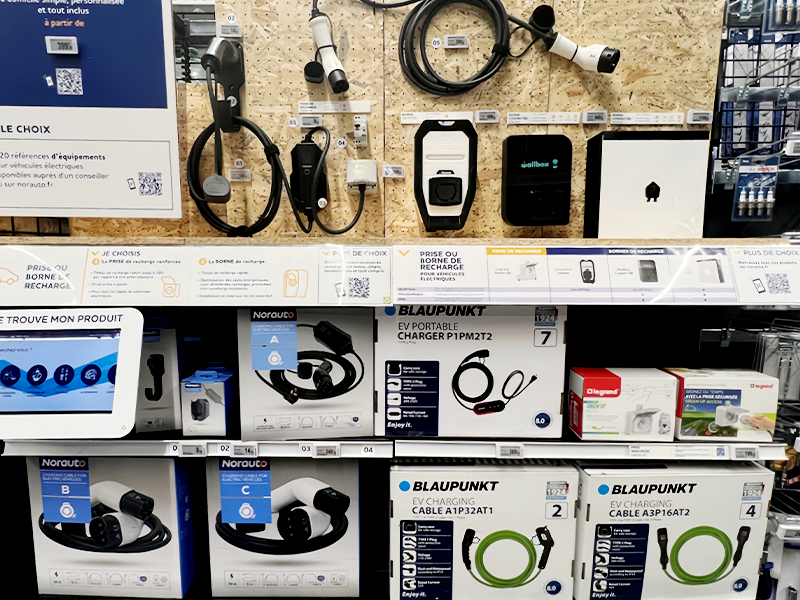
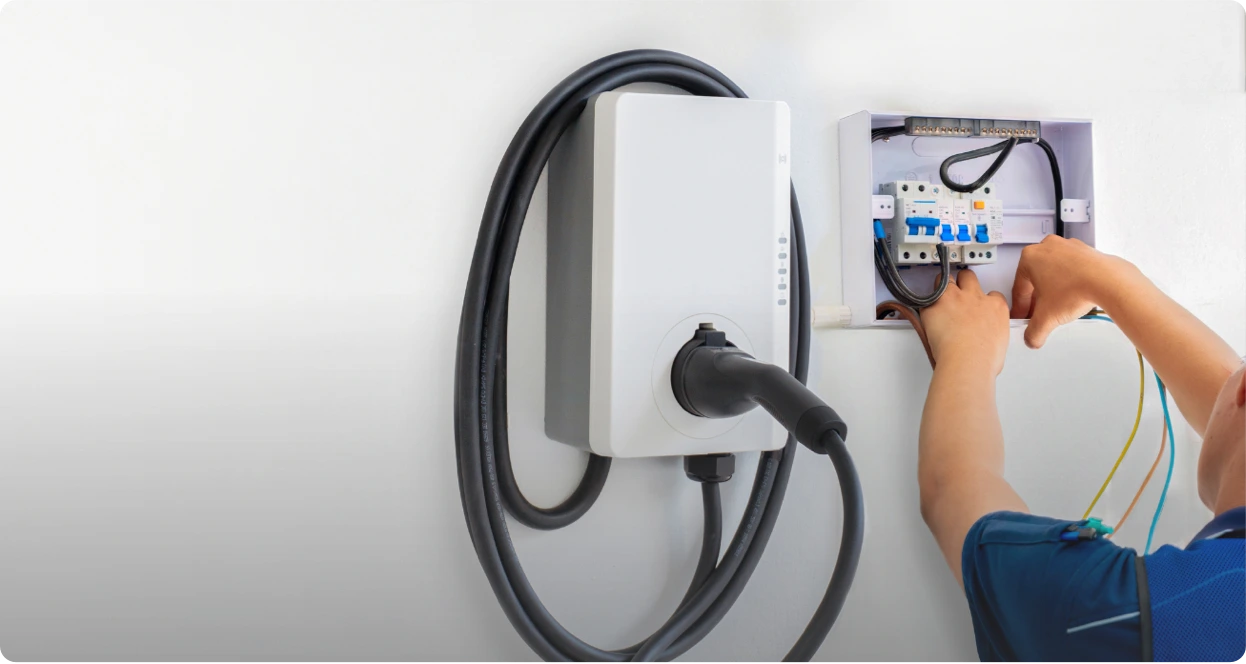
Owning an electric vehicle changes the way you think about refuelling. Instead of a weekly stop at a petrol station, charging becomes part of your daily routine at home, at work, or wherever you park. That shift has created a crowded market of add-ons, and it is easy to spend money on items that promise convenience but rarely leave the boot. The problem is not a shortage of options. The problem is knowing which of those options genuinely change how, where, and how safely you can charge.
What you actually need comes down to two questions: which connector your vehicle uses, and where you do most of your charging. For most drivers, a correct charging cable, a portable charger as backup, and one well-chosen adapter cover the large majority of real-world situations. Everything else, from smart modules to cable reels, is an optional layer that should only be added once the essentials are solved.
This guide separates the truly necessary EV charging accessories from the nice-to-haves, and explains how to match each item to your vehicle and your charging habits.

Why Most EV Owners Buy More Accessories Than They Need
Most drivers overbuy because they plan for rare scenarios instead of their normal routine. Research consistently shows that the majority of charging happens at home or at a destination on slower AC power, while rapid DC charging is reserved for longer trips. Once you map your own habits, the shopping list shrinks quickly.
The “80/20 rule” of EV charging is a useful mental model: roughly 80 percent of the energy you use goes in overnight or during the day at a slower AC charger, while the remaining 20 percent is drawn from rapid DC chargers on longer journeys. That distribution matters because the two situations require completely different equipment. Public AC chargers often expect you to bring your own cable, whereas DC rapid chargers almost always have the cable permanently attached to the unit. Buying a “DC cable” makes no sense because that product does not exist for consumers, yet it appears on plenty of wish lists.
A practical way to audit your needs is to sort your charging into three scenarios:
- Daily home charging, which is where a fixed AC unit and the right mounting hardware do the heavy lifting.
- Public and destination AC charging, which is where a region-matched cable and, occasionally, an adapter prove their value.
- Long-distance DC charging, which is where access and connector compatibility matter far more than any accessory in your boot.
If you list the accessories you already own and label each one against these three scenarios, the items that never earn a tick are the ones you can leave on the shelf.
The Essential EV Charging Accessories Every Driver Needs
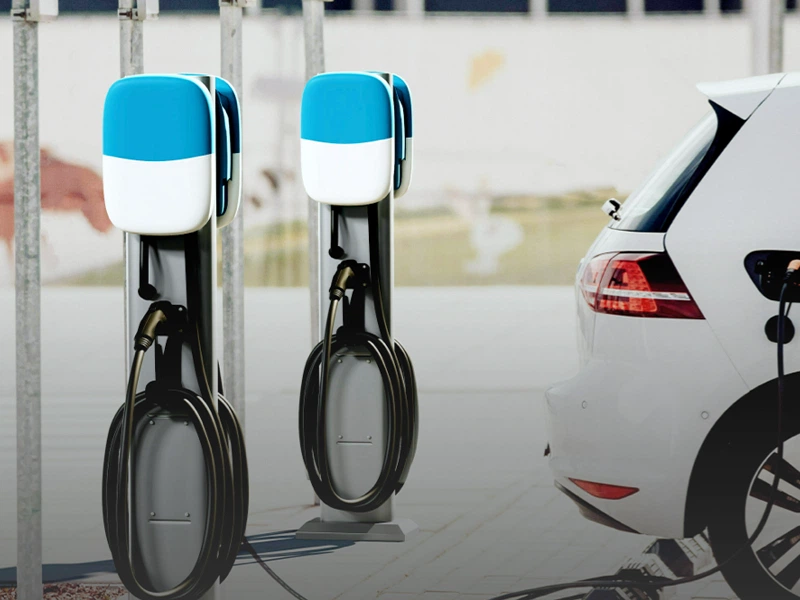
Three items form the core of a sensible kit: a charging cable that matches your regional standard, a portable charger for backup, and a connector adapter for cross-standard compatibility. Together they solve the compatibility gaps that strand drivers while keeping the total cost and weight manageable.
These three essentials are worth reviewing in detail, because buying the wrong version of any one of them causes more frustration than not owning it at all.
A Charging Cable That Matches Your Region
A dedicated charging cable is the single most useful accessory for anyone who plans to use public or shared AC chargers. Many of these units are “socket” types, meaning the cable is not attached and you must supply your own to connect the charger to your vehicle. Keeping one in the car turns an unusable charging point into a usable one.
When selecting EV charging cables, the priorities are the connector standard, the current rating, and the length. A cable that is too short cannot reach the socket from certain parking positions, and six metres is often described as the practical minimum for flexibility. The current rating must match the charger output and the vehicle’s on-board charger, with common selections around 16 A and 32 A. Outdoor use also makes the jacket material and weather resistance relevant, since abrasion, UV exposure, and temperature swings shorten the life of a cheap cable quickly.
A Portable EV Charger for Backup
A portable charger, sometimes called a mobile connector or travel charger, lets you charge from an ordinary household socket or a suitable industrial outlet when no dedicated charging point is available. It is not a replacement for a fixed home unit, but it removes the fear of arriving somewhere with no way to top up. A portable EV charger earns its place in the boot for visits to family, holiday rentals, campsites, and remote locations where charging infrastructure is thin.
The key decisions are the input plug types it supports and whether the current is adjustable. An adjustable unit lets you match the draw to the circuit you are plugged into, which is the difference between a safe top-up and a tripped breaker. Portability does not make every socket suitable, so the supply, the circuit, and the earthing must always be checked before you connect.
A Connector Adapter for Cross-Standard Compatibility
Adapters exist because charging standards differ between regions and because imported vehicles do not always match local infrastructure. A driver who moves between a Type 2 market and a vehicle with a different inlet, or who owns a car with a legacy connector, can restore access to a much wider network with a single well-chosen adapter. Browse the range of EV charging adapters to understand how many combinations are actually available.
The critical rule is that an adapter is a controlled solution, not a default. It must match the charging mode, the voltage, and the current of the real-world scenario, and it must never be used to patch a fundamentally mismatched design. Confirm the direction of the adapter, since a Type 1 to Type 2 product is not the same as a Type 2 to Type 1 product, and check the rated current rather than assuming that anything that fits will work.

Matching Accessories to Your EV Connector Standard
Before buying any accessory, identify the inlet on your vehicle and the connector used by the chargers you rely on. Compatibility is a matter of matching men with sockets, and it is the most common reason a purchase turns out to be wrong.
The global charging landscape is built on a handful of standards, and the Combined Charging System is a good example of how the AC and DC worlds overlap. CCS extends the Type 1 and Type 2 AC connectors with two additional DC contacts, which is why a CCS vehicle inlet can accept both slower AC charging and high-power DC charging. Understanding this layering makes it easier to see why one vehicle might need a cable in one country and nothing more than the attached connector in another.
AC Connectors: Type 1, Type 2 and NACS
For AC charging, three connector families dominate. Type 2 is the standard across Europe and many export markets, Type 1 is common in North America and Japan, and the North American Charging Standard is a single connector used across charging levels in its home market. Because public AC chargers are frequently untethered, the cable you carry must end in the connector your vehicle accepts.
DC Connectors: CCS1, CCS2, CHAdeMO, GB/T and NACS
DC rapid charging adds a second layer of standards. CCS1 and CCS2 dominate in their respective regions, CHAdeMO survives on older Japanese vehicles and stations, GB/T is used in China, and the North American standard is also used for DC. The table below summarises the practical picture.
| Standard | Typical region | Charging type | Do you bring the cable |
| Type 1 (J1772) | North America, Japan | AC | Often yes, at socket chargers |
| Type 2 | Europe and many export markets | AC | Often yes, at socket chargers |
| NACS | North America | AC and DC | Usually no, chargers are tethered |
| CCS1 | North America | DC | No, cable is attached |
| CCS2 | Europe and beyond | DC | No, cable is attached |
| CHAdeMO | Japan, legacy networks | DC | No, cable is attached |
| GB/T | China | AC and DC | Depends on the installation |
The practical takeaway is straightforward: you almost never carry a DC cable, because rapid chargers supply their own. Where you do need to invest is in the AC side, and specifically in the cable and adapter that match your vehicle and the networks you actually use.
Safety and Protection Accessories You Should Not Skip
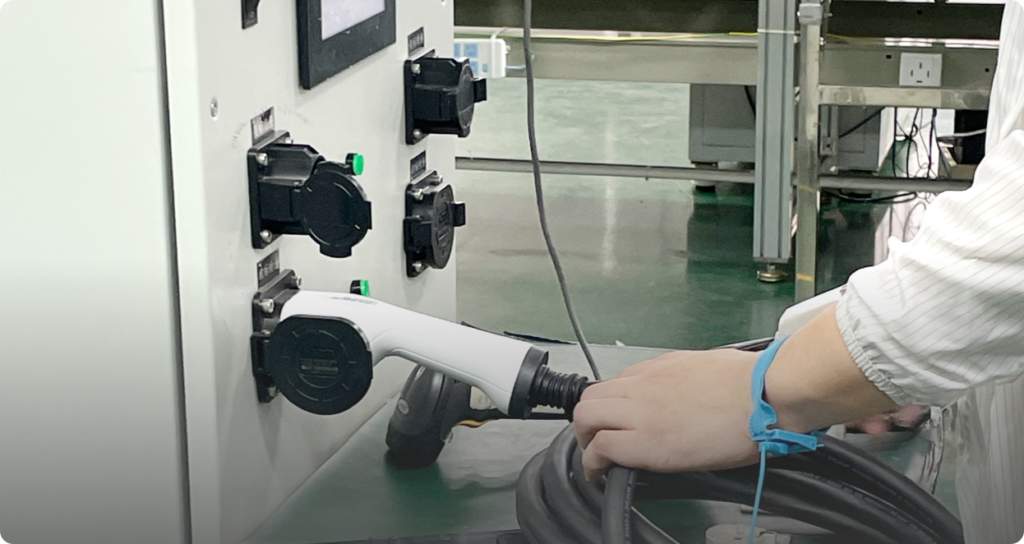
Safety accessories are the ones most often forgotten and the ones that matter most. Residual current protection, sensible surge protection, and disciplined cable management protect both your vehicle and the electrical installation, and they cost far less than the damage they prevent.
According to the Australian Government’s guidance on EV charging equipment, charging relies on a chain of equipment and protections, and the quality of the weakest link determines the safety of the whole setup.
Residual Current Protection
Every charging installation should be protected against residual current faults, and EV charging adds a specific consideration: DC leakage. A common approach is a Type A residual current device combined with DC 6 mA detection, or an equivalent integrated solution inside the charger. This protection must be coordinated with the upstream circuit breaker so that the devices work together rather than against each other. Getting this wrong causes nuisance tripping, and getting it skipped creates a genuine hazard.
Surge Protection and Proper Grounding
Voltage spikes from the grid can damage sensitive charging electronics and, in the worst case, the vehicle itself. A surge protective device diverts excess voltage to earth before it reaches the charger. Equally important is correct earthing and protective conductor continuity, which is what allows protection devices to operate as intended. Tidy wiring and verified earthing are unglamorous, but they are the foundation of every safe charging point.
Cable Management, Holsters and Storage
A charging cable that lies on a damp garage floor, gets driven over, or is dragged across gravel will not last long. A wall holster or hook keeps the connector off the ground and protects the pins, while a purpose-made cable reel or organiser prevents tangling and reduces strain on the connector. These items are inexpensive, and they directly extend the life of the cable, which is one of the more costly accessories in the kit.

Accessories That Improve Daily Home Charging
For most owners, the home charging setup does the daily work, so the accessories that improve it deliver the most value. A fixed AC unit with the right mounting hardware, combined with basic smart features, removes almost all friction from overnight charging.
Mounting Hardware, Pedestals and Enclosures
A fixed wall unit needs a secure mounting point and, in outdoor or shared locations, a suitable enclosure and cable management. Where wall mounting is not practical, a pedestal or pillar stand provides a freestanding solution. Choosing the right AC charging stations and their supporting hardware is really about matching the physical installation to the space, whether that is a garage wall, a driveway, or a shared car park. Weather exposure, cable routing, and access for maintenance all shape the choice.
Smart Charging and Load Management
Smart features rarely change whether you can charge, but they change when and how cheaply you do it. Scheduling lets you charge during off-peak hours, access control prevents unauthorised use, and load management lets multiple chargers share a limited supply without overloading the building. For a single home unit these features are convenient; for a fleet or a multi-unit building they become close to essential.
Situational Add-ons: V2L and Travel Adapters
Beyond charging itself, a growing category of accessories lets the vehicle act as a power source rather than a load. Vehicle-to-load solutions turn the battery into a portable supply for tools, appliances, or equipment in the field, which is a genuine capability boost for some users and an unnecessary complication for others. Travel adapters for different domestic socket formats belong in the same bucket: valuable for anyone who charges in multiple countries, and dead weight for everyone else.

How to Build Your EV Charging Accessory Kit
Build your kit in tiers. Secure the essentials first, add the useful items that remove daily friction, and treat the situational extras as exactly that. This order keeps cost and clutter down while covering the scenarios you are most likely to meet.
The U.S. Department of Energy’s Alternative Fuels Data Center classifies charging by speed, from slower AC levels of around 5 to 25 miles of range per hour up to DC fast charging that can deliver 100 to 200 miles or more in half an hour. That range explains why the accessory list is dominated by AC equipment: it is the environment where you actually spend your charging time.
| Tier | Item | Why it matters |
| Essential | Region-matched AC charging cable | Unlocks untethered public chargers |
| Essential | Portable charger with adjustable current | Backup anywhere there is a socket |
| Essential | One correctly rated adapter | Bridges regional standard gaps |
| Useful | RCD and surge protection | Protects people, vehicle, and installation |
| Useful | Cable holster or organiser | Extends cable life and keeps the boot tidy |
| Situational | Smart charging and load management | Cost savings and multi-charger control |
| Situational | V2L accessories and travel adapters | Power supply and multi-country charging |
For businesses that buy in volume, the same logic applies with a few additions. Confirm the connector standard your target market actually deploys, match current ratings and phases to the installation design, check that protection devices are coordinated, and insist on clear labelling and a predictable spare-parts strategy. Those details reduce commissioning delays and repeat-order mistakes far more than any single feature on a specification sheet.

FAQ
Do I need to bring my own charging cable to public AC chargers?
It depends on the charger. Many public AC points are socket types, which means they have no attached cable and you must connect your own. DC rapid chargers, by contrast, almost always have the cable built in. Carrying a region-matched AC cable is the simplest way to guarantee you can use both kinds of location.
Can I use a regular household extension cord to charge an EV?
No. A standard extension cord is not rated for the sustained high current that EV charging draws, and it can overheat or fail. If you genuinely need extra reach, use a cable and connector rated for the load, keep it as short as practical, and confirm the circuit and earthing can support the demand before you connect.
What is the single most important EV charging accessory to buy first?
For most drivers it is a correct charging cable for their region, because it is what unlocks the public AC chargers that make up the bulk of everyday opportunity charging. A portable charger and an adapter are close behind, since together they cover backup and compatibility. Safety devices should never be treated as an afterthought, because they protect everything else in the setup.