Das Beste aus einer EV-Ladestation-Tester erfordert mehr als nur das Drücken von Tasten. Das Gerät selbst mag ausgeklügelt sein, vollgepackt mit automatisierten Funktionen und klaren Pass/Fail-Anzeigen, aber um es effektiv zu nutzen, muss man verstehen, was jeder Test bewirkt und warum die Reihenfolge wichtig ist.
Viele Techniker nehmen ihr Prüfgerät in Empfang, werfen einen Blick in das Handbuch und finden die Dinge nach und nach heraus. Dieser Ansatz funktioniert - gewissermaßen. Aber dabei werden oft Nuancen übersehen, die eine angemessene Prüfung von einer gründlichen Verifizierung unterscheiden. Und in einer Branche, in der die Einhaltung von Sicherheitsvorschriften reale Konsequenzen hat, sind diese Feinheiten von Bedeutung.
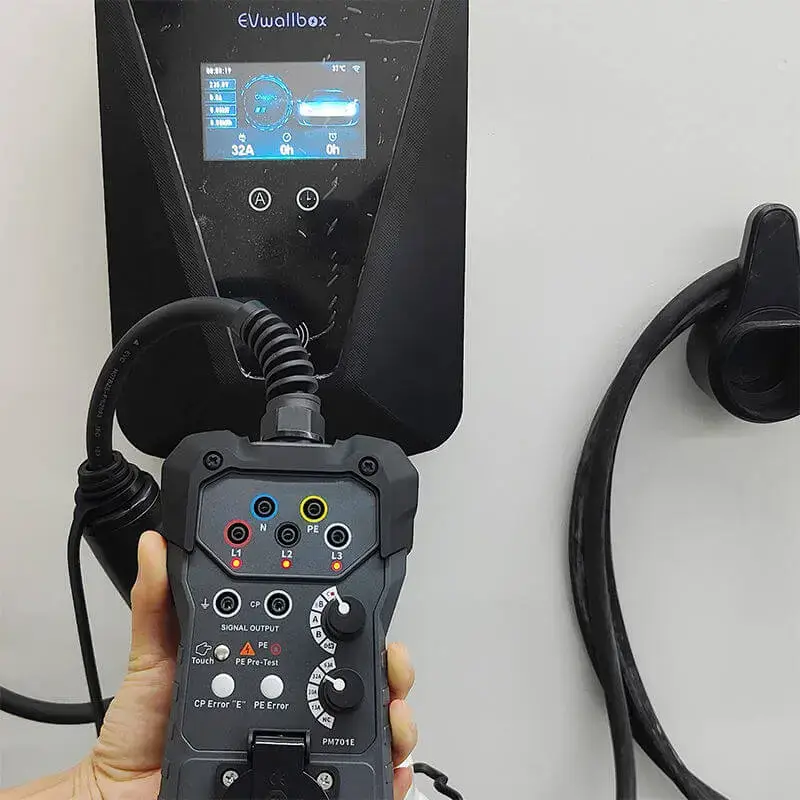
Vorbereitung Ihres EV-Ladestationstesters
Überprüfung der Ausrüstung vor dem Test
Bevor Sie sich auf den Weg zu einer Baustelle machen, sollten Sie ein paar Minuten damit verbringen, den EV-Ladestationstester zu überprüfen, um sich später mögliche Kopfschmerzen zu ersparen. Nichts bringt einen Inbetriebnahmebesuch so zum Scheitern wie die Entdeckung leerer Batterien oder eines beschädigten Prüfkabels auf halbem Weg.
Zu den wichtigsten Prüfungen vor dem Test gehören:
- Batteriestand - voll aufgeladen oder neue Batterien eingesetzt
- Kalibrierungsstatus - aktuelles Zertifikat innerhalb der Gültigkeitsdauer
- Zustand der Messleitungen - keine rissige Isolierung, verbogene Stifte oder abgenutzte Stecker
- Simulation der Adapterintegrität - saubere Kontakte und sicheres Gehäuse
- Firmware-Version - ggf. aktualisiert zur Unterstützung aktueller Standards
Die Konfiguration der Ladestation verstehen
Nicht jede Ladestation funktioniert auf die gleiche Weise. Bevor Sie einen EV-Ladestationstester anschließen, sollten Sie wissen, was getestet werden soll, um geeignete Testparameter auszuwählen.
Die wichtigsten Konfigurationsdetails sind zu identifizieren:
- Lademodus - Modus 2 tragbar, Modus 3 fest installiert oder Modus 4 DC-Schnellladung
- Maximaler Nennstrom - bestimmt die Erwartungen an das Tastverhältnis des Pilotsignals
- Steckertyp - Typ 1, Typ 2, CCS, CHAdeMO, oder andere
- RCD-Typ und -Standort - intern im Ladegerät, extern Typ A oder extern Typ B
- Erdschlussschutzverfahren - RCD-basiert, interne Überwachung oder beides
Bei den meisten EV-Ladestationstestern ist es erforderlich, den passenden Testmodus auszuwählen oder Parameter einzugeben, die zur getesteten Station passen. Wird dies falsch gemacht, führt dies zu verwirrenden Ergebnissen oder falschen Fehlern.
Schritt-für-Schritt-Tests mit einem EV-Ladestationstester
Elektrische Sicherheitstests zuerst
| Test | Zweck | Typische Anforderung | Wann wird durchgeführt? |
|---|---|---|---|
| Kontinuität der Erde | Bestätigt die Integrität des Schutzerdungspfades | < 0,3Ω typischerweise | Stromkreis stromlos geschaltet |
| Isolationswiderstand | Überprüft die Isolierung zwischen Leitern | > 1MΩ bei 500V DC | Stromkreis stromlos geschaltet |
| Versorgungsspannung | Bestätigt die korrekte Spannung am Ladegerät | Innerhalb von ±10% nominal | Stromkreis unter Spannung |
| RCD-Auslösezeit | Überprüft die Geschwindigkeit des Fehlerschutzes | ≤ 300ms bei Nennstrom | Stromkreis unter Spannung |
| DC-Fehlererkennung | Tests Typ B RCD oder interner Schutz | Auslösung bei 6mA DC typisch | Stromkreis unter Spannung |
Überprüfung des Steuersignals
Nachdem die Sicherheitstests bestanden sind, geht der EV-Ladestationstester zur Protokollverifizierung über - und hier kommt es wirklich auf die speziellen Fähigkeiten an.
Der Pilottest der Steuerung prüft, ob die Ladestation für jeden Ladezustand die richtigen Signale erzeugt. Das Pilotsignal ist eine ±12-V-Rechteckwelle, die auf bestimmte Spannungspegel abfällt, wenn sich das Fahrzeug anschließt und Strom anfordert.
Der Prüfprozess läuft in der Regel folgendermaßen ab:
- Schließen Sie den Simulationsadapter des EV-Ladestationstesters an den Ladestecker an.
- Wählen Sie am Prüfgerät den Fahrzeugsimulationsmodus
- Beginn der Zustandsfolge - Tester simuliert Zustand A (kein Fahrzeug angeschlossen)
- Übergang zu Zustand B - Tester simuliert angeschlossenes Fahrzeug, nicht bereit
- Übergang zu Zustand C - Prüfer simuliert Fahrzeug bereit, fordert Aufladung an
- Prüfen Sie, ob das Ladegerät die Schütze aktiviert und Strom liefert.
- Rückkehr durch die Zustände, um die korrekte Abschaltsequenz zu überprüfen
- Aufzeichnung der Steuerspannungspegel bei jedem Zustandsübergang
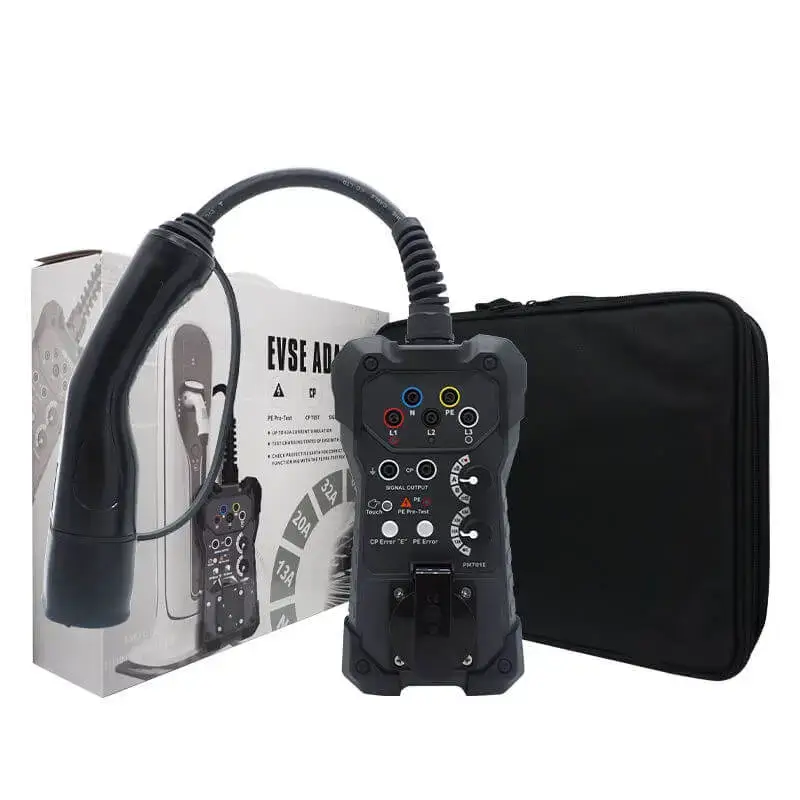
Proximity Pilot und Strombegrenzungstest
Der Näherungs-Pilotstromkreis teilt der Ladestation die Stromstärke des Kabels mit. Unterschiedliche Widerstandswerte bedeuten unterschiedliche Stromstärken - die Station muss diese erkennen und den Ausgangsstrom entsprechend begrenzen.
Ein EV-Ladestationstester mit PP-Simulationsfunktion kann verschiedene Widerstandswerte darstellen, um zu überprüfen, ob die Station korrekt reagiert. Dies ist wichtig, da eine Station, die die PP-Signale ignoriert, möglicherweise 32 A durch ein Kabel leitet, das nur für 13 A ausgelegt ist. Das ist ein Brandrisiko, das nur darauf wartet zu passieren.
Die Prüfung der PP-Reaktion umfasst:
- Simulation verschiedener Kabelleistungen durch Widerstandswahl
- Überprüfung der von der Station angezeigten Stromgrenzwerte
- Bestätigung, dass das Tastverhältnis des Pilotsignals mit der Stromgrenze übereinstimmt
- Überprüfen des Verhaltens, wenn PP eine Unterbrechung der Kabelverbindung anzeigt
Dokumentation der Ergebnisse Ihres EV-Ladestationstesters
Welche Aufzeichnungen sind zu führen?
Moderne EV-Ladestationstester speichern die Testergebnisse intern und übertragen die Daten oft an mobile Apps oder Desktop-Software. Diese Fähigkeit macht eine umfassende Dokumentation praktisch und nicht lästig.
Die Dokumentation sollte vollständig sein:
- Stationskennung - Seriennummer, Standort, Installationsdatum
- Testerkennung - Modell, Seriennummer, Kalibrierungsdatum
- Alle gemessenen Werte - nicht nur bestanden/nicht bestanden, sondern tatsächliche Zahlen
- Befolgter Prüfablauf und eventuelle Abweichungen
- Identifikation und Berechtigungsnachweis des Technikers
- Umgebungsbedingungen, falls für die Messungen relevant
- Alle beobachteten Anomalien, auch wenn die Tests bestanden wurden
Der Unterschied zwischen minimaler und gründlicher Dokumentation wird oft erst deutlich, wenn später Probleme auftreten. Grundlegende Messungen bei der Inbetriebnahme machen die Fehlersuche in Zukunft viel einfacher. Ohne diese Referenzdaten wird die Feststellung, ob ein Messwert eine normale Abweichung oder eine Verschlechterung darstellt, zum Ratespiel.
Umgang mit fehlgeschlagenen Tests
Bevor Sie annehmen, dass die Ladestation defekt ist:
- Prüfen Sie, ob die Anschlüsse der Messleitungen sicher und die Kontakte sauber sind.
- Bestätigen Sie, dass die richtigen Testparameter für den Stationstyp ausgewählt wurden.
- Wiederholen Sie die Messung, um zu prüfen, ob es Probleme mit dem Übergang gibt.
- Prüfen Sie, ob es sich um einen geringfügigen oder endgültigen Fehler handelt.
Echte Fehler müssen untersucht werden. Das Prüfgerät für EV-Ladestationen ermittelt, was ausgefallen ist, aber nicht unbedingt, warum. Ein Pilotsignal, dessen Spannung außerhalb der Toleranz liegt, könnte von der Elektronik des Ladegeräts, von Verdrahtungsproblemen oder sogar von Problemen mit der Versorgungsspannung herrühren, die sich auf die Referenzschaltungen des Ladegeräts auswirken. Wenn Sie mehr über EV-Ladestationstester wissen möchten, lesen Sie bitte Was ist ein EV-Ladegerätetester?.
FAQ
Wie lange dauert ein kompletter Test mit einem EV-Ladestationstester?
Eine vollständige Testsequenz für die Inbetriebnahme erfordert in der Regel 20 bis 45 Minuten pro Ladepunkt, vorausgesetzt, es treten keine Fehler auf, die untersucht werden müssen. Einfache einphasige Ladestationen für Privathaushalte sind eher kürzer, während dreiphasige gewerbliche Ladestationen mit mehreren Steckdosen länger brauchen. Der EV-Ladestationstester automatisiert einen Großteil des Messprozesses, aber das Anschließen von Kabeln, das Durchlaufen von Zustandssequenzen und das Dokumentieren der Ergebnisse nimmt immer noch Zeit in Anspruch, die nicht überstürzt werden darf, ohne dass es zu Versäumnissen kommt. Techniker, die sich mit ihrem speziellen Testermodell vertraut machen, werden in der Regel schneller, ohne die Gründlichkeit zu verlieren, obwohl die Lernkurve unterschiedlich verläuft. Die Einplanung von 30 Minuten pro Steckdose ist eine vernünftige Schätzung für die meisten Mode-3-Installationen.
Kann ein EV-Ladestationstester für alle Ladetypen verwendet werden?
Die meisten EV-Ladestationstester beherrschen die Überprüfung von Modus 2 und Modus 3 des AC-Ladens umfassend. Schnelles DC-Laden - Modus 4 - stellt eine zusätzliche Komplexität dar, die nicht alle Prüfgeräte unterstützen. Die CCS- und CHAdeMO-Protokolle beinhalten Hochspannungs-Gleichstromkreise und unterschiedliche Kommunikationsmethoden, die spezielle Fähigkeiten erfordern, die über die Überprüfung des AC-Ladens hinausgehen. Vor dem Kauf eines EV-Ladestationstesters sollten die unterstützten Modi und Steckertypen mit den erwarteten Prüfanforderungen abgeglichen werden, um Einschränkungen vor Ort zu vermeiden.
Ist eine Schulung erforderlich, bevor ein EV-Ladestationstester verwendet werden kann?
Die formalen Zertifizierungsanforderungen variieren je nach Gerichtsbarkeit, eine praktische Ausbildung ist jedoch unabhängig von den behördlichen Vorgaben dringend zu empfehlen. Ein EV-Ladestationstester ist nur so effektiv wie die Person, die ihn bedient. Um zu verstehen, was die Messungen bedeuten, um zu erkennen, wann die Ergebnisse auf Installationsprobleme und wann auf Messartefakte hinweisen, und um Grenzwerte zu interpretieren, sind Kenntnisse erforderlich, die über die grundlegende Bedienung des Geräts hinausgehen. Viele Hersteller von Prüfgeräten bieten Schulungsprogramme an, und Branchenorganisationen bieten Kurse zur Ladeinfrastruktur für Elektrofahrzeuge an, die sich mit Prüfprotokollen befassen.