
Shopping for diagnostic equipment is rarely as fun as buying the car itself, but it is arguably more important. For electricians and facility managers, the market for tools has exploded recently, making the task of selecting the right gear a bit of a headache. When it comes to maintaining safety at charging stations, the EV charger tester is the piece of kit that bridges the gap between a hunch and a certainty.
It is often observed that people try to get by with just a standard multimeter, but that is a rookie mistake. A multimeter can measure voltage, sure, but it can’t have a conversation with the charging station. The station needs to be convinced a car is there before it releases the juice, and that is exactly what this tester does.
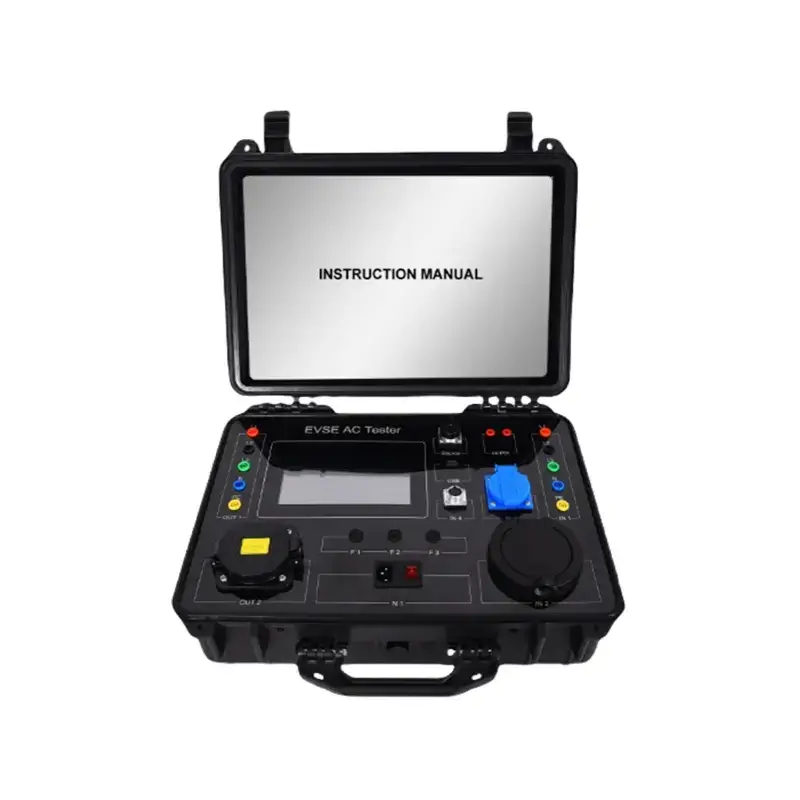
Key features to look for in a quality EV Charger Tester
Choosing the best unit isn’t just about picking the one with the most buttons. In fact, sometimes fewer buttons are better when you are working in the rain.
Simulation capabilities
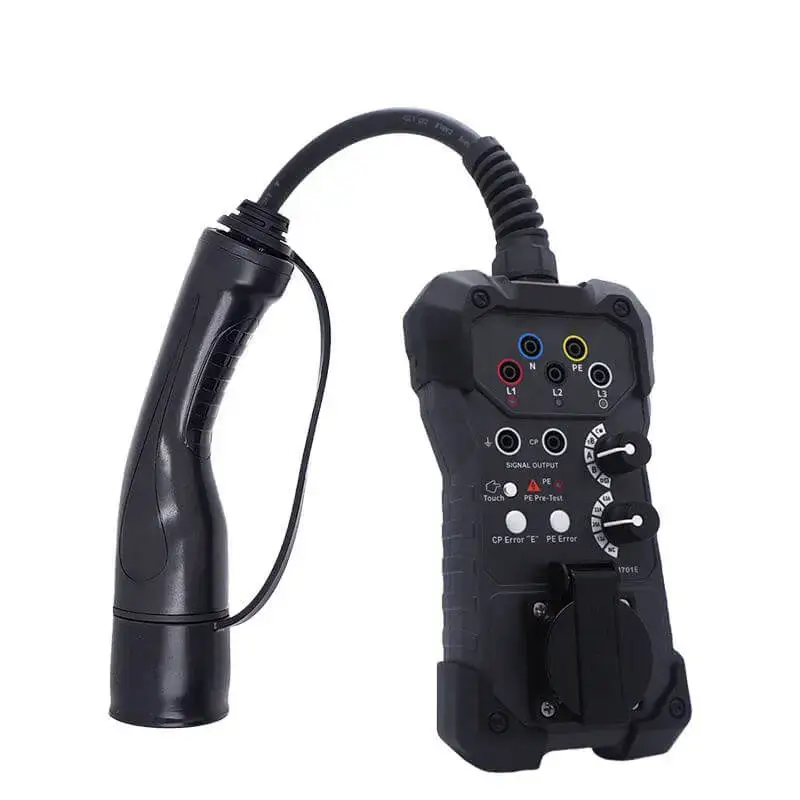
The primary job of any EV charger tester is to act like a vehicle. It needs to accurately simulate the Control Pilot (CP) and Proximity Pilot (PP) states. One should look for a device that has clear, distinct settings for these states. There is nothing worse than a loose dial that leaves you guessing if you are in “State B” (connected) or “State C” (charging). The tactile feel of the switch matters more than one might think.
Build quality and durability
Let’s be honest; tools get dropped. They get thrown in the back of vans. A tester made of brittle plastic isn’t going to last a month on a busy job site. The best units usually have a rubberized boot or a high-impact casing. It is worth paying a little extra for something that doesn’t rattle when you shake it.
Comparing different types of EV Charger Testers
Broadly speaking, these devices fall into two buckets: simple adapters and advanced analyzers. The adapters are small and require a separate multimeter to read the results, while the analyzers might have screens and more internal logic.
Here is a quick breakdown of how they generally stack up against each other:
| Feature | Basic Adapter | Advanced Analyzer |
|---|---|---|
| Price Point | Budget-friendly | Premium |
| Portability | Fits in a pocket | Requires a case |
| Equipment Needed | Needs a multimeter | Standalone (mostly) |
| Best For | Quick spot checks | Full commissioning |
Why the EV Charger Tester is essential for safety
It is not just about making sure the car charges; it is about making sure the station doesn’t kill anyone. A quality EV charger tester allows the technician to simulate faults, like a ground fault (PE Error).
When you press that “Fault” button, the station should immediately cut the power. If it doesn’t, that station is a fire hazard. Watching a station fail this test is a sobering experience, and it reinforces why having a reliable tester is non-negotiable. You are effectively stress-testing the safety features without putting a real car (or person) at risk.
Practical tips for using your chosen device
Once you have picked a model, using it becomes a rhythm.
- Inspect the cable: Before plugging the EV charger tester in, check the connector for cracks.
- Connect in State A: Always start with the simulator in the “disconnected” state.
- Listen for the click: When you switch to “State C,” you should hear the station’s contactor clunk shut. No clunk usually means no power.
- Test the loop: Use your external meter to check the earth loop impedance while the system is live.
If you want to know more about EV charging testing. please read TOP 5 EV Charger Tester Recommendations.
FAQ
Can I use an EV charger tester on a DC fast charger?
Usually, no. Most standard testers are designed for AC charging stations (Level 1 and Level 2). DC fast chargers use a completely different communication protocol (like CCS or CHAdeMO) and require much more expensive, specialized heavy-duty equipment.
Do I need to calibrate my tester?
Yes, like any precision instrument, it should be checked periodically. While the EV charger tester itself is often just a box of resistors and switches (in the case of adapters), ensuring those resistance values haven’t drifted is crucial for accurate simulation.
Is it difficult to learn how to use one?
Not really. If you understand the basics of how an EV charges (the handshake process), the tool is very intuitive. It is mostly just turning a dial to match the steps of the charging process. Most electricians pick it up in about five minutes.


 English
  Spanish
  Portuguese
  French
  Russian
  German
  Italian