
Pull up to any public fast charger, and there’s a good chance it’s a DC unit. The big ones, the ones that can add 100 miles of range in fifteen or twenty minutes. But what’s actually happening inside that cabinet? And why is it so much faster than plugging in at home?
Watched enough drivers pull up to these stations—some confident, some confused—and it’s clear that not everyone understands the difference between AC and DC charging. Which is fine. Nobody needs to be an electrical engineer to use one. But understanding what a DC EV charging station actually does makes it easier to plan trips, set expectations, and maybe appreciate the engineering a little bit.
This is a look at what these stations are, how they work, and where they fit into the bigger picture.
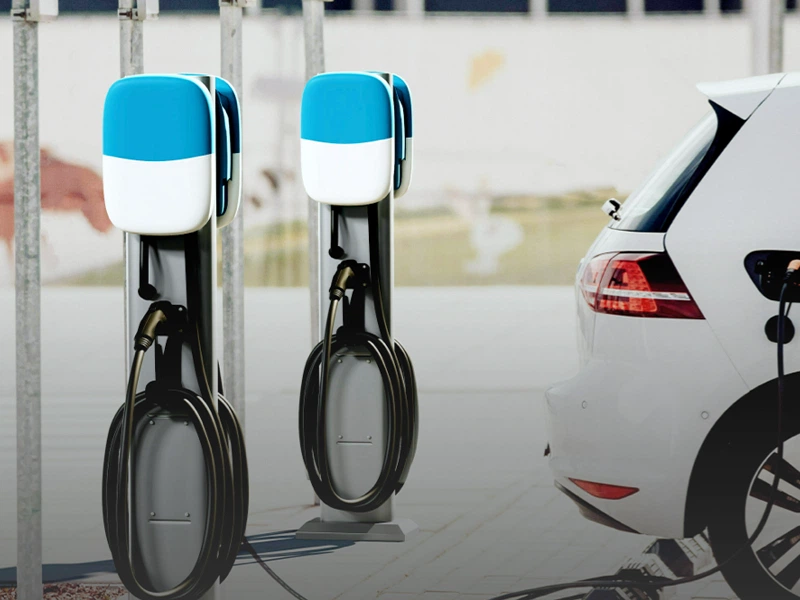
How a DC EV Charging Station Differs from Regular Charging
The fundamental difference is where the conversion from AC to DC happens. Every home has AC (alternating current) coming out of the walls. EV batteries store DC (direct current). Somewhere, that conversion has to happen.
Level 1 and Level 2 Charging
With a standard home outlet or a Level 2 charger, the conversion happens inside the car. The charger (really just a smart extension cord) sends AC power to the vehicle, and the car’s onboard converter changes it to DC for the battery. That onboard converter is small—it has to fit in the car, after all—so it’s relatively slow.
DC Fast Charging
A DC EV charging station does the conversion before the power reaches the car. Big, stationary converters inside the cabinet turn AC grid power into DC, then send that DC directly to the battery. The car’s onboard converter gets bypassed entirely. That’s why it’s so much faster—industrial-sized converters can handle far more power than the small one tucked inside the vehicle.
From an observational standpoint, this is why a 50 kW DC charger is still faster than a 19 kW Level 2 charger, even though the numbers don’t look that far apart. The DC charger isn’t limited by the car’s internal hardware.
Key Components Inside a DC EV Charging Station
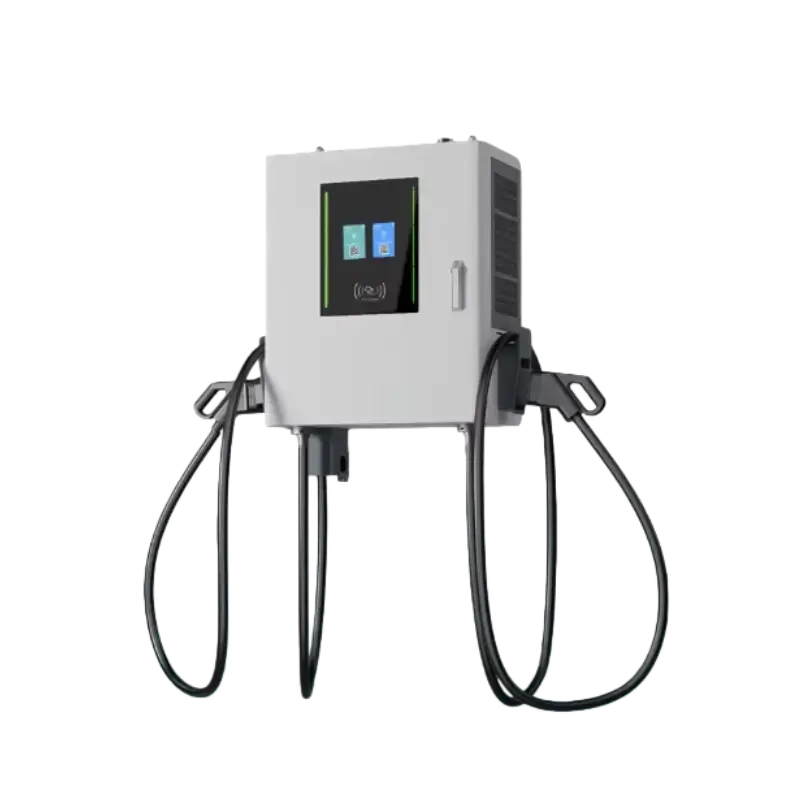
There’s more inside that tall cabinet than most people realize. A DC EV charging station is essentially a small power plant packaged for parking lots.
Power Modules and Scalability
One interesting design choice: many stations use multiple smaller power modules rather than one big converter. If a module fails, the station can keep running at reduced power instead of dying completely. Some stations can also share power across multiple stalls—two cars plug in, and the station splits the available power between them. That’s better than one car charging alone while the other waits.
Power Levels and Charging Speeds
Not all DC EV charging stations are created equal. The power rating determines how fast a given vehicle can charge—though the vehicle itself also has limits.
Common Power Ratings
• 50 kW: The entry point for DC fast charging. Adds about 150–200 miles of range per hour, depending on the vehicle. Common at older stations and some urban sites.
• 150 kW: The current sweet spot. Adds 300–400 miles of range per hour. Works well with most modern EVs.
• 350 kW: Ultra-fast. Adds 600–800 miles of range per hour. Only newer 800V vehicles (Hyundai Ioniq 5, Kia EV6, Porsche Taycan) can take full advantage.
• 350 kW+: Rare. Mostly demonstration sites or future-proofed installations.
The Vehicle's Role
Here’s something that surprises a lot of new EV owners. Plugging a Chevy Bolt into a 350 kW station doesn’t make it charge faster than plugging into a 50 kW station. The Bolt’s internal limits max out around 55 kW. The station can offer more, but the car won’t take it. The charging speed is always the lesser of what the station can provide and what the car can accept.
From watching this play out, the best DC EV charging station for a given driver is one that matches or slightly exceeds their car’s maximum rate. Putting a slow-charging car on an ultra-fast charger doesn’t hurt anything, but it also doesn’t help—and sometimes costs more per kWh.
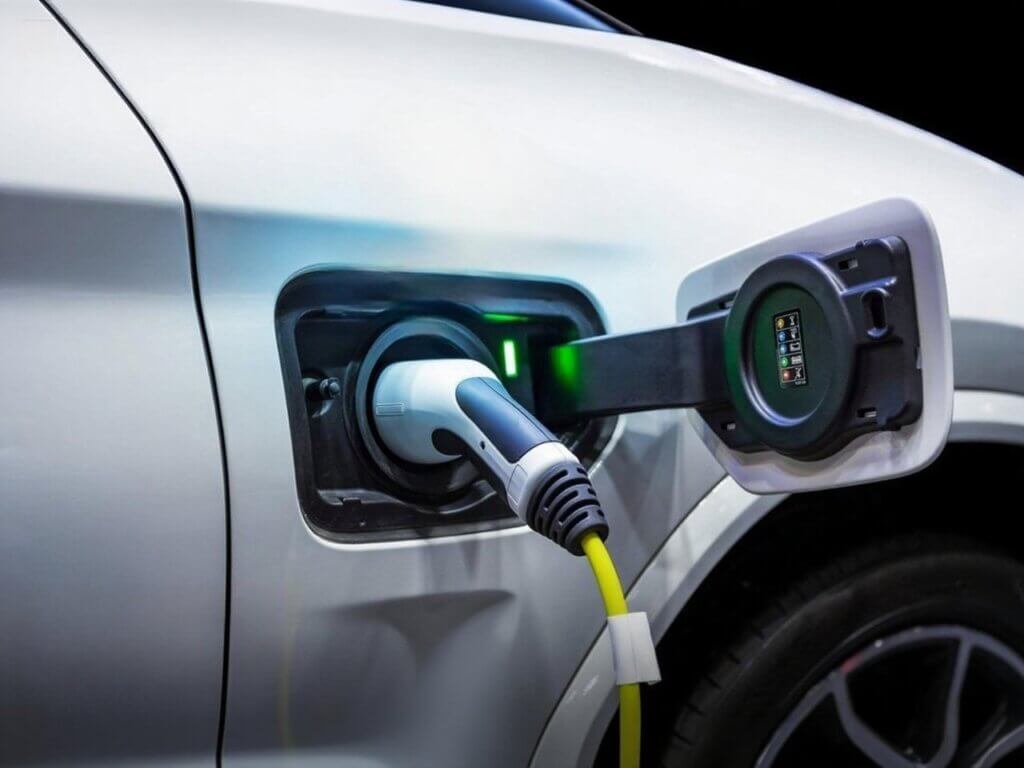
The Charging Session: What Actually Happens
Plugging in seems simple, but there’s a conversation happening behind the scenes.
The Handshake
When the connector clicks into the car, the station and vehicle start talking. The car tells the station its maximum voltage, maximum current, and current state of charge. The station responds with what it can provide. They agree on starting parameters.
This handshake happens in seconds. But when it fails—when the car and station can’t agree, or communication drops—the session won’t start. That’s often what’s happening when a charger “doesn’t work” even though it has power. Something in the communication chain broke.
The Charging Curve
DC fast charging isn’t constant. The station might deliver full power when the battery is low, then taper off as the battery fills. This is the charging curve. A typical session:
• 0–30%: Full power (if the car allows it)
• 30–60%: Gradually tapering
• 60–80%: Reduced power
• 80–100%: Slow trickle
Most drivers charge to 80% on road trips for this reason. The last 20% takes almost as long as the first 80%.
Testing and Maintenance
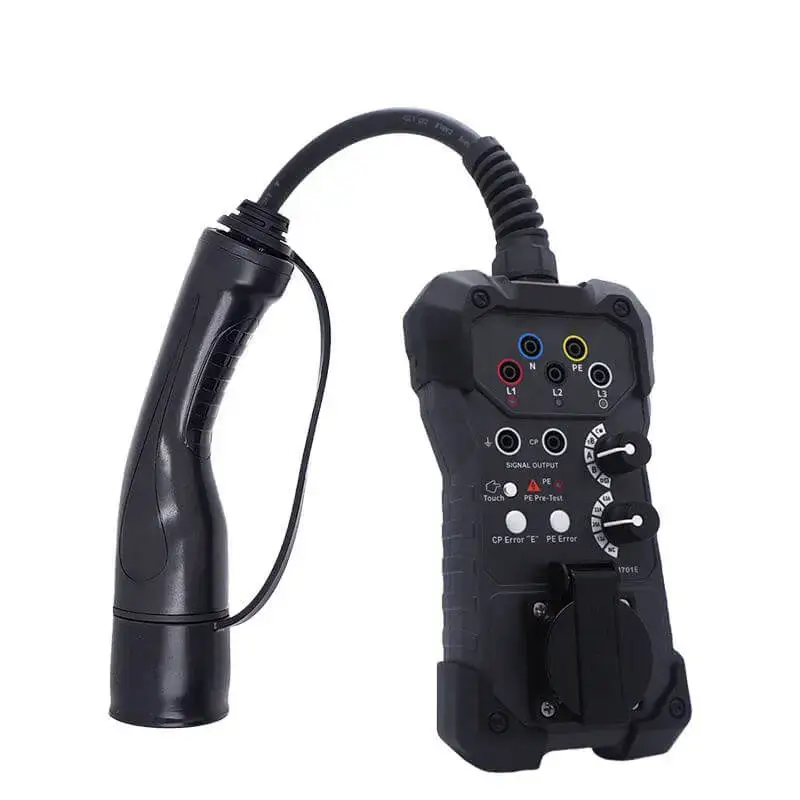
Keeping these stations running requires regular checks. Technicians use specialized tools to verify output, communication, and safety systems. An EV Charger Tester simulates a vehicle connection and measures whether the station is delivering the correct voltage, current, and protocol handshake. Without this kind of testing, small issues can go unnoticed until a driver shows up and finds a dead charger.
Connector Types and Compatibility
Different regions use different plugs. This has been a source of confusion for years.
North America
• NACS (North American Charging Standard): Used by Tesla. Becoming more widely adopted by other manufacturers.
• CCS1 (Combined Charging System): Used by most non-Tesla EVs (Ford, GM, Hyundai, Kia, BMW, etc.). Has two additional DC pins below the standard J1772 AC connector.
• CHAdeMO: Used by older Nissan Leafs and a few other Japanese models. Rapidly disappearing.
Europe
•CCS2: The standard. Mandated by regulation for all new DC EV chargers.
• CHAdeMO: Also fading.
Asia
Varies by country. China uses GB/T. Japan uses CHAdeMO (though shifting toward CCS).
For road trippers, the main advice is knowing what plug their car has and checking that the station supports it. Adapters exist for some combinations (NACS to CCS1, for example) but not all.
Where DC Fast Charging Makes Sense
Not every location needs DC fast charging. It’s expensive to install and operate. The economics work best where people are passing through, not where they’re parking for hours.
Good locations for DC fast charging:
• Highway rest stops and travel plazas
• Gas stations near highway exits
• Shopping centers near major corridors
• Restaurant rows (places where people stop for 20–40 minutes anyway)
Poor locations for DC fast charging:
• Office parking (people park all day; Level 2 is cheaper and sufficient)
• Apartment complexes (same logic)
• Rural areas with low traffic (can’t recoup installation costs)
From watching the industry evolve, the sites that succeed are the ones that match charging speed to dwell time. High dwell time (hours) gets Level 2. Low dwell time (minutes) gets DC fast charging. Trying to force the wrong type into a location usually leads to underutilization.
The Cost Reality
Building a DC EV charging station isn’t cheap. The hardware alone can run $30,000 to $100,000 per unit. Installation—trenching, concrete, electrical work—often adds another $50,000 to $150,000. Utility upgrades can push the total even higher.
That’s why public DC charging costs more than home charging. The equipment needs to be paid for, maintained, and operated. A driver paying 40–60 cents per kWh at a public DC station is covering those costs. Home charging at 10–15 cents per kWh doesn’t have the same infrastructure overhead.
FAQ
How fast is a DC EV charging station compared to home charging?
A 150 kW DC station can add 200–300 miles of range per hour. A home Level 2 charger adds 20–40 miles per hour. DC charging is roughly 5–10 times faster.
Can any EV use a DC EV charging station?
Most modern EVs can, but not all. The vehicle needs a DC-compatible inlet (CCS, NACS, or CHAdeMO). Some older plug-in hybrids and very early EVs are AC-only.
Does DC fast charging damage the battery?
Frequent DC fast charging causes slightly more battery wear than Level 2 charging, but modern EVs have thermal management systems that minimize the difference. Occasional fast charging (road trips, etc.) has negligible impact on long-term battery health.


 English
  Spanish
  Portuguese
  French
  Russian
  German
  Italian