
As the electric vehicle (EV) market matures, the industry’s focus has shifted from simple power delivery to sophisticated data exchange. When a driver plugs an EV into a charging station, a complex “digital negotiation” occurs within milliseconds. If this negotiation fails, the vehicle won’t charge—even if the hardware is perfectly functional. This gap in communication is why EV charging conformance testing has become the most critical phase in the product development lifecycle.
Conformance testing is the rigorous process of verifying that an Electric Vehicle Supply Equipment (EVSE) unit adheres strictly to international communication protocols. Without comprehensive EV charging conformance validation, the global charging network remains fragmented, leading to poor user experiences and increased maintenance costs.
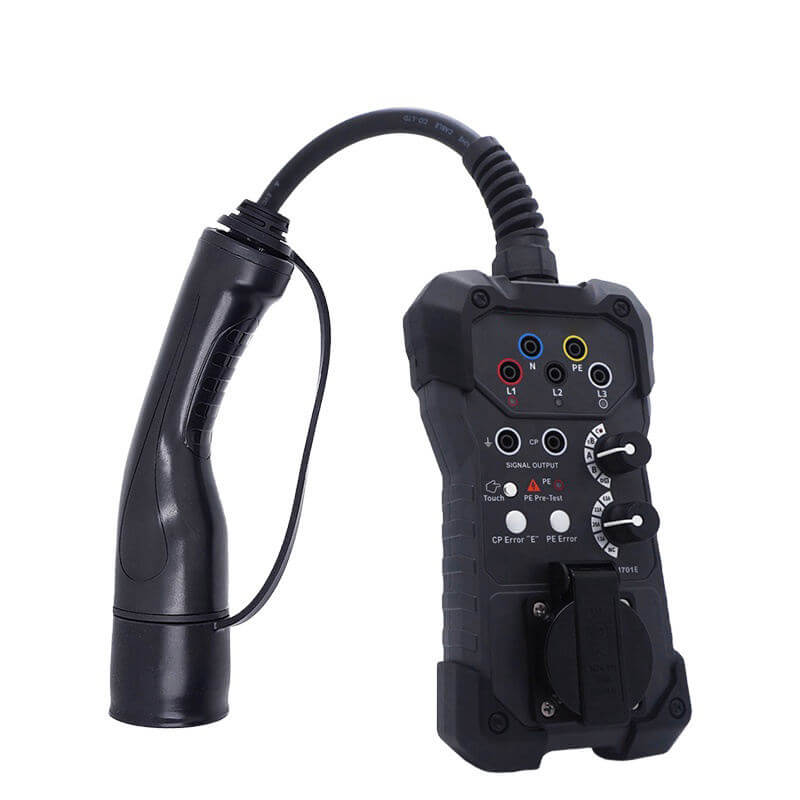
Defining the Core Pillars of EV Charging Conformance
True EV charging conformance is multifaceted, spanning from raw electrical signals to high-level encrypted data packets. To achieve a “certified” status, a charging station must pass tests across three distinct layers:
A. The Physical and Electrical Layer
This involves the basic analog signaling defined by IEC 61851-1. The tester verifies:
PWM Accuracy: Ensuring the Pulse Width Modulation (PWM) signal has a clean frequency of 1kHz.
Voltage Levels: Validating that the Control Pilot (CP) stays within the tolerance of State A (12V), State B (9V), and State C (6V).
Duty Cycle Precision: Ensuring that a 25% duty cycle accurately communicates a 15A limit without drifting.
B. The Protocol and Communication Layer
For modern DC fast chargers and “Smart” AC chargers, the EV charging conformance focus shifts to the Digital Communication (ISO 15118).
PLC Signal Quality: Monitoring the Power Line Communication (PLC) used for high-level messaging.
Message Sequencing: Verifying that the charger sends the SessionSetupRes only after a valid SessionSetupReq.
C. The State Machine Logic
The EV charger must react predictably to state changes. For example, if the vehicle moves to State E (Error), the charger must drop the contactors within the specified millisecond window.

Key Standards Governing EV Charging Conformance
In the complex ecosystem of electric mobility, EV charging conformance is not governed by a single rulebook, but rather a hierarchy of international standards. Each standard addresses a specific layer of the charging session, and a failure in any one of these can lead to a “dead” charging post. Understanding these standards is the first step for any technician utilizing EV charging test equipment.
A. IEC 61851-1: The Foundation of Control Signaling
This is the baseline for all EV charging conformance testing worldwide. It defines the “General Requirements” for EV conductive charging systems. Specifically, it codifies the Basic Signaling mechanism—the analog Pulse Width Modulation (PWM) signal on the Control Pilot (CP) wire. Conformance here means the station must perfectly execute the “State Machine” logic. For instance, the transition from State A (Standby) to State B (Vehicle Connected) must be detected within a specific voltage window ($9V \pm 1V$). If the station’s internal resistors drift, it will fail this primary level of EV charging conformance, rendering it incompatible with even the simplest electric vehicles.
B. ISO 15118: The “Plug & Charge” Standard
As we move into “Smart Charging,” ISO 15118 (specifically parts -2 and -20) has become the gold standard for EV charging conformance. Unlike the simple analog signals of IEC 61851, ISO 15118 handles High-Level Communication (HLC). It allows the vehicle and the grid to talk to each other using encrypted XML messages.
Bidirectional Power Flow (V2G): The newest iteration, ISO 15118-20, introduces conformance requirements for discharging the car’s battery back into the grid.
Security & TLS: A huge part of EV charging conformance today involves verifying the Transport Layer Security (TLS) handshake. If the charger’s security certificates are expired or incorrectly formatted, the “handshake” will fail, a common issue found during rigorous compliance audits.
C. DIN 70121: The Bridge to DC Fast Charging
Often used in conjunction with ISO standards, DIN 70121 is a specialized technical report that defined the initial implementation of Combined Charging System (CCS) protocols for DC charging. While it is being phased out in favor of ISO 15118, many legacy fast chargers still rely on it. A professional EV charging conformance test must verify that a station can “fall back” to DIN 70121 if a vehicle doesn’t support the newer ISO protocols. Failure to handle this backward compatibility is a frequent cause of interoperability complaints at public charging hubs.
D. SAE J1772 and Regional Nuances
For technicians operating in North America, EV charging conformance must also account for SAE J1772. While it shares many similarities with the IEC standards, there are subtle differences in physical connector tolerances and safety timing. Testing for conformance means ensuring the latch-locking mechanism and the Proximity Pilot (PP) resistance values match the specific North American grid requirements.

Step-by-Step Process for Validating EV Charging Conformance
Testing for EV charging conformance is a sequential process. It begins with the simplest electrical checks and builds toward complex software interactions.
Step 1: Signal Integrity and Waveform Analysis
Before looking at data, the EV charging conformance tester analyzes the “health” of the PWM wave. Technicians look for:
Edge Jitter: Variations in the timing of the signal edges that can confuse the vehicle’s onboard charger.
Harmonic Interference: Noise from the charger’s power electronics that might bleed into the communication lines.
Step 2: Protocol Handshake and TLS Validation
For chargers utilizing ISO 15118, the tester acts as the vehicle to initiate a “Plug & Charge” sequence.
TCP/IP Link: Establishing the digital connection over PLC.
TLS Handshake: Ensuring the charger’s security certificates are valid and the encryption is unbroken.
Authorization: Verifying the charger correctly processes the contract certificates.
Step 3: Timing and Response Latency
A major cause of EV charging conformance failure is “Timing Violations.” Standards dictate that a charger must respond to a vehicle’s request within a specific window (e.g., 2 seconds for a Session Setup). If the charger takes 2.1 seconds due to internal software lag, the vehicle will abort the session.
Step 4: Negative Testing (Error Handling)
A robust EV charging conformance test must include “Negative Scenarios.” This involves intentionally sending the charger an invalid message or a sudden “Pilot Short” to see if it enters a safe state or fails dangerously.
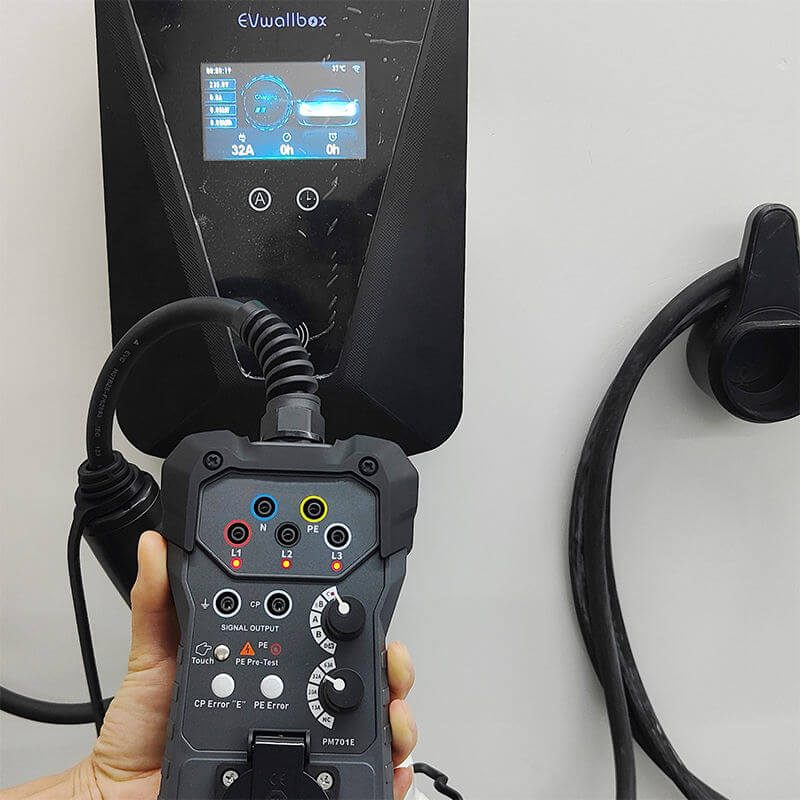
Essential Tools for Professional EV Charging Conformance Testing
Generic diagnostic tools cannot handle the depth of protocol analysis required for conformance. Professional labs utilize specialized EV charging conformance analyzers that offer:
Real-Time Protocol Sniffing: The ability to “see” the raw hex data exchanged between the car and the station.
Oscilloscope Integration: Mapping digital messages directly onto the electrical waveform for synchronized troubleshooting.
Automated Test Suites: Pre-programmed scripts that run through thousands of IEC and ISO test cases at the press of a button.
Industry Note: Using a simulator that only passes “Basic” tests often leads to recalls when the charger is deployed in the field and encounters a variety of EV models. Conformance testing must be exhaustive.
Identifying Common Failures in EV Charging Conformance
Even high-end chargers often stumble during the initial EV charging conformance audit. The most common failures include:
PWM Drift: The 1kHz frequency drifts as the charger heats up under load, causing the car to drop the connection.
Message Retries: Excessive “retry” attempts in the PLC layer, which slows down the charging start time and frustrates the user.
Incomplete XML Implementation: Errors in how the charger parses the XML messages used in ISO 15118, leading to “Syntax Errors” that the vehicle cannot interpret.
V2G Incompatibility: Failure to correctly manage the bidirectional power flow signals required for Vehicle-to-Grid applications.
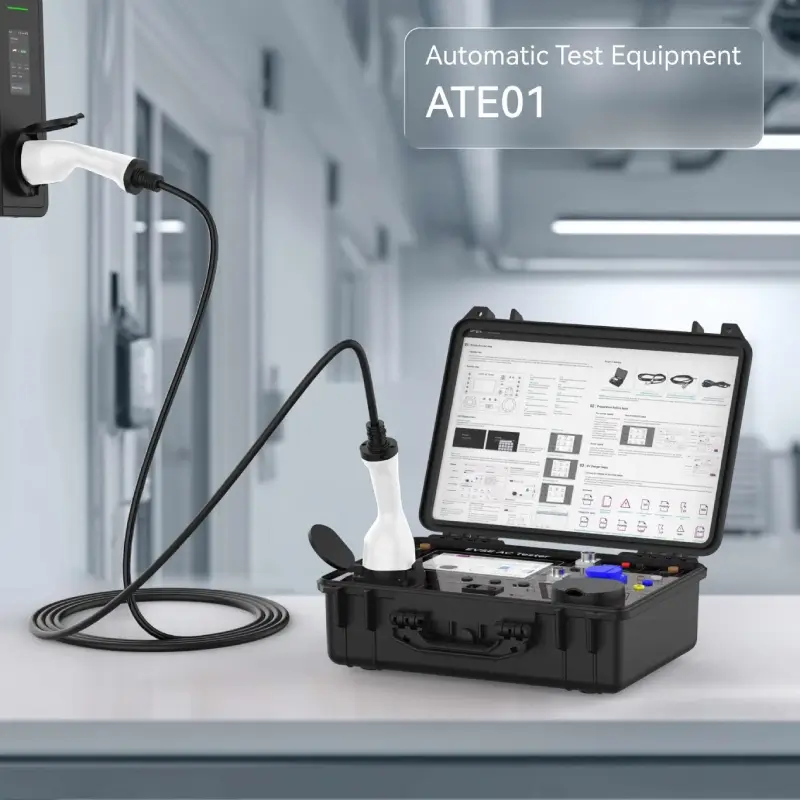
Conclusion: The Future of EV Charging Conformance
In the coming years, EV charging conformance will move beyond a “one-time test” and become a continuous requirement as chargers receive “Over-the-Air” (OTA) updates. Ensuring that a software patch doesn’t break protocol compliance is the next great challenge for EVSE operators.
By investing in rigorous EV charging conformance testing today, manufacturers can ensure that their infrastructure is truly “future-proof,” interoperable, and, most importantly, trusted by the drivers who rely on it.
More information:
FAQ
Q: Is conformance testing the same as safety testing?
No. Safety testing (like RCD and Ground tests) ensures the device won’t cause harm. EV charging conformance ensures the device speaks the “correct language” to work with any electric vehicle on the road.
Q: Why do I need ISO 15118 conformance if I only do AC charging?
While basic AC charging uses PWM, many new “Smart AC” chargers use ISO 15118 for advanced features like automated billing and grid-friendly charging schedules.
Q: Can I use a car to test for conformance?
No. A car only tests one software implementation. An EV charging conformance tester can simulate hundreds of different vehicle behaviors and “illegal” signal states to ensure the charger is truly robust.


 English
  Spanish
  Portuguese
  French
  Russian
  German
  Italian