Mekel Type 2 to GB/T EV Charging Cable
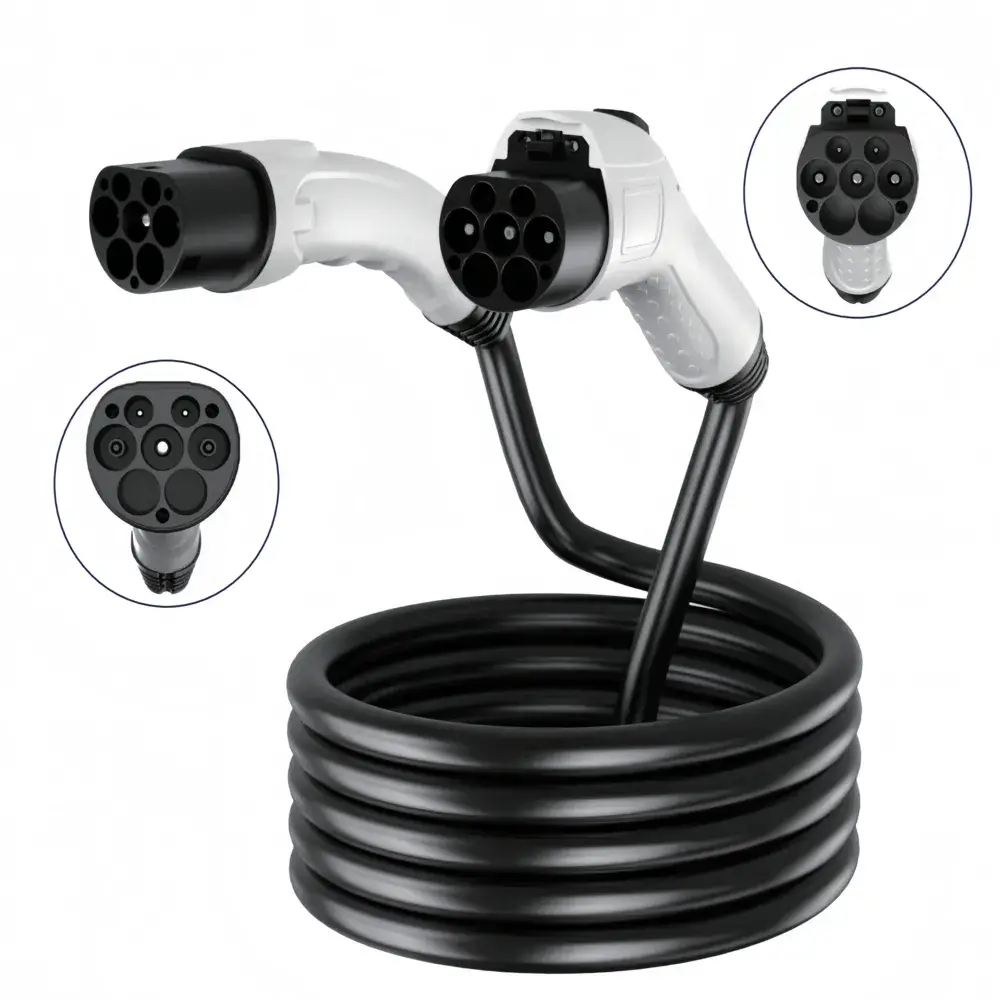
The Mekel Type 2 to GB/T EV Charging Cable is the essential connectivity solution for enabling Chinese-standard electric vehicles to access the widespread Type 2 AC charging infrastructure across Europe, Southeast Asia, and the Middle East. Engineered for durability and certified safety, this premium Type 2 to GB/T Charging Cable bridges the technical gap between standards, ensuring safe, efficient, and reliable charging for cross-border fleets, international travelers, and any operation supporting EVs from different markets. Its robust design guarantees high performance in demanding conditions, making it the trusted EV Charging Cable for global interoperability.
How Type 2 to GB/T EV Charging Cable Works
Operating the Type 2 to GB/T Cable is a straightforward three-step process designed for user safety and convenience:
- Connect to Charger: Plug the cable's Type 2 (Mennekes) male connector into the socket of a compatible AC charging station.
- Connect to Vehicle: Attach the cable's GB/T female connector to your vehicle's GB/T charging inlet.
- Initiate Charging: Authorize and start the session via the station's method. The cable facilitates full communication between the charger and vehicle, managing power delivery and enabling real-time fault detection for a secure charging cycle.
Why Choose Type 2 to GB/T EV Charging Cable?
Certified Safety
- Flame-retardant thermoplastic housing rated UL94V-0
- IP55 waterproof protection when connected
- >10,000 plug cycles for long-term durability
- Built with silver-plated copper alloy conductors for optimal conductivity
Robust Performance
- Rated for 16A / 32A, supporting single-phase and three-phase AC charging
- Operates in extreme temperatures from –40°C to +80°C, suitable for harsh climates and industrial use
Personnalisation flexible
- Options for laser-engraved logos, custom lengths, colors, and packaging
- Backed by a 2-year warranty and supported by Mekel’s global delivery network
Parameter of Type 2 to GB/T EV Charging Cable
| Specification | Détails |
|---|---|
| Courant nominal | 16A / 32A (Single/Three Phase) |
| Tension nominale | 240V AC |
| Contact Resistance | ≤ 0.5 mΩ |
| Flame Retardant Rating | UL94V-0 |
| Mechanical Life | >10,000 plug cycles |
| Waterproof Rating | IP55 (when connected) |
| Housing Material | Thermoplastique |
| Conductor Material | Silver-plated copper alloy |
| Température de fonctionnement | –40°C to +80°C |
| Cable Length | 5000 ±100 mm |
Application

Public Use
Crucial for public charging network operators and municipal authorities aiming to support the growing number of imported Chinese EVs. Deploying this Type 2 to GB/T Cable as an accessory at public Type 2 charging points promotes inclusivity, attracts more users, and future-proofs public infrastructure.

Residential Use
Perfect for individual owners of Chinese-brand EVs (e.g., BYD, NIO, Xpeng) residing or traveling in regions with Type 2 as the dominant standard. This Type 2 to GB/T Charging Cable allows for convenient home charging using a local Type 2 wallbox, eliminating range anxiety abroad.

Commercial Use
Indispensable for businesses like international car rental agencies, corporate fleets with Chinese vehicles, and hotels catering to a global clientele. Providing this EV Charging Cable ensures all guests or assets can utilize on-site Type 2 charging facilities, enhancing service quality and operational flexibility.
Centre d'aide
FAQ
Q1: Which electric vehicles is this Type 2 to GB/T EV Charging Cable compatible with?
A: This charging cable is compatible with all Battery Electric Vehicles (BEVs) and Plug-in Hybrid Electric Vehicles (PHEVs) that utilize the Chinese national GB/T standard for AC charging. This includes most electric vehicles produced by Chinese manufacturers for the domestic market.
Q2: In which regions or countries is this Type 2 to GB/T EV Charging cable primarily used?
A: This Type 2 to GB/T Charging Cable is designed for use anywhere Type 2 socket-based AC chargers are installed, primarily across Europe, the UK, Southeast Asia, Australia, and the Middle East. It allows GB/T vehicles to charge in these regions.
Q3: How do I choose between 16A and 32A specifications?
A: The 32A Type 2 to GB/T Cable is recommended for broader compatibility and faster charging, as it supports higher power levels common at public and commercial stations. The 16A version is suitable for basic residential charging where lower power is sufficient.
Q4: Can this Type 2 to GB/T EV Charging cable be used for DC fast charging?
A: No. This product is strictly an AC EV Charging Cable. It is not designed or rated for DC fast charging, which requires entirely different connectors, cables, and communication protocols (like the GB/T DC standard).
Q5: Is any special setup or software required to use this Type 2 to GB/T EV Charging adapter cable?
A: No special setup is needed. It is a passive, plug-and-play device. Simply connect it properly between a Type 2 charger and your GB/T vehicle, and the existing charging protocols will manage the session automatically and safely.
Guides dont vous pourriez avoir besoin
Quelle est la différence entre les câbles de recharge pour VE de type 1, de type 2 et de type 3 ?
As electric vehicles (EVs) continue to gain traction around the world, reliable and standardized EV charging accessories becomes essential. One area that often causes confusion—especially for new EV owners or
Comment choisir un câble de recharge pour VE ?
Si vous avez récemment opté pour un véhicule électrique (VE), l'une des premières choses dont vous aurez besoin est un câble de recharge fiable pour VE. Avec les nombreuses options disponibles sur le marché, il est facile de trouver un câble de recharge pour véhicule électrique.
Toutes les voitures électriques utilisent-elles le même câble de recharge ?
As electric vehicles (EVs) become more common, new owners often face a confusing question: Do all EVs use the same EV charging cable? As this is an issue that arises
Sécurité des câbles de recharge des VE : Ce qu'il faut savoir pour éviter les dommages et les risques
Les véhicules électriques (VE) modifient notre conception de la mobilité. Mais l'augmentation du nombre de propriétaires de VE s'accompagne d'une sérieuse responsabilité : les recharger en toute sécurité. Alors que beaucoup se concentrent sur la batterie ou