
The shift toward electric mobility has changed more than just how we drive; it has completely redefined how we “refuel.” For many, the EV portable charger is the ultimate safety net—a piece of gear that lives in the trunk, ready to bridge the gap between home and the next fast-charging station. But while these devices are undeniably convenient, treating them like a simple toaster or a laptop cord is a mistake. High-voltage electricity and sustained power draws require a level of respect and technical awareness that goes beyond the “plug-and-play” mentality.
Actually, when looking at a standard garage or an outdoor driveway setup, the risks aren’t always obvious. It’s not just about the charger itself, but the environment it occupies. This guide dives into the nuances of staying safe while using portable equipment, ensuring that your transition to electric remains smooth and, more importantly, hazard-free.
Understanding the Fundamentals of Portable Charging
A common misconception is that all portable chargers are created equal. In reality, they are sophisticated pieces of Electric Vehicle Supply Equipment (EVSE) that perform a complex handshake with your car’s onboard computer. The EV portable charger doesn’t just push electricity; it negotiates current, monitors heat, and checks for ground faults before it ever allows a single electron to move.
Level 1 vs. Level 2: What’s the Difference for Safety?
Most people start with the Level 1 cord that came with their car. It’s slow, yes, but generally safer for older homes because it draws less current. However, many are now upgrading to aftermarket Level 2 units for faster home turnarounds.
Feature | Level 1 (Portable) | Level 2 (Portable) |
Voltage | 120V (Standard Wall Outlet) | 240V (Dryer/NEMA 14-50 Outlet) |
Typical Amperage | 8A to 12A | 16A to 40A |
Heat Generation | Low to Moderate | High (requires better ventilation) |
Safety Certification | Almost always UL-listed | Varies widely (Check for UL/ETL) |
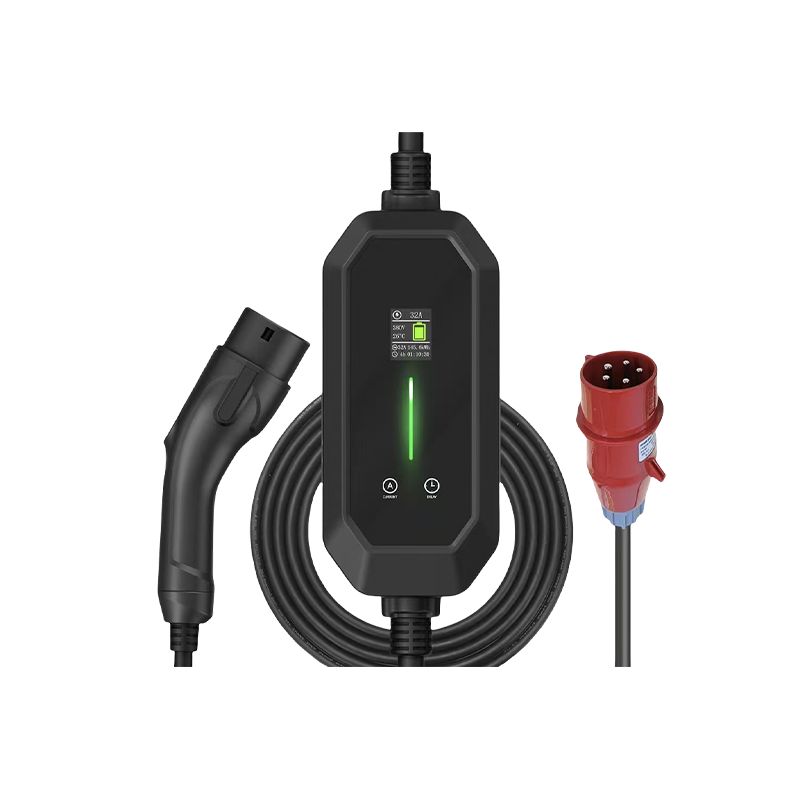
It’s worth noting that Level 2 portable chargers put a significant strain on residential wiring. If a house wasn’t built with heavy-duty circuits in mind, running a high-amp charger for 10 hours straight can lead to “thermal events”—a polite way of saying the wires inside your walls might melt.
The Hidden Dangers: What Could Go Wrong?
Observationally, the biggest safety issues don’t come from the car or the charger failing; they come from human error and “creative” electrical solutions.
The Extension Cord Trap
It is tempting. Your car is parked just five feet too far from the outlet, and you reach for that orange extension cord in the shed. Never do this. Standard household extension cords are not rated for the continuous, high-wattage load of an EV portable charger. They will overheat, potentially sparking a fire long before the car is ever charged.
If you absolutely must extend your reach, only use heavy-duty, EV-specific extension cables that are gauged correctly for the amperage you are pulling. Even then, it’s a compromise that should be avoided whenever possible.
Socket Wear and Tear
Think about how often you plug and unplug your phone. Now imagine doing that with a heavy industrial plug. Wall outlets, especially cheaper ones found in older garages, have internal “leaves” that grip the plug. Over time, these loosen. A loose connection creates resistance, and resistance creates heat. If you notice your EV portable charger plug feels hot to the touch (not just warm, but “ouch” hot), your wall outlet is likely failing and needs immediate replacement by a professional.
Safety Certifications: Why “Cheap” is Expensive
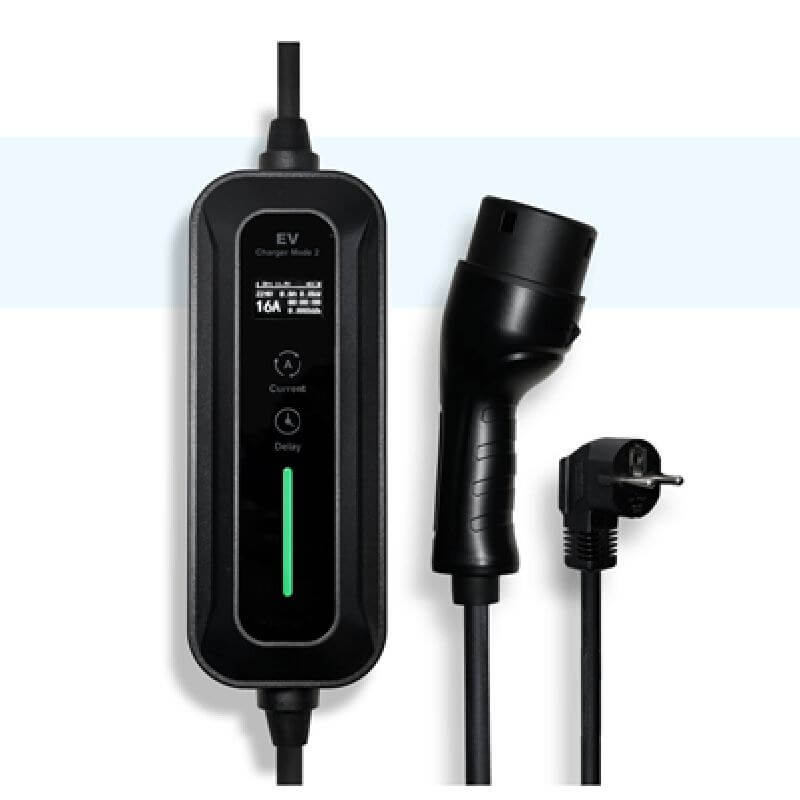
Browsing online marketplaces, it is easy to find an EV portable charger for half the price of a name-brand unit. They look the same, they have the same buttons, and they promise the same speeds. However, the internal components are some important certifications..
- UL (Underwriters Laboratories): The gold standard in North America.
- ETL (Intertek): Another reputable safety certification.
- CE Mark: Common in Europe, though it is often self-certified by manufacturers and carries less weight than UL/ETL for safety testing.
The buyer should check the supplier’s certification. Saving $100 on a charger seems like a win until you’re dealing with a fried onboard charger in a $50,000 vehicle.
Best Practices for Outdoor Charging
Many EV owners don’t have the luxury of a garage. Charging in the driveway means dealing with the elements. While most EV portable charger units are rated IP65 or IP67 (dust and water-resistant), the “water-resistant” part refers to the control box, not necessarily the plug in the wall.
Managing Rain and Snow
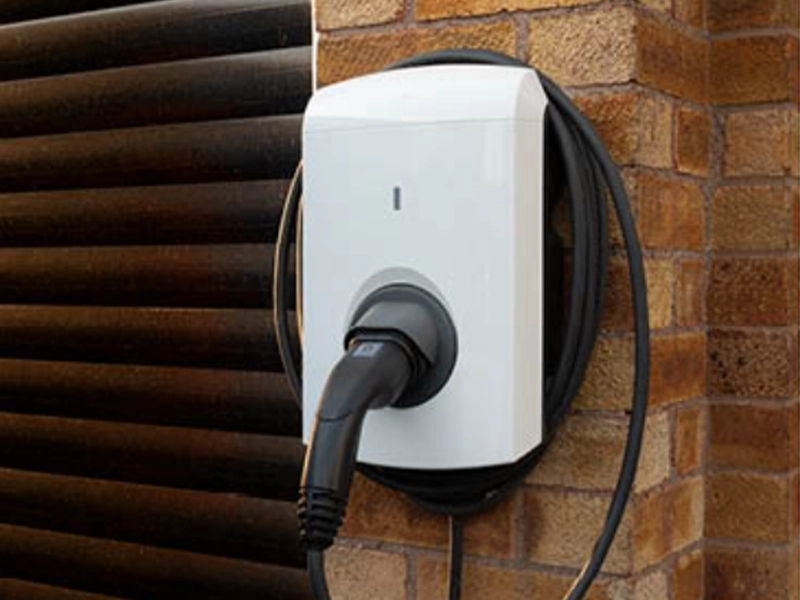
- Keep the Connection Dry: Use an “in-use” weatherproof cover for your outdoor outlet. These have a plastic bubble that allows the cord to exit while keeping the socket dry.
- Check the Seals: Periodically inspect the rubber gaskets on your charger’s connectors. If they are cracked, water can seep in and cause a “Ground Fault” error, stopping your charge.
- Avoid Submersion: Never let the control box (the “brick” in the middle of the cable) sit in a puddle. Use a hook or a mounting bracket to keep it off the ground.

Proper Storage and Longevity
When the EV portable charger isn’t in active use, where it sits matters just as much as how it’s plugged in. Many drivers have a habit of tossing the cable into the trunk in a tangled mess, but over time, tight kinks can damage the internal copper wiring. Observationally, the best way to store these units is by coiling them loosely in a dedicated carrying bag. This prevents the cable from rubbing against sharp objects in your car and keeps the sensitive electronics in the “brick” protected from impact.
Actually, environmental factors are the silent killers of portable gear. If you live in a climate with extreme humidity or salt air, the metal pins inside the connector can oxidize faster than you’d expect. Storing the EV portable charger in a dry, temperature-controlled environment—rather than leaving it in a freezing or baking car interior year-round—can easily add two or three years to its functional life. It’s a small bit of effort that saves a significant replacement cost down the line.
Handling the Charging “Handshake”
There is a specific rhythm to starting a charge that often gets overlooked. Most people tend to jam the plug into the car as quickly as possible, but the communication protocol between the vehicle and the EV portable charger needs a moment to stabilize. If you hear the car’s locking mechanism click and then immediately unclick, it’s usually because the “handshake” was interrupted or the signal was weak.
In these cases, don’t just keep force-plugging it. It’s often better to unplug, wait ten seconds for the charger’s internal capacitors to reset, and then try again with a firm, steady motion. This ensures that the Control Pilot signal is clear and that the car’s battery management system is satisfied with the safety checks. Taking that extra few seconds prevents unnecessary wear on the car’s charging port and keeps the software logic from flagging a “false positive” error that might prevent you from charging at all.
Essential Maintenance Checklist
To keep an EV portable charger in top condition, a little bit of proactive care goes a long way. It’s surprisingly easy for these cables to take a beating, especially if they are being coiled and uncoiled daily.
- Cable Inspection: Run your hand along the length of the cable once a month. Feel for any bumps, cuts, or soft spots that might indicate internal wire damage.
- Pin Cleaning: Look inside the J1772 or Type 2 connector. If you see green corrosion or black soot (arcing marks), the pins need cleaning with electrical contact cleaner.
- Firmware Updates: If your charger is a “smart” unit with Wi-Fi, keep the software updated. Manufacturers often push updates that improve thermal management or compatibility with newer car models.
Troubleshooting Common Safety Errors
Error Light/Icon | Meaning | Immediate Action |
Red Flashing | Ground Fault (PE Error) | Unplug immediately; check the house ground wiring. |
Solid Yellow | Over-Temperature | Let the unit cool down; move it out of direct sunlight. |
Steady Red | Hardware Failure | Contact the manufacturer; do not attempt to open the box. |
The Subjective Side: The “Feel” of a Safe Charge
There is a certain sensory experience to safe charging that often goes unmentioned in manuals. When you plug in a high-quality EV portable charger, there should be a distinct, solid “click.” The handle shouldn’t wiggle in the car’s port. If the connection feels mushy or loose, it’s a sign that the mechanical tolerances are off, which can lead to arcing.
Furthermore, a quiet hum is normal—that’s often the cooling fans or the contactors inside. However, any buzzing, popping, or the faint smell of “ozone” (a sharp, metallic scent) is a massive red flag. Trusting your senses is sometimes the fastest way to catch a problem before a safety sensor even trips.
Managing the Physical Footprint
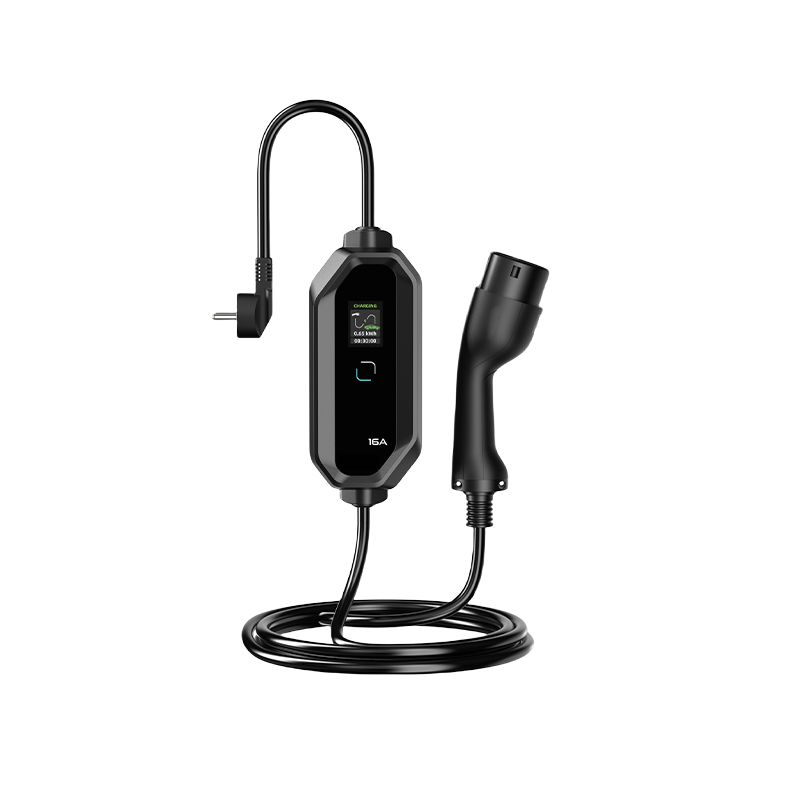
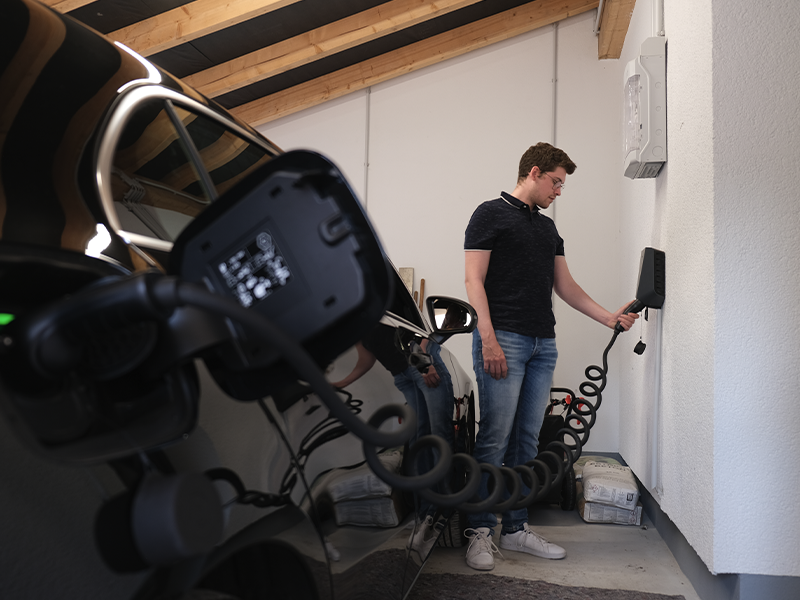
One thing that doesn’t get talked about enough is the actual physical path the cable takes from the wall to your car. When using an EV portable charger, it is incredibly easy to create a tripping hazard or, worse, leave the cable in a position where it can be pinched by a garage door or run over by another vehicle. Observationally, the weight of the “brick” or control box can also put a lot of downward stress on the wall outlet if it’s just hanging mid-air. It’s usually a good idea to use a wall-mounted hook or even a simple sturdy chair to support the weight of the unit. This prevents the plug from slowly pulling out of the socket—a common cause of arcing—and keeps the cable from becoming a tangled mess that someone might stumble over in the dark. It’s these small, physical adjustments that often make the difference between a seamless daily routine and a frustrated call to an electrician.
Conclusion
The transition to electric driving is often sold as a high-tech, seamless future, but the reality is grounded in the physical hardware sitting on your garage floor. When we look at the EV portable charger not just as a cable, but as a critical interface between a multi-thousand-dollar vehicle and a complex power grid, the necessity for safety becomes much clearer. It’s about more than just avoiding a blown fuse; it’s about ensuring that every overnight session is as uneventful as possible.
Actually, the peace of mind that comes from a well-managed setup shouldn’t be underestimated. When you follow the right protocols—checking for heat, avoiding cheap adapters, and giving the “handshake” a moment to settle—you aren’t just protecting your car; you’re future-proofing your home’s infrastructure. At the end of the day, an EV portable charger is a bridge. It bridges the gap between your car and the grid. Like any bridge, it needs to be built to code, maintained regularly, and used within its weight limits. By choosing certified hardware, respecting the limits of your home’s electrical system, and avoiding the “extension cord shortcut,” you ensure that the only thing getting boosted is your car’s range—not your stress levels. The future of transport is electric, but it only works if we keep the “electric” part safely contained within the cables.
FAQ
Can I leave my EV portable charger plugged into the wall even when not charging?
While most modern units have a very low “vampire” power draw, it is generally safer to unplug them if they won’t be used for several days. Constant exposure to the grid makes the charger more vulnerable to power surges from lightning or utility fluctuations. Plus, keeping it unplugged prevents the wall socket’s internal tension from weakening over years of constant weight.
What should I do if the EV portable charger gets wet during a storm?
If the unit was plugged in during heavy rain, it’s designed to handle the moisture. However, if it was submerged or if water got inside the handle, do not plug it into the car. Dry the exterior thoroughly with a towel and let the connector pins air-dry completely before attempting a connection. Most chargers have sensors to detect moisture “leaks,” but a little manual caution goes a long way.
Is it normal for the "brick" on the cable to get hot?
Warm is normal; hot is a red flag. Because the EV portable charger is handling a significant amount of current for hours at a time, some heat dissipation is expected. However, if the casing is too hot to hold or if you notice a “burnt plastic” smell, stop the charge immediately. This usually indicates an internal component is failing or the circuit is overloaded.



 English
  Spanish
  Portuguese
  French
  Russian
  German
  Italian