Cómo encontrar el mejor comprobador de cargadores de VE para sus necesidades
La selección de los equipos de ensayo implica equilibrar múltiples factores. Las limitaciones presupuestarias compiten con los requisitos de prestaciones. La portabilidad es importante para los técnicos de campo, pero no tanto para las pruebas de banco. Y, sinceramente, lo que funciona de maravilla para una aplicación puede resultar totalmente inadecuado para otra.
El mercado de equipos de comprobación de cargadores de vehículos eléctricos se ha ampliado considerablemente con la adopción de este tipo de vehículos. Las opciones van desde sencillos comprobadores de enchufes que cuestan menos de cien dólares hasta completos sistemas de análisis que ascienden a decenas de miles. En algún punto de ese espectro se encuentra el mejor comprobador de cargadores de VE para casos de uso específicos, aunque las recomendaciones universales siguen siendo difíciles de alcanzar.
Entender lo que hacen realmente los distintos comprobadores ayuda a reducir considerablemente las opciones. No todas las situaciones exigen un análisis exhaustivo del protocolo. A veces basta con una verificación básica de la seguridad. Otras veces, basta con una capacidad de diagnóstico completa.
Categorías de los mejores equipos de comprobación de cargadores EV
Comprobadores básicos de seguridad
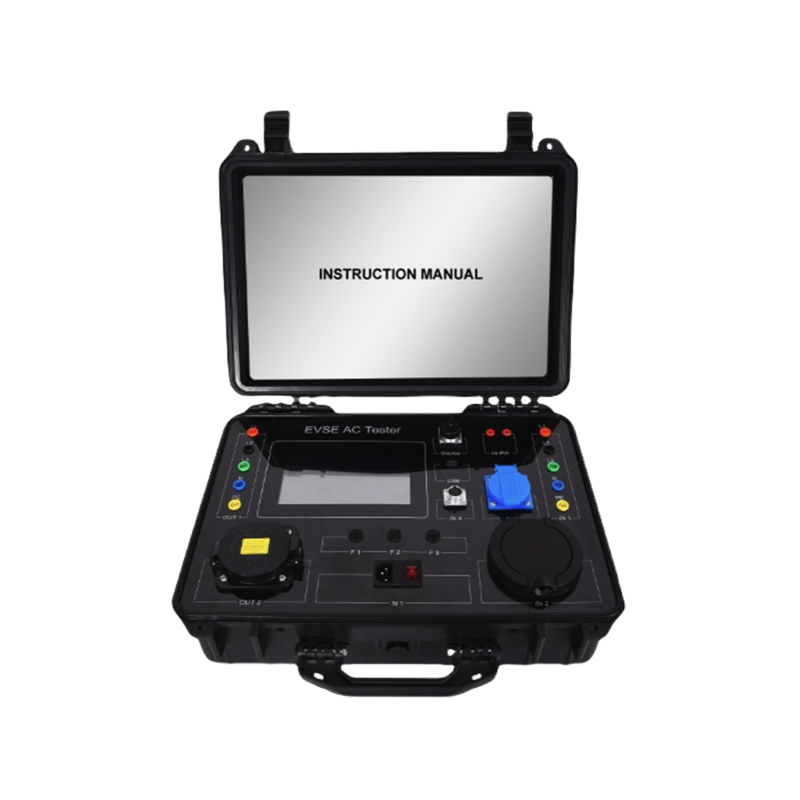
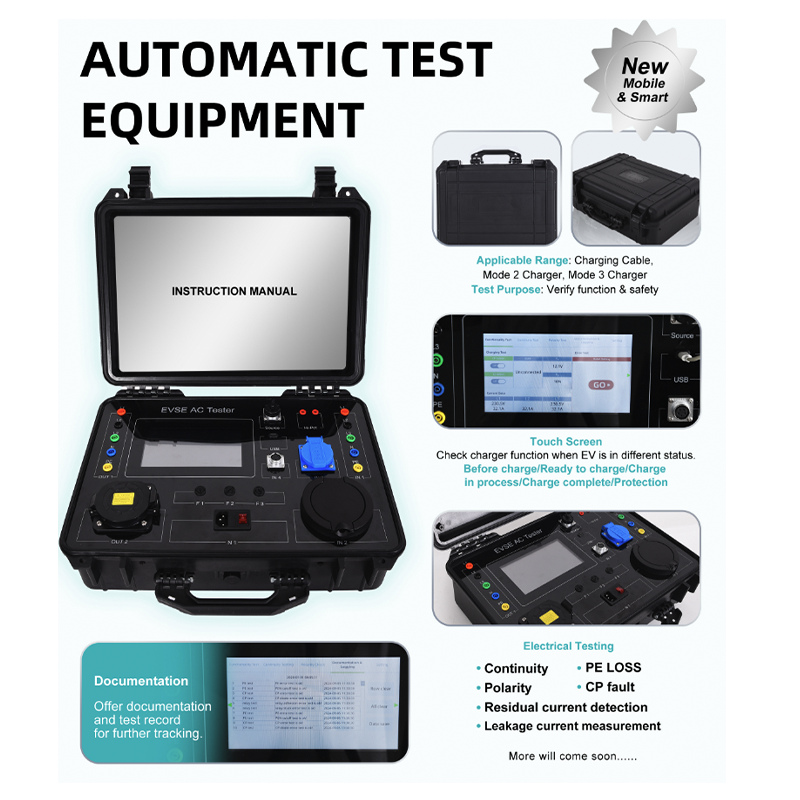
Los dispositivos de prueba de nivel básico verifican los parámetros de seguridad eléctrica fundamentales. Estas unidades comprueban la conexión a tierra, la polaridad y la integridad básica de los circuitos. No analizan los protocolos de carga ni miden las curvas de suministro eléctrico, pero confirman que las instalaciones cumplen los requisitos mínimos de seguridad.
Los probadores básicos se adaptan a varios escenarios:
- Inspección inicial de nuevas instalaciones residenciales
- Comprobación rápida antes de utilizar cargadores públicos desconocidos
- Controles de seguridad rutinarios por parte de los administradores de fincas
- Demostraciones educativas y formación
Para estas aplicaciones, gastarse miles de euros en equipos avanzados no tiene mucho sentido. Un comprobador básico de calidad realiza el trabajo adecuadamente. Sin embargo, decir que un dispositivo básico es el mejor comprobador de cargadores de VE sería tergiversar considerablemente sus capacidades.
Analizadores y simuladores de protocolos
Los equipos profesionales de gama media añaden la comprobación del protocolo de comunicación a la verificación de la seguridad. Estos dispositivos simulan la comunicación con el vehículo, lo que permite a los técnicos probar las estaciones de carga sin que haya vehículos eléctricos presentes.
Los analizadores de protocolos verifican:
1. Generación y respuesta de la señal piloto
2. Funcionalidad de detección de proximidad
3. Secuencias de transición de estados
4. Comportamientos en el tratamiento de errores
5. Calendario de cumplimiento de las normas
Esta categoría incluye muchos candidatos fuertes para la designación del mejor comprobador de cargadores de VE entre los técnicos de servicio profesionales. La combinación de pruebas de seguridad y análisis de protocolos cubre la mayoría de los requisitos de servicio de campo.
Analizadores de potencia completos
Los sistemas de pruebas de gama alta añaden funciones detalladas de medición de potencia. Estos instrumentos caracterizan el rendimiento real de la carga: estabilidad de la tensión, suministro de corriente, factor de potencia, contenido de armónicos y cálculos de eficiencia.
Este análisis exhaustivo es importante para:
- Puesta en servicio de nuevas instalaciones comerciales
- Investigación de las quejas sobre resultados
- Certificar que los equipos cumplen las especificaciones
- Aplicaciones de investigación y desarrollo
La inversión que requieren los analizadores completos restringe su público a las organizaciones con necesidades de pruebas sustanciales. Los técnicos individuales rara vez justifican ese gasto a menos que atiendan a clientes de gran volumen de forma constante.
Comparación de las mejores opciones de comprobadores de cargadores de VE
Modelos populares que merece la pena considerar
Hay varios fabricantes de equipos de ensayo bien considerados. Las comparaciones directas ayudan a ilustrar las diferencias de capacidad en función del precio.
| Modelo de comprobador | Categoría | Características principales | Precio aproximado | Lo mejor para |
|---|---|---|---|---|
| Metrel MI 3155 | Seguridad + Protocolo | Pruebas completas de EVSE, portátiles | $3,000-4,000 | Instaladores profesionales |
| Megger EVCA210 | Seguridad + Protocolo básico | Diseño robusto, interfaz intuitiva | $2,500-3,500 | Técnicos de servicio |
| Adaptador de prueba KEWTECH EVSE | Seguridad básica | Funcionamiento asequible y sencillo | $150-300 | Verificación rápida de la seguridad |
| Chauvin Arnoux CA 8345 | Analizador de potencia | Análisis detallado de la calidad de la energía | $8,000-12,000 | Análisis de ingeniería |
No se trata de una lista exhaustiva, sino de las opciones más comunes. La disponibilidad regional varía y los fabricantes lanzan modelos actualizados periódicamente. Es aconsejable comprobar la oferta actual antes de comprar, dada la continua evolución del mercado.
Características más importantes
A la hora de evaluar cuál es el mejor comprobador de cargadores de VE para aplicaciones concretas, ciertas características merecen especial atención.
Las consideraciones críticas incluyen:
- Cobertura de normas (IEC 61851, SAE J1772, variaciones regionales)
- Capacidad de ensayo de CA y CC
- Funciones de registro de datos e informes
- Actualizaciones de software y asistencia del fabricante
- Requisitos y costes de calibración
- Durabilidad física en condiciones de campo
- Duración de la batería para funcionamiento portátil
Pasar por alto cualquiera de estos factores lleva a arrepentirse de la compra. Ese comprobador aparentemente perfecto se vuelve considerablemente menos atractivo cuando la calibración cuesta $500 al año o las actualizaciones de software dejaron de hacerse hace dos años.
El mejor comprobador de cargadores de VE para cada aplicación
Pruebas de instalaciones residenciales
Los electricistas que instalan equipos de carga domésticos necesitan una verificación de seguridad fiable sin una complejidad excesiva. El mejor comprobador de cargadores de VE para trabajos residenciales equilibra la capacidad con el coste y la curva de aprendizaje.
La mayoría de las instalaciones residenciales implican carga de CA de nivel 2, relativamente sencilla en comparación con la carga rápida de CC. Los equipos que realizan pruebas de CA son adecuados para este segmento del mercado. Invertir en capacidad de pruebas de CC para trabajos exclusivamente residenciales es una pérdida de dinero.
Requisitos prácticos de las pruebas residenciales:
- Verificación de la protección contra fallos a tierra
- Confirmación de polaridad y conexión a tierra
- Pruebas básicas de señales piloto
- Medición de la resistencia de aislamiento
- Capacidad de pruebas de carga
Las unidades que cumplen estos requisitos sin excesivas características adicionales suelen representar la mejor relación calidad-precio para los electricistas orientados al sector residencial.
Aplicaciones comerciales y de flota
Las instalaciones comerciales de recarga presentan requisitos de ensayo más exigentes. Los mayores niveles de potencia, los sistemas de gestión en red y la accesibilidad pública complican las cosas. Las operaciones de flota añaden consideraciones de seguimiento de la utilización y programación del mantenimiento.
El mejor comprobador de cargadores de VE para aplicaciones comerciales suele tener un precio medio-alto. El análisis de protocolos resulta esencial a la hora de solucionar problemas comunicados por los usuarios. Las funciones de medición de potencia ayudan a verificar que las instalaciones ofrecen el rendimiento nominal.
Las organizaciones que gestionan varios centros de recarga se benefician especialmente de la estandarización de los equipos de ensayo de sus equipos técnicos. Los procedimientos coherentes y los resultados comparables requieren una instrumentación común.
Consideraciones sobre la carga rápida de CC
Las pruebas de los cargadores rápidos de CC requieren equipos especializados. Los niveles de potencia implicados -a menudo 150 kW o más- superan por completo las capacidades típicas de prueba de CA. Las cuestiones de seguridad de alta tensión añaden una complejidad que los probadores básicos simplemente no pueden abordar.
Pocas organizaciones, aparte de las empresas dedicadas al servicio de EVSE, necesitan capacidad de prueba de carga rápida de CC. La inversión en equipos es considerable y los requisitos de formación especializada añaden más costes. A menudo, subcontratar las pruebas de los cargadores rápidos de CC tiene más sentido desde el punto de vista económico que crear una capacidad interna.
En el caso de las pruebas de CC, las herramientas de diagnóstico específicas del fabricante suelen superar a los equipos de prueba genéricos. La naturaleza patentada de muchas implementaciones de carga rápida de CC limita lo que pueden lograr los comprobadores de terceros.
Consideraciones presupuestarias y evaluación del valor
Coste total de propiedad
El precio de compra sólo representa el coste inicial. Los gastos corrientes se acumulan a lo largo de la vida útil del equipo. La calibración, las suscripciones a software, los accesorios y la eventual sustitución son factores que influyen en los costes reales de propiedad.
El mejor comprobador de cargadores para VE ofrece valor durante toda su vida útil, no sólo en el momento de la compra. Los equipos más baratos, que requieren calibraciones frecuentes o carecen de soporte de software, pueden costar más a largo plazo que las alternativas de mayor calidad.
La cobertura de la garantía varía mucho de un fabricante a otro. Algunos ofrecen una amplia protección plurianual. Otros proporcionan una cobertura mínima que requiere la compra de una garantía ampliada para una protección adecuada. Estas diferencias afectan significativamente al cálculo del valor.
Si quiere saber más sobre el mejor comprobador de cargadores para vehículos eléctricos, lea ¿Qué es un comprobador de cargadores de VE?.
PREGUNTAS FRECUENTES
¿Necesitan los electricistas profesionales un comprobador de cargadores de vehículos eléctricos?
Los electricistas profesionales que realizan instalaciones de recarga de VE se benefician significativamente de un equipo de pruebas adecuado. Mientras que los equipos de pruebas eléctricas generales cumplen algunos requisitos, los comprobadores específicos para EVSE verifican los protocolos de comunicación y las funciones de seguridad específicas de la carga que las herramientas estándar no pueden evaluar. El mejor comprobador de cargadores de VE para electricistas que entran en este mercado proporciona tanto verificación de seguridad como pruebas de protocolos básicos sin un coste excesivo.
¿Con qué frecuencia deben calibrarse los comprobadores de cargadores de VE?
La mayoría de los fabricantes recomiendan una calibración anual para los equipos de ensayo de calidad profesional. Algunas aplicaciones o requisitos normativos pueden especificar intervalos más cortos. La calibración garantiza que la precisión de las mediciones se mantiene dentro de las tolerancias especificadas, lo que es especialmente importante cuando los resultados de las pruebas documentan el cumplimiento de las normas de seguridad. Descuidar la calibración socava la confianza en los resultados de las pruebas, independientemente de la capacidad original del equipo.
¿Puede un comprobador manejar equipos de carga de CA y CC?
Algunos comprobadores avanzados admiten equipos de carga tanto de CA como de CC, aunque las capacidades suelen variar según el modo. Las pruebas exhaustivas de carga rápida de CC suelen requerir equipos especializados que van más allá de lo que ofrecen las unidades combinadas. Para las organizaciones que prueban principalmente equipos de CA de nivel 2 con necesidades ocasionales de CC, pueden ser suficientes los comprobadores combinados. Las grandes cargas de trabajo de las pruebas de CC suelen requerir sistemas de prueba específicos con capacidad de CC para un análisis exhaustivo.