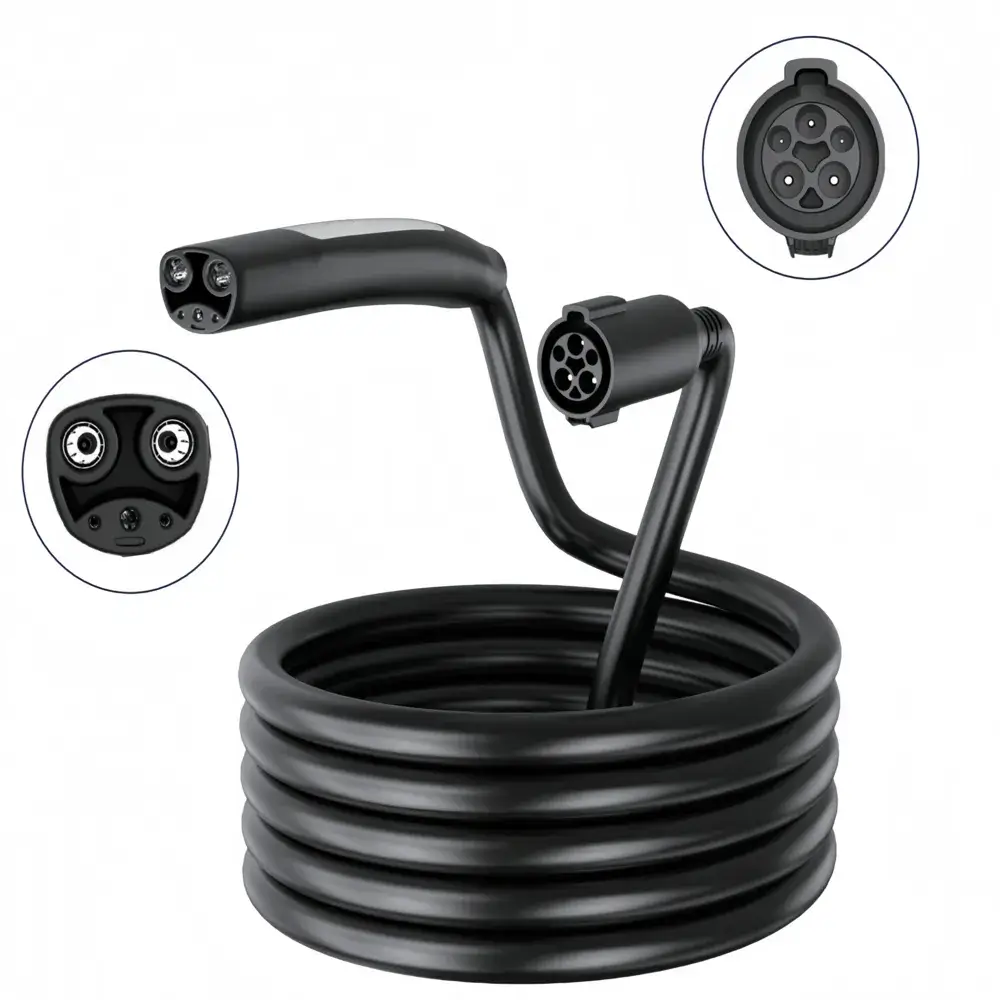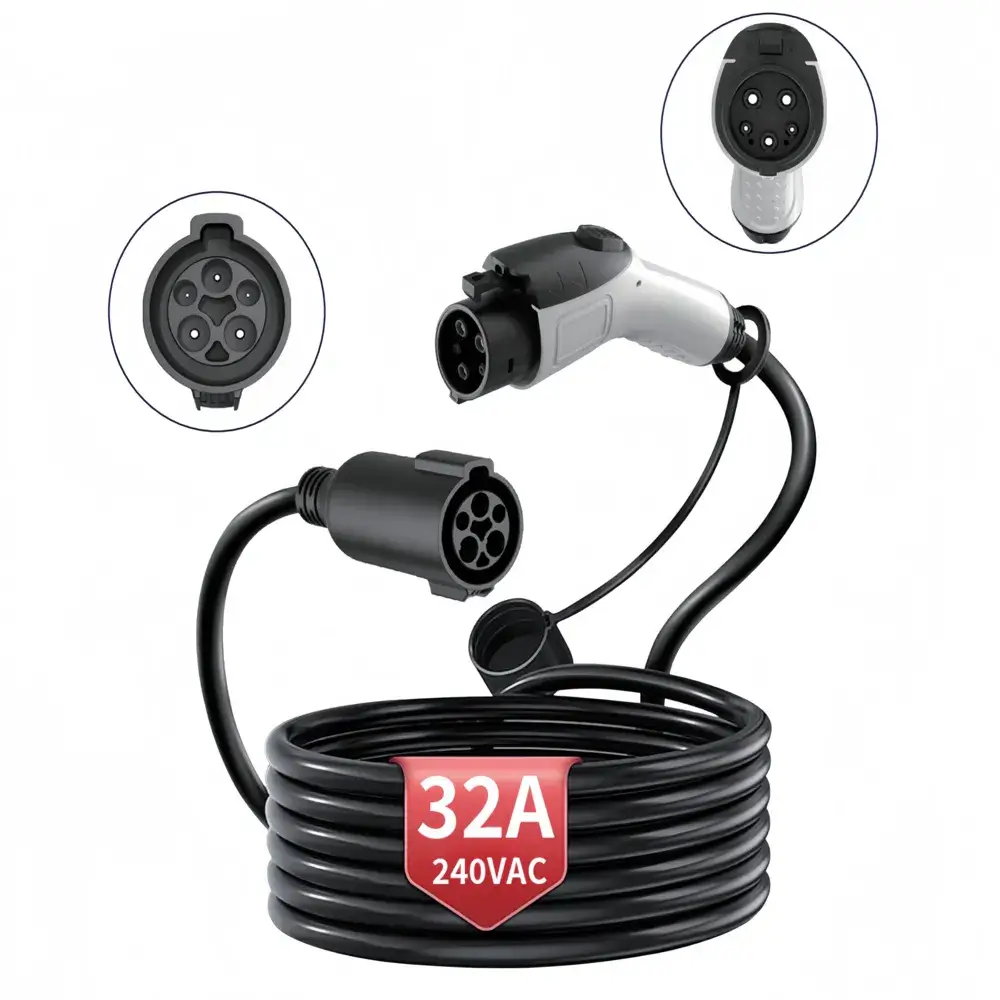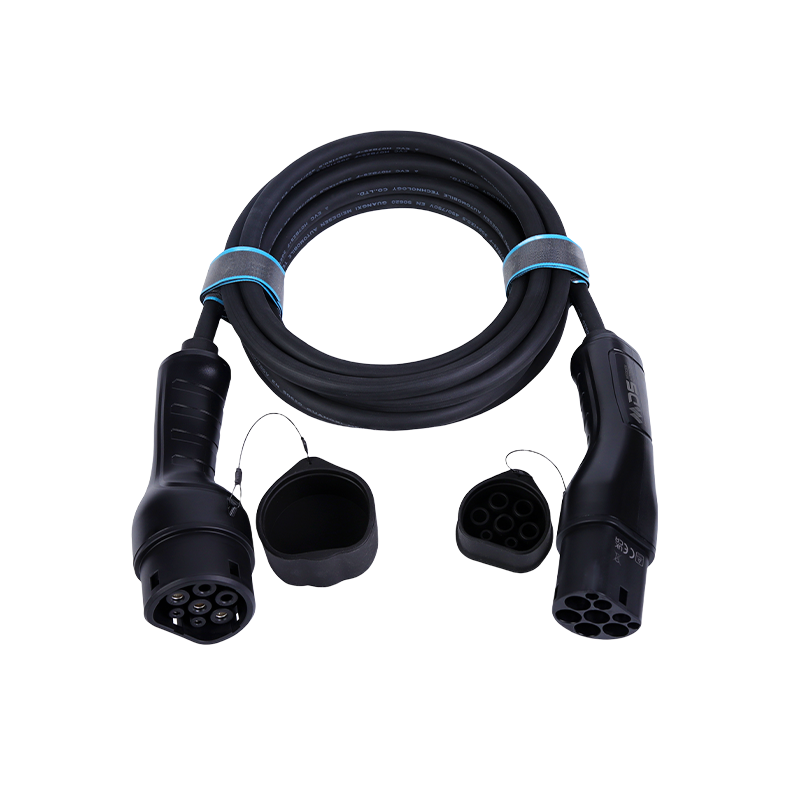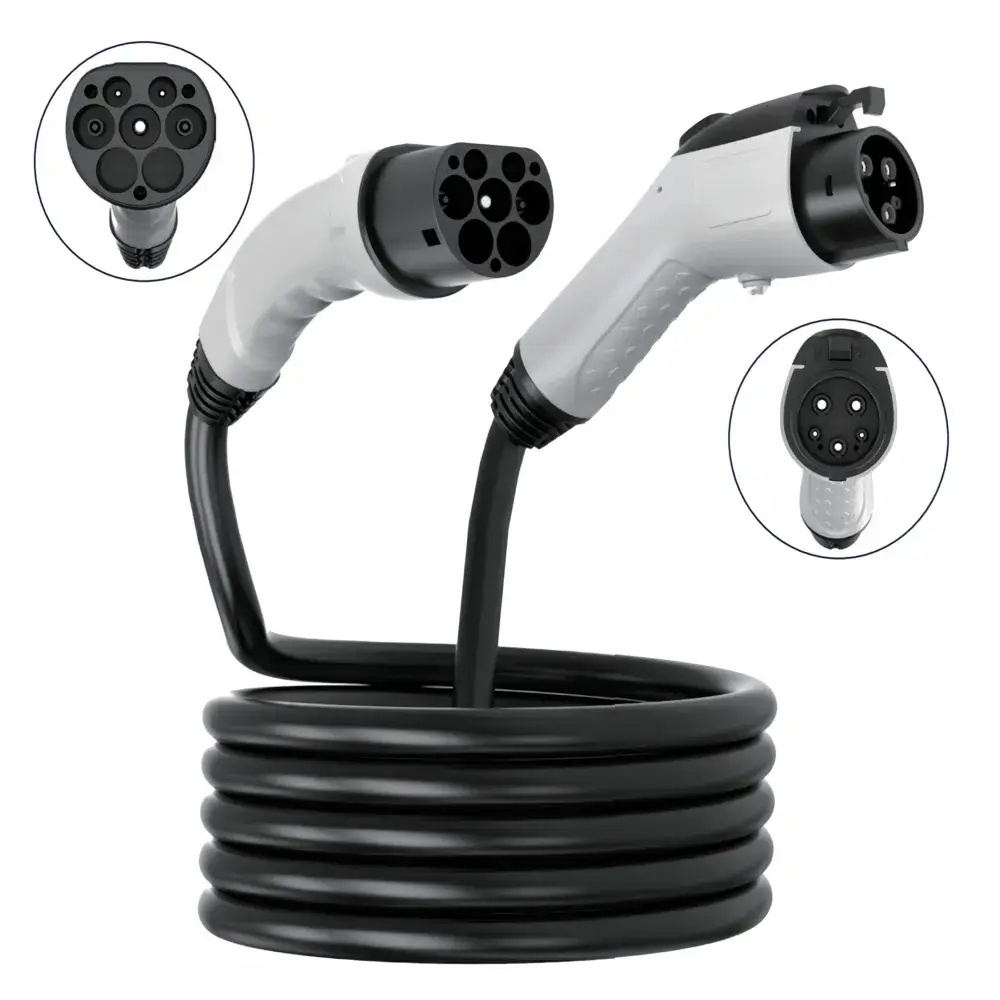
Mekel Type 2 to J1772 EV Charging Cable
The Mekel Type 2 to J1772 EV Charging Cable is a high-performance charging solution engineered to bridge charging standards across regions. It seamlessly connects the prevalent Type 2 (Mennekes) AC charging stations—common across Europe, Southeast Asia, and the Middle East—to electric vehicles equipped with the J1772 inlet, widely used in North America and Japan. Whether for international travel, vehicle import, or managing a mixed-standard fleet, this Type 2 to J1772 Charging Cable delivers a safe, efficient, and fully compliant charging experience. Its robust construction and certified safety features ensure reliable performance in diverse global environments, making it the ideal bridge between different charging ecosystems.
How Type 2 to J1772 EV Charging Cable Works
- The Type 2 male plug connects to the AC charging station.
- The J1772 female plug connects to the vehicle inlet.
- The cable supports regulated power delivery and communication between the EV and the charger, ensuring safe charging and fault detection.
Why Choose Type 2 to J1772 EV Charging Cable?
Certified Safety
- Flame-retardant thermoplastic housing rated UL94V-0
- IP55 waterproof protection when connected
- >10,000 plug cycles for long-term durability
- Built with silver-plated copper alloy conductors for optimal conductivity
All-in-One Integrated Design
- Rated for 16A / 32A single-phase, supporting up to 250V AC
- Operates in extreme temperatures from –30°C to +50°C, suitable for global deployment
Personnalisation flexible
- Options for laser-engraved logos, custom lengths, colors, and packaging
- Backed by a 2-year warranty and supported by Mekel’s global delivery network
Market Compatibility
- Ideal for J1772 EVs (e.g., Nissan Leaf, Chevrolet Bolt, Toyota Prius Plug-in) operating in Europe, Southeast Asia, and the Middle East
- Compatible with Type 2 AC charging stations
- Not suitable for DC rapid charging — designed exclusively for AC fast charging
Parameter of Type 2 to J1772 EV Charging Cable
| Specification | Détails |
|---|---|
| Courant nominal | 16 A / 32 A (Single Phase) |
| Tension nominale | 250 V AC |
| Contact Resistance | ≤ 0.5 mΩ |
| Flame Retardant Rating | UL94 V-0 |
| Mechanical Life | > 10,000 plug cycles |
| Waterproof Rating | IP54 (when connected) |
| Housing Material | Thermoplastique |
| Conductor Material | Silver-plated copper alloy |
| Température de fonctionnement | –30 °C to +50 °C |
| Cable Length | 5 000 ±100 mm |
Application

Public Use
Critical for public charging networks aiming for inclusivity. Municipalities, shopping centers, and tourist destinations can deploy this EV Charging Cable as an accessory at their Type 2 charging stations. It ensures that travelers and drivers of imported J1772 vehicles are never stranded, providing reliable charging access and improving the overall utility of public charging infrastructure.

Residential Use
This Type 2 to J1772 EV Charging Cable is essential for homeowners or residents with J1772-inlet vehicles living in regions where Type 2 is the standard. Whether in a private house or an apartment building equipped with a Type 2 wallbox, this cable provides the crucial link, enabling convenient overnight or daily charging at home without requiring a costly charger replacement.

Commercial Use
Ideal for businesses serving international clients or operating mixed fleets. Hotels, corporate offices, and rental car companies can use this Type 2 to J1772 Cable to accommodate guests or employees driving North American or Japanese EVs. It transforms a standard Type 2 charging point into a globally compatible facility, enhancing service and accessibility for a wider customer base.
Centre d'aide
FAQ
Q1: Which electric vehicles is this EV charging cable compatible with?
A: This Type 2 to J1772 Cable is fully compatible with all Battery Electric Vehicles (BEVs) and Plug-in Hybrid Electric Vehicles (PHEVs) that use the standard J1772 AC charging inlet, such as the Nissan Leaf, Chevrolet Bolt, Toyota Prius Plug-in, and many others.
Q2: In which regions can I use this Type 2 to J1772 cable?
A: You can use it in any region with Type 2 (Mennekes) socket-based AC charging stations, which primarily includes most of Europe, the UK, Australia, Southeast Asia, and the Middle East. It is not suitable for DC fast chargers (like CCS Combo 2) or stations with permanently attached cables.
Q3: How do I choose between the 16A and 32A specifications?
A: The 32A specification is recommended as it supports higher charging power (up to ~7.4 kW single-phase), offers broader charger compatibility, and enables faster charging. The 16A option is suitable for scenarios with lower power requirements or where budget is a primary concern.
Q4: Can this Type 2 to J1772 charging cable be used for DC fast charging?
A: Absolutely not. This is an EV Charging Cable designed exclusively for Alternating Current (AC) charging. DC Fast Charging requires completely different connectors (e.g., CCS Combo 1/2) and dedicated cables with more complex internal structures.
Q5: Does using this Type 2 to J1772 adapter cable affect charging speed or safety?
A: No. The Mekel Type 2 to J1772 EV Charging Cable is manufactured to the highest safety standards using premium conductors (silver-plated copper alloy) to minimize resistance and voltage drop. It will deliver the maximum safe AC charging power available from the station, as supported by your vehicle, without becoming a bottleneck for speed or safety.
Guides dont vous pourriez avoir besoin
Pourquoi tous les câbles de recharge pour VE ne fonctionnent pas avec tous les chargeurs
Les véhicules électriques (VE) ne sont plus une innovation marginale : ils sont devenus courants. Avec des millions de nouveaux VE sur les routes en 2024 et 2025, l'une des questions les plus fréquemment posées par les nouveaux conducteurs de véhicules électriques est de savoir s'ils ont besoin d'un véhicule électrique ou non.
Pourquoi les entreprises ont-elles encore besoin de chargeurs portables pour VE à l'ère des superchargeurs ?
In July 2025, Chinese mobility giant DiDi unveiled a groundbreaking 1600kW EV supercharger—setting a new benchmark in electric vehicle charging technology. With the ability to recharge compatible EVs in mere
Comment choisir un chargeur portable fiable:A Guide pour les acheteurs B2B
In a recent interview, Harry Bajaj, founder of EV tech firm Mobec Innovation, stressed the urgent need to address “range anxiety” through flexible, mobile charging solutions. His #PledgeForChange campaign calls