
If you’ve recently switched to an electric vehicle (EV), one of the first things you’ll need is a reliable EV charging cable. With many options on the market, it’s easy to feel overwhelmed. The right electric car charging cables can make daily charging faster, safer, and more convenient. This guide walks you through the key points to help you make an informed choice.
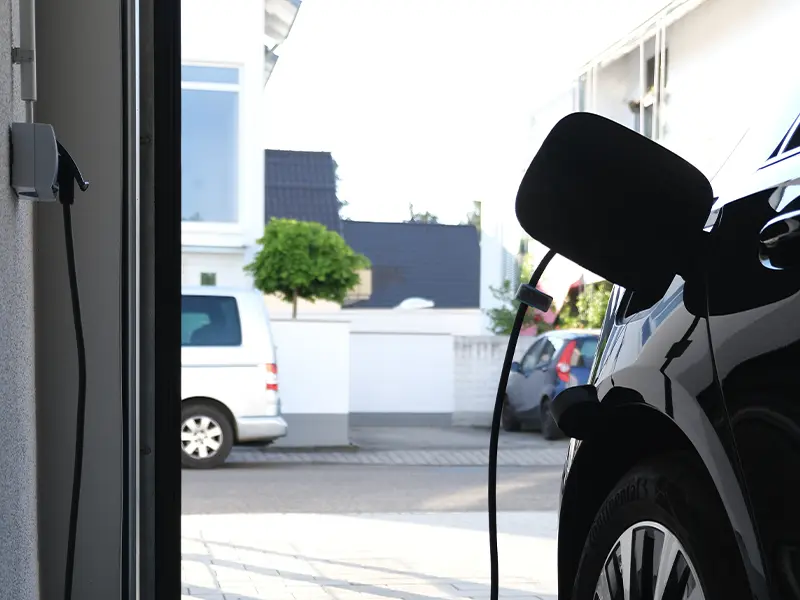
Check Your EV Charging Cable Type
The first step is to identify your EV’s connector type. Most EVs in Europe now use a Type 2 EV charging cable, such as Type 2 to Type 2 charging cable . However, some older models and vehicles from Asia may still use Type 1 charging cable.
Check the manual of your vehicle or the port itself to avoid any incompatibility. If you are going to use public AC chargers or a home wallbox, then choose the charging cable type appropriately.
Choose the Right Power Rating
EV Charging cables are mostly rated at 16 amps (A) or 32A; 16A for slower charging, usually up to 3.6 kW most often, and 32A for faster charging typically up to 7.2 kW for single-phase or 22 kW for three-phase installations.
If uncertain or plan to upgrade the home charger later, it would be prudent to opt for 32A EV charging cables, offering more flexibility and generally being backward compatible with lower-powered EV chargers.
Pick a Suitable Length
Different lengths are available for EV charging cables, typically between 5 meters and 10 meters; the appropriate length would depend on how far the car is parked from the charging point.
A 5-meter cable would be long enough if you were going to hang the EV charging cable on a garage wall. But for outdoor or shared spaces, where cars may be parked farther from the socket, then 7m or 10m would give more flexibility. Do not go for unnecessarily long EV charging cables—they are bulkier to store and can be a trip hazard.
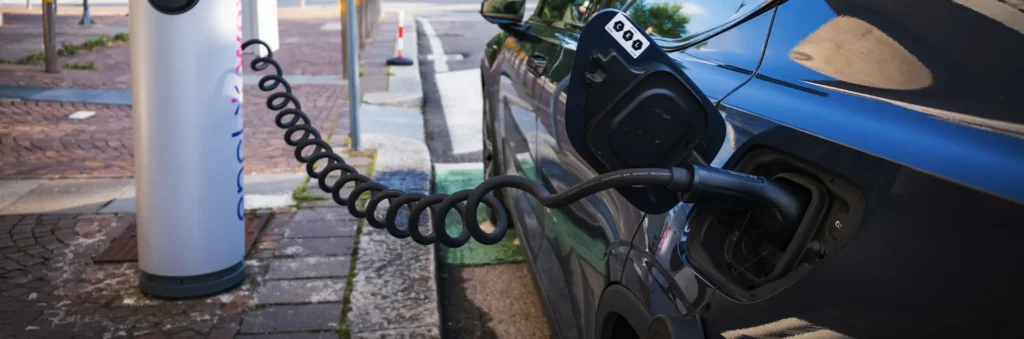
Use Mode 3 for Public/Home Charging
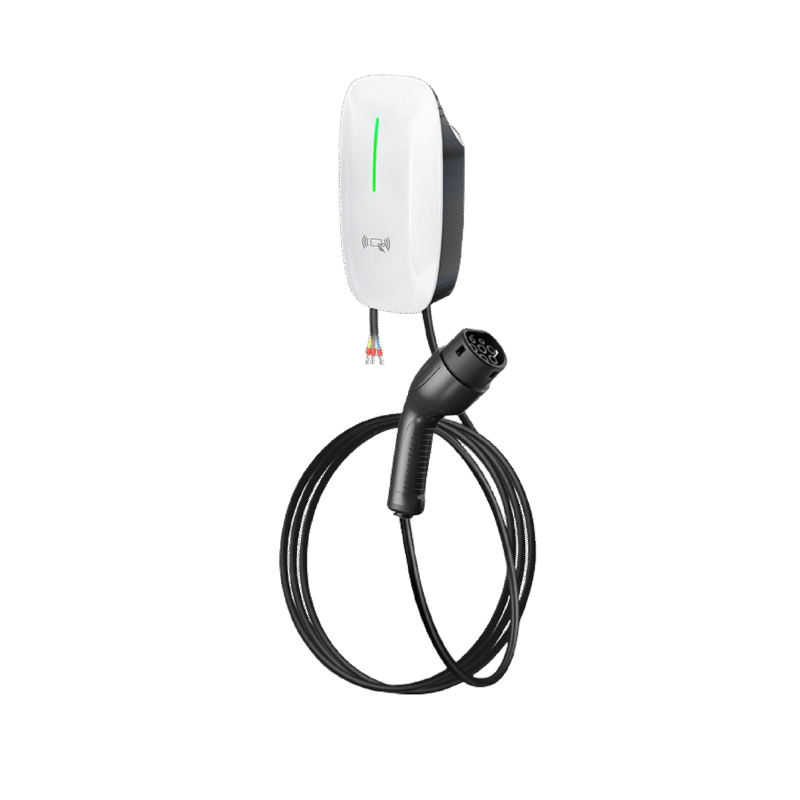
Understanding charging modes is crucial. For regular home and public charging, a Mode 3 EV charging cable is recommended. It connects your EV directly to a dedicated wallbox or public AC charger and provides faster and safer charging.
In contrast, Mode 2 EV charging cables plug into standard household outlets. While convenient for emergencies, they’re slower and not ideal for daily use. Mode 3 EV charging cable is now the norm across most public stations in Europe.
Focus on Safety and Durability
Your charging cable will be exposed to various weather conditions and repeated handling, so quality matters. Look for certifications like CE, TÜV, or other recognized safety marks. A high IP rating (e.g., IP65 or higher) ensures the cable is weatherproof and suitable for outdoor use.
Reinforced cable jackets, solid plug construction, and good strain relief at both ends are also signs of a well-built product. Investing in a quality EV charging cable now can prevent problems down the line.
Conclusion
Choosing the right EV charging cable isn’t complicated once you understand the basics: match your plug type, choose the right power rating and length, go with Mode 3 for regular use, and prioritize safety. A good EV charging cable isn’t just a tool—it’s part of your everyday driving experience. Selecting the right one ensures smoother, safer, and more efficient charging every time you plug in.
FAQ
Can I use a 32A EV charging cable with a 16A charger?
Yes. A 32A cable will work with a 16A charger, though the charging speed will be limited by the lower current. It’s a future-proof choice.
What’s the difference between Type 1 and Type 2 EV charging cable?
Type 1 EV charging cable is mostly found in older or US/Asian vehicles. Type 2 EV charging cable is the standard across Europe and supports faster charging on three-phase power.
Is it safe to leave the electric car charging cable outside?
Yes, if the electric car charging cable has a high IP rating and is certified for outdoor use. Always check the product label for weatherproof ratings like IP65 or above.
Can I use my EV charging cable at public stations?
Yes, if it’s a Mode 3 electric car charging cable with the correct plug type. Most public AC chargers in Europe require you to bring your own cable.


 French
  English
  Spanish
  Portuguese
  Russian
  German
  Italian