
Electric vehicles are getting more popular each year. Many business owners think a Estación de carga comercial para vehículos eléctricos is a good idea. Smart leaders stay ahead by trying new charging deployment ideas.
EV Charging Stations Market
Growth Trends
The commercial EV charging sector is experiencing substantial expansion, fueled by rising EV ownership and the demand for accessible, efficient charging infrastructure. Retailers, office complexes, and other commercial entities are integrating charging stations to attract customers, extend dwell times, and increase overall revenue. Early investment in this infrastructure positions businesses to capitalize on emerging opportunities as market demand intensifies.
Tip: Business can observe developments in local areas for identifying best locations for installation of new EV charging stations.
Policy Drivers
Governmental policies play a pivotal role in shaping the market. Incentives such as tax credits and rebates reduce the financial barriers to installation, while regulations promoting clean energy and emission reductions encourage widespread EV adoption. Businesses that align with these initiatives not only comply with regulatory requirements but also strengthen their public image as environmentally responsible entities.
Competition
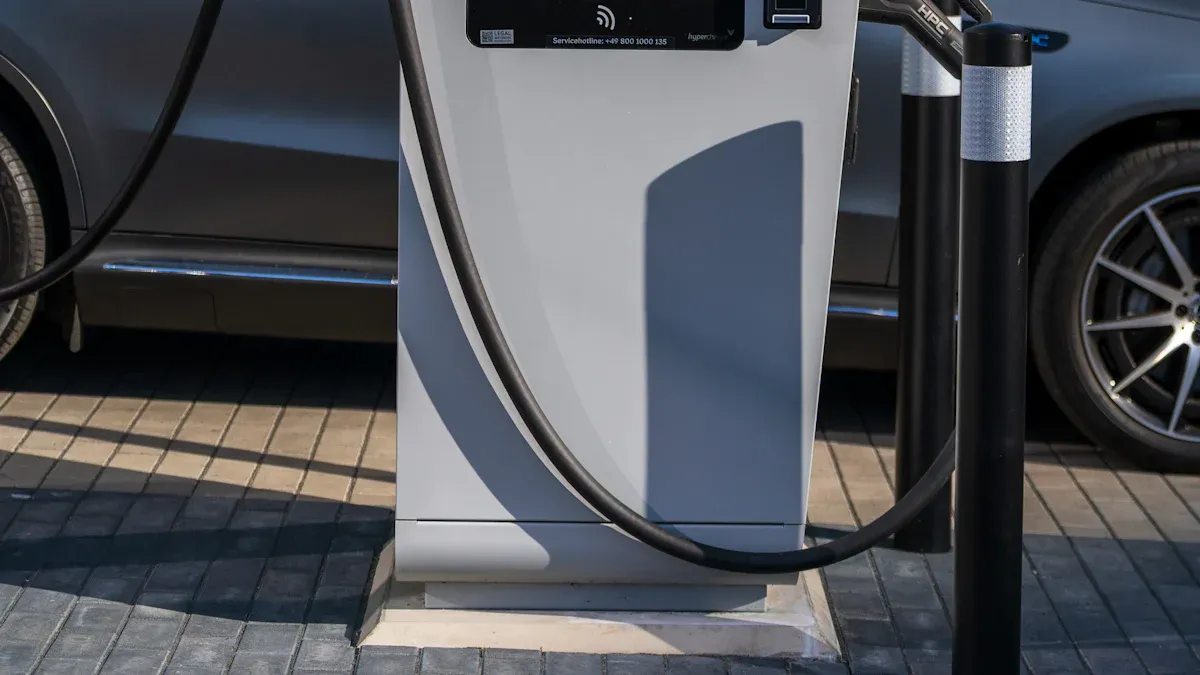
As the market matures, competition among EV charging station providers is intensifying. Key differentiators include charging speed, integration of intelligent features, customer loyalty programs, and strategic partnerships. To thrive, businesses must prioritize reliability, technological innovation, and collaborative efforts with local stakeholders, adapting proactively to regulatory and market shifts.
To be different, businesses try to make their ev charging stations special. They may add extra services or work with other companies. Some have loyalty programs or deals for people who use the stations a lot. Others make sure their stations are easy to use and always work.
Ways businesses compete in the EV charging stations market:
- Provide fast and steady charging
- Integrate smart features for charging stations
- Incentivize customers through loyalty programs
- Strategic partnerships with local businesses
Types of Commercial EV Charging Stations
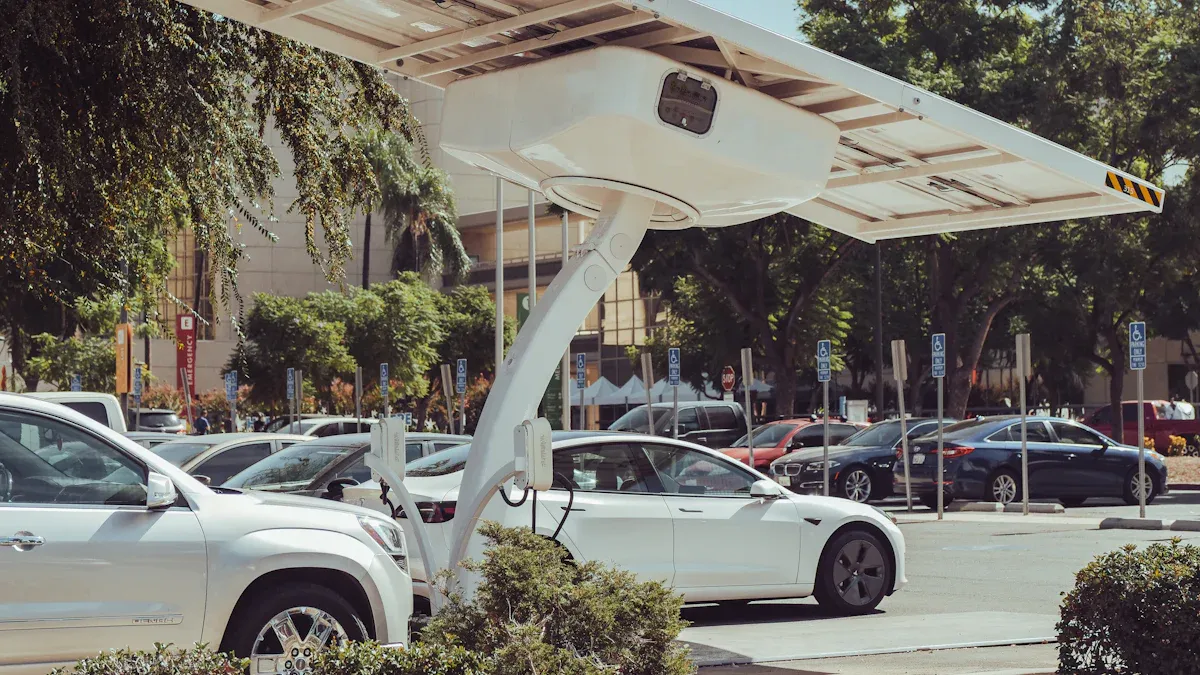
Selecting the appropriate charging technology depends on factors such as location, anticipated usage, and infrastructure capabilities. The primary options include Level 2 chargers, DC fast chargers, and smart charging systems.
Cargadores de nivel 2
Level 2 chargers are widely deployed in commercial environments, including parking facilities, workplaces, and retail centers. They utilize standard electrical systems to deliver charging sessions typically lasting several hours. Advantages encompass compatibility with existing infrastructure, support for sustainability goals, and the ability to attract and retain customers. These chargers offer a cost-effective, scalable solution for routine charging needs.
Benefits of Level 2 charging:
- Good for daily usage
- Compatible with most existing infrastructure
- Attracts consumers who requires simplified methods of charging
Note: Businesses can easily scale with level 2 charging stations by adding additional units according to demand
Cargadores rápidos de CC
DC fast chargers cater to high-traffic locations, such as highways and urban hubs, where rapid recharging is essential. Although they necessitate specialized electrical infrastructure, they appeal to users requiring minimal downtime. Key attributes include accelerated charging times, reduced emissions through efficient energy delivery, and enhanced user convenience.
| DC Fast Chargers Features | Descripción |
| Rapid Charging | Enables quick vehicle recharges |
| Advanced Infrastructure | Requires dedicated electrical systems |
| Sustainability Support | Contributes to lower carbon emissions |
Smart Charging Solutions
Smart chargers incorporate networked technologies for enhanced functionality, including remote monitoring, usage analytics, dynamic pricing, and energy optimization. These systems facilitate efficient resource allocation, minimize operational waste, and support seamless upgrades, making them ideal for data-driven business operations. For example, a charging station for BMW can integrate with smart systems to provide both efficient energy use and premium customer experience.
Features of smart charging solutions:
- Remote monitoring and control
- Dynamic pricing model
- Usage data collection
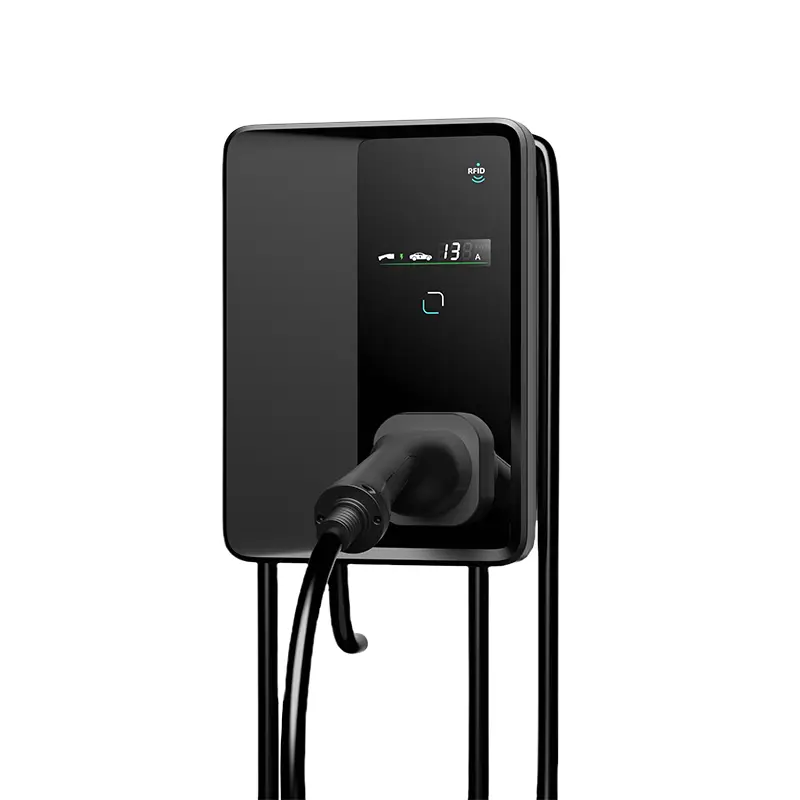
Estación de carga en serie Mekel 7-22kW para VE BMW
Business Models for EV Charging Stations
Effective monetization strategies are crucial for maximizing returns on investment in EV charging infrastructure. The right choices of ownership and pricing models can help business excel in the EV charging market.
Ownership Options:
- Outright ownership: Provides full control but entails higher upfront costs and risks
- Leasing or third-party management: which lowers initial expenses at the expense of some autonomy
- Asociaciones: which distribute costs, risks, and revenues among collaborators.
Tip: Tip: A business should consider future operations in consideration of ownership options. Full ownership has the highest potential in generating revenue and underlying profit, but partnerships or leasing can be safer and easier to start. This guide will cover key points: Retos de la construcción de una estación de carga comercial.
Estrategias de fijación de precios
Pricing is very important for any EV charging station business model. The right pricing can help bring in more drivers, make more money, and stay ahead of others. There are two main ways to set prices: pay-per-use and subscription.
Pay-Per-Use
This model charges users based on session duration or energy consumption, making it suitable for high-volume locations.
Advantages:
- Flexibility in adjusting rates for peak periods
- Simple to set up
Challenges:
- Fluctuating revenue
- Limited customer retention.
Subscription
Subscription-based pricing involves recurring fees for unlimited or tiered access, and is effective for frequent users.
Advantages:
- Steady stream of predictable income
- Fosters user loyalty
Challenges:
- Requires robust marketing efforts
- Less viable in low-demand areas
| Pricing Model | Ideal Applications | Revenue Predicatability | Customer Loyalty |
| Pay-Per-Use | High Traffic Sites | Bajo | Bajo |
| Subscription | Regular Client Base | Alta | Alta |
Value-Added Services
To differentiate offerings, businesses can integrate supplementary features such as loyalty rewards, mobile applications for reservations, dedicated parking spaces, bundled promotions, and tailored solutions for fleet operators. These enhancements transform charging stations into comprehensive service ecosystems, driving customer engagement and long-term growth.
Business Benefits of EV Charging Stations

Customer Attraction
Installing charging stations draws EV owners, boosting foot traffic, prolonging visits, and elevating sales. Strategic promotion through signage and digital platforms amplifies visibility and maximizes impact.
Brand Reputation
Commitment to EV infrastructure signals environmental stewardship, fostering customer trust, facilitating business-to-business collaborations, and garnering community endorsement.
| Beneficio | Business Impact |
| Building on Brand Image | Enhances Customer Trust and Loyalty |
| B2B Partnership | Attracts Aligned Collaborators |
| Community Support | Builds Local Goodwill |
Employee Perks
Providing on-site charging improves employee satisfaction, aids in talent acquisition and retention, and underscores a progressive organizational culture.
Conclusión
Commercial EV charging stations represent a strategic opportunity for businesses to generate revenue, advance sustainability, and achieve operational efficiencies. By carefully assessing charger types, business models, and market dynamics, organizations can position themselves for success in this rapidly growing sector. To look further ahead, this guide will cover key points: Guide to Commercial EV Charging Station Installation.




 Spanish
  English
  Portuguese
  French
  Russian
  German
  Italian