
Finding the Best EV Charger Tester for Your Needs
Selecting testing equipment involves balancing multiple factors. Budget constraints compete with feature requirements. Portability matters for field technicians but less so for bench testing. And honestly, what works brilliantly for one application might prove completely wrong for another.
The market for EV charger testing equipment has expanded considerably alongside electric vehicle adoption. Options range from simple socket testers costing under a hundred dollars to comprehensive analysis systems running into tens of thousands. Somewhere in that spectrum exists the best EV charger tester for specific use cases—though universal recommendations remain elusive.
Understanding what different testers actually do helps narrow choices considerably. Not every situation demands comprehensive protocol analysis. Sometimes basic safety verification suffices. Other times, nothing less than complete diagnostic capability will do.
Categories of Best EV Charger Tester Equipment
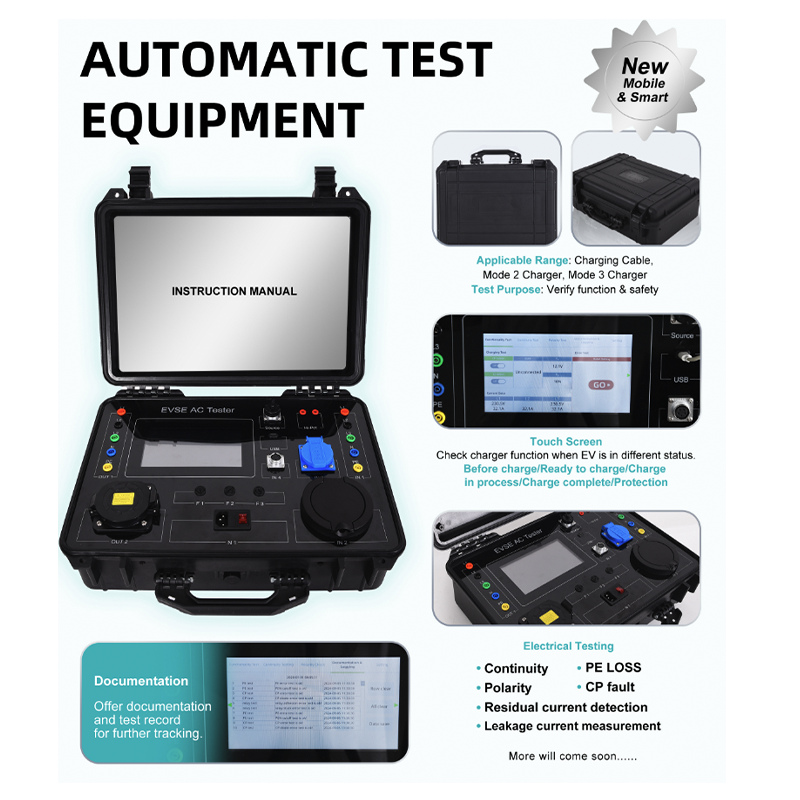
Basic Safety Testers
Entry-level testing devices verify fundamental electrical safety parameters. These units check grounding, polarity, and basic circuit integrity. They won’t analyze charging protocols or measure power delivery curves, but they confirm installations meet minimum safety requirements.
Basic testers suit several scenarios:
• Initial inspection of new residential installations
• Quick verification before using unfamiliar public chargers
• Routine safety checks by property managers
• Educational demonstrations and training
For these applications, spending thousands on advanced equipment makes little sense. A quality basic tester handles the job adequately. However, calling any basic device the best EV charger tester overall would misrepresent capabilities significantly.
Protocol Analyzers and Simulators
Mid-range professional equipment adds communication protocol testing to safety verification. These devices simulate vehicle-side communication, allowing technicians to test charging stations without actual EVs present.
Protocol analyzers verify:
1. Pilot signal generation and response
2. Proximity detection functionality
3. State transition sequences
4. Error handling behaviors
5. Timing compliance with standards
This category includes many strong candidates for best EV charger tester designation among professional service technicians. The combination of safety testing and protocol analysis covers most field service requirements.
Comprehensive Power Analyzers
High-end testing systems add detailed power measurement capabilities. These instruments characterize actual charging performance—voltage stability, current delivery, power factor, harmonic content, and efficiency calculations.
Such comprehensive analysis matters for:
• Commissioning new commercial installations
• Investigating performance complaints
• Certifying equipment meets specifications
• Research and development applications
The investment required for comprehensive analyzers restricts their audience to organizations with substantial testing needs. Individual technicians rarely justify such expenditure unless serving high-volume clients consistently.
Comparing the Best EV Charger Tester Options
Popular Models Worth Considering
Several manufacturers produce well-regarded testing equipment. Direct comparisons help illustrate capability differences across price points.
| Tester Model | Categoria | Caraterísticas principais | Approximate Price | Melhor para |
|---|---|---|---|---|
| Metrel MI 3155 | Safety + Protocol | Comprehensive EVSE testing, portable | $3,000-4,000 | Professional installers |
| Megger EVCA210 | Safety + Basic Protocol | Rugged design, intuitive interface | $2,500-3,500 | Field service technicians |
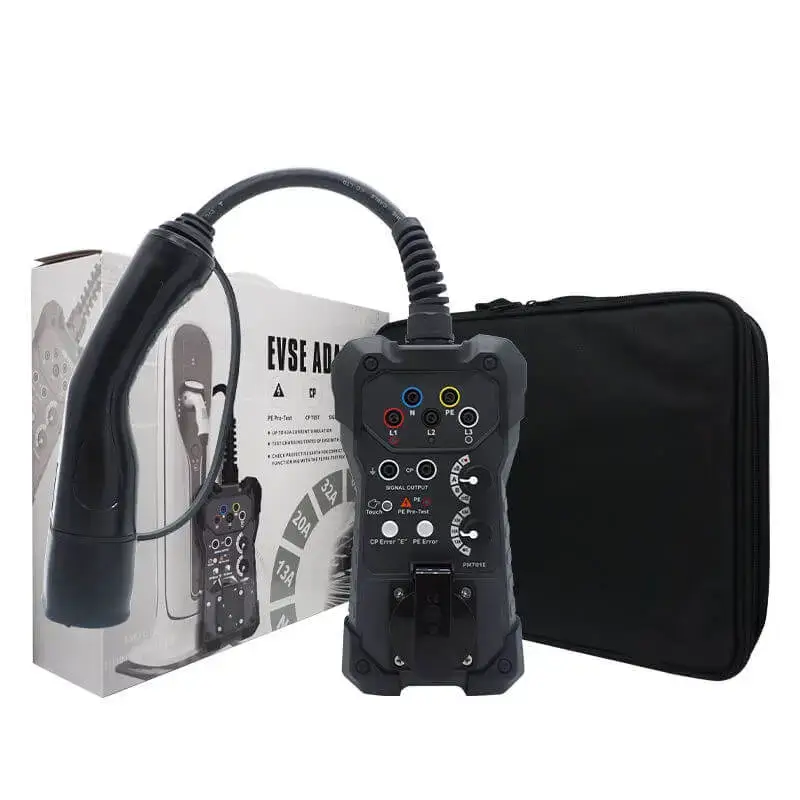
| KEWTECH EVSE Test Adapter | Basic Safety | Affordable, simple operation | $150-300 | Quick safety verification |
| Chauvin Arnoux CA 8345 | Power Analyzer | Detailed power quality analysis | $8,000-12,000 | Engineering analysis |
These represent commonly encountered options rather than exhaustive listings. Regional availability varies and manufacturers release updated models periodically. Checking current offerings before purchasing makes sense given ongoing market evolution.
Features That Matter Most
When evaluating which represents the best EV charger tester for particular applications, certain features deserve special attention.
Critical considerations include:
• Standards coverage (IEC 61851, SAE J1772, regional variations)
• AC and DC testing capability
• Data logging and reporting functions
• Software updates and manufacturer support
• Calibration requirements and costs
• Physical durability for field conditions
• Battery life for portable operation
Overlooking any of these factors leads to purchasing regret. That seemingly perfect tester becomes considerably less appealing when calibration costs $500 annually or software updates stopped two years ago.
Matching the Best EV Charger Tester to Applications
Residential Installation Testing
Electricians installing home charging equipment need reliable safety verification without excessive complexity. The best EV charger tester for residential work balances capability against cost and learning curve.
Most residential installations involve Level 2 AC charging—relatively straightforward compared to DC fast charging. Equipment handling AC testing adequately serves this market segment well. Investing in DC testing capability for exclusively residential work wastes money.
Practical residential testing requirements:
- Ground fault protection verification
- Polarity and grounding confirmation
- Basic pilot signal testing
- Insulation resistance measurement
- Load testing capability
Units meeting these requirements without excessive additional features often represent best value for residential-focused electricians.
Commercial and Fleet Applications
Commercial charging installations present more demanding testing requirements. Higher power levels, networked management systems, and public accessibility all complicate matters. Fleet operations add utilization tracking and maintenance scheduling considerations.
The best EV charger tester for commercial applications typically falls in the mid-to-upper price range. Protocol analysis becomes essential when troubleshooting user-reported problems. Power measurement capabilities help verify installations deliver rated performance.
Organizations managing multiple charging locations particularly benefit from standardized testing equipment across their technician teams. Consistent procedures and comparable results require common instrumentation.
DC Fast Charging Considerations
Testing DC fast chargers demands specialized equipment. The power levels involved—often 150kW or higher—exceed typical AC testing capabilities entirely. High-voltage safety concerns add complexity that basic testers simply cannot address.
Few organizations outside dedicated EVSE service companies need DC fast charging test capability. The equipment investment proves substantial and specialized training requirements add further costs. Outsourcing DC fast charger testing often makes more economic sense than building internal capability.
For those requiring DC testing capability, manufacturer-specific diagnostic tools often outperform generic test equipment. The proprietary nature of many DC fast charging implementations limits what third-party testers can accomplish.
Budget Considerations and Value Assessment
Total Cost of Ownership
Purchase price represents only initial cost. Ongoing expenses accumulate throughout equipment life. Calibration, software subscriptions, accessories, and eventual replacement all factor into true ownership costs.
The best EV charger tester delivers value across its entire service life—not just at purchase. Cheaper equipment requiring frequent calibration or lacking software support may cost more long-term than higher-quality alternatives.
Warranty coverage varies significantly between manufacturers. Some offer comprehensive multi-year protection. Others provide minimal coverage requiring extended warranty purchases for adequate protection. These differences affect value calculations meaningfully.
If you want to know more about best EV charger tester, please read O que é um aparelho de teste de carregadores de veículos eléctricos.
FAQ
Do professional electricians need an EV charger tester?
Professional electricians performing EV charging installations benefit significantly from appropriate testing equipment. While general electrical test equipment handles some requirements, EVSE-specific testers verify communication protocols and charging-specific safety features that standard tools cannot assess. The best EV charger tester for electricians entering this market provides both safety verification and basic protocol testing without excessive cost.
How often should EV charger testers be calibrated?
Most manufacturers recommend annual calibration for professional-grade testing equipment. Some applications or regulatory requirements may specify shorter intervals. Calibration ensures measurement accuracy remains within specified tolerances—particularly important when test results document compliance with safety standards. Neglecting calibration undermines confidence in test results regardless of how capable the equipment was originally.
Can one tester handle both AC and DC charging equipment?
Some advanced testers accommodate both AC and DC charging equipment, though capabilities differ between modes typically. Comprehensive DC fast charging testing generally requires specialized equipment beyond what combination units provide. For organizations testing primarily AC Level 2 equipment with occasional DC needs, combination testers may suffice. Heavy DC testing workloads usually demand dedicated DC-capable test systems for thorough analysis.


 Portuguese
  English
  Spanish
  French
  Russian
  German
  Italian