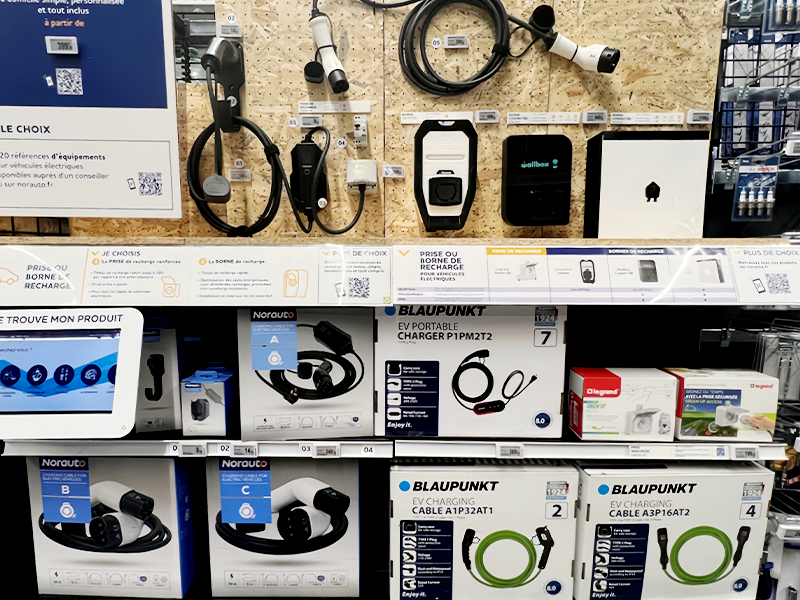
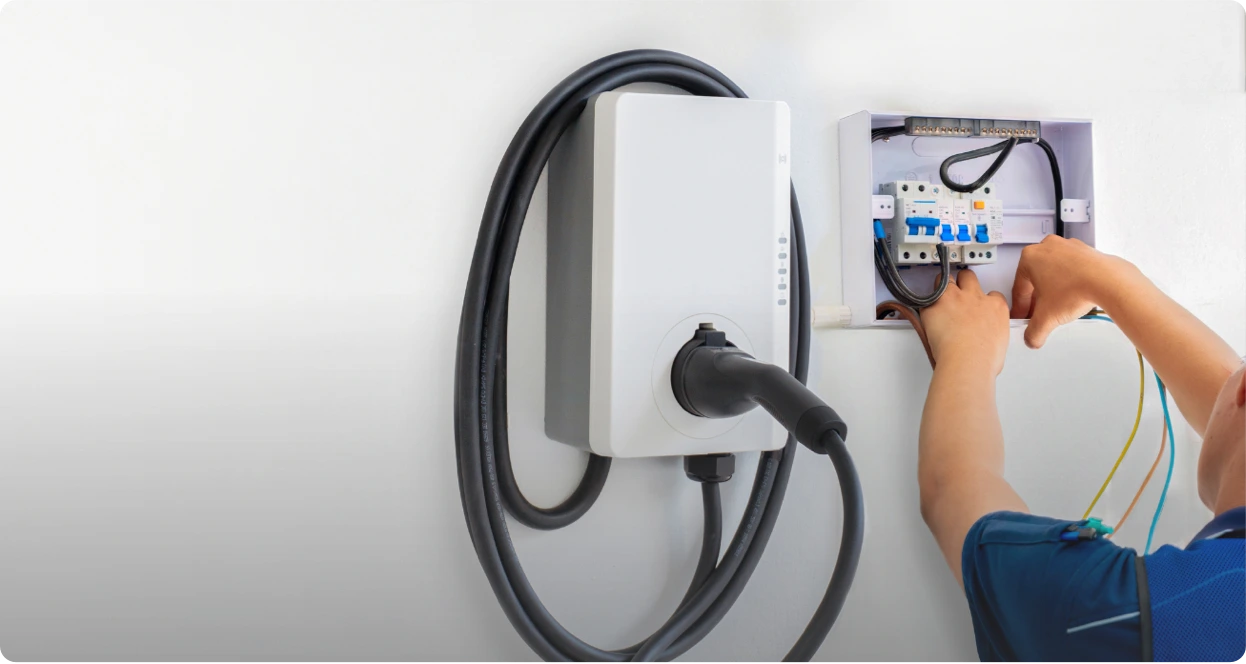
Os operadores de frotas, distribuidores e importadores que adquirem equipamento de carregamento rápido a granel deparam-se com um mercado saturado. À primeira vista, as fichas técnicas dos adaptadores parecem semelhantes, mas a diferença entre uma unidade que mantém a corrente nominal durante anos e outra que começa a sobreaquecer ao fim de poucos meses resume-se à forma como o fornecedor a concebe, testa e documenta. A maioria dos compradores descobre essa diferença após a chegada dos primeiros contentores, quando as devoluções, os pedidos de garantia ou uma inspeção reprovada transformam um preço unitário baixo num problema dispendioso. A gama de adaptadores de carregamento para veículos elétricos é normalmente onde essa diferença é mais acentuada, porque a caixa exterior não revela nada sobre os contactos no interior.
Escolha um fornecedor de adaptadores de carregamento rápido verificando cinco aspetos antes de negociar o preço: quais os conectores e as normas de comunicação que os produtos suportam efetivamente, se as certificações indicadas na ficha técnica correspondem a relatórios de testes reais, como é que o fornecedor gere o aquecimento à corrente nominal, que testes são realizados em cada lote de produção e quem é o proprietário das ferramentas de produção. Um fornecedor que responda a todas estas cinco questões com documentos, em vez de promessas, justifica normalmente um preço unitário mais elevado.
As secções que se seguem transformam cada uma dessas verificações em perguntas específicas e mostram como deve ser uma boa resposta.
O que um adaptador de carregamento rápido faz, na verdade
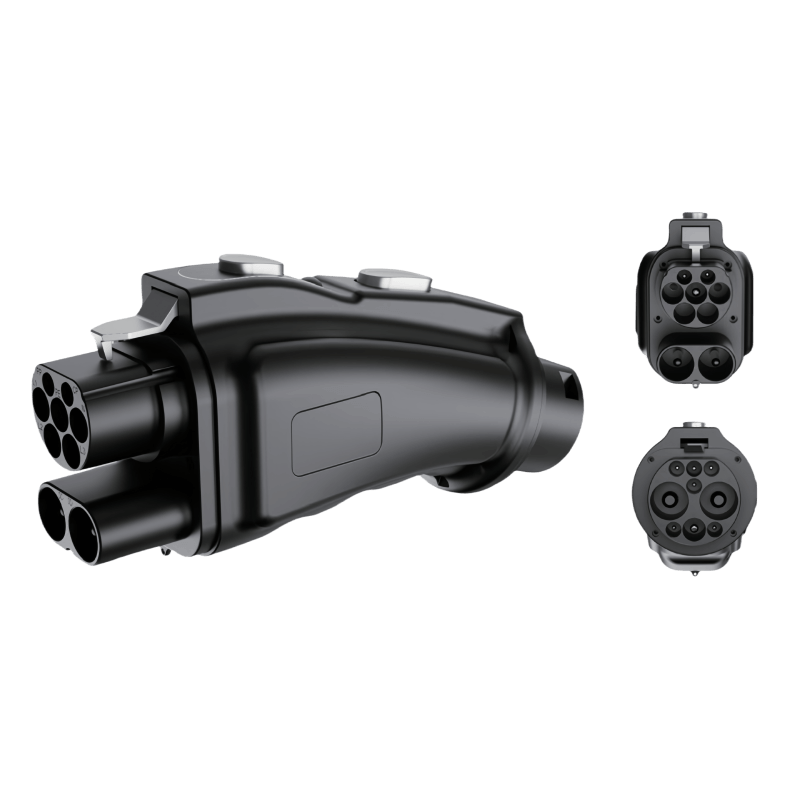
Um adaptador de carregamento rápido transmite energia e sinais de controlo entre uma fonte e um veículo, e desempenha três funções ao mesmo tempo: adapta-se ao conector físico, mantém a corrente negociada sem sobreaquecimento e transmite os dados de que ambas as partes necessitam para chegar a acordo quanto aos níveis de energia seguros.
A peça é tratada como uma mercadoria, e é aí que está o erro. Um adaptador é um componente de segurança. No interior da caixa, encontram-se contactos dimensionados para uma corrente nominal, um mecanismo de bloqueio, um sensor de temperatura nos modelos de melhor conceção e cablagem classificada tanto para a tensão como para a vida útil em termos de flexibilidade. A resistência de contacto é o valor que determina se a unidade envelhece bem. Dois adaptadores podem suportar a mesma corrente nominal no papel, mas diferir significativamente na temperatura que atingem sob essa carga.
Esse aquecimento não é meramente superficial. O carregamento rápido aplica uma corrente elevada e sustentada, e alguns miliohms de resistência adicional no contacto traduzem-se num aumento real da temperatura nos pinos. Com o tempo, os ciclos térmicos soltam o fecho, endurecem as juntas e abrem a fresta por onde a humidade penetra. É por isso que a primeira conversa com um fornecedor de adaptadores de carregamento rápido deve centrar-se na intensidade nominal e nos dados térmicos, e não numa fotografia do catálogo.
Por que razão a escolha do fornecedor é mais importante do que o preço unitário
Um adaptador mais barato acaba por sair mais caro quando se somam as avarias que provoca. As devoluções, a gestão da garantia, o tempo de inatividade do veículo e uma remessa retida na alfândega custam, cada uma, mais por incidente do que a pequena poupança obtida em cada unidade.
Os compradores B2B sentem esses custos em diferentes áreas. Um distribuidor vê as taxas de devolução a aumentar e as avaliações no mercado a descer. Um operador de frota perde tempo de atividade do veículo enquanto um conector é substituído. Um importador tem um contentor retido porque a documentação não corresponde ao produto. Todos estes três casos têm a mesma causa principal: o fornecedor reduziu os custos numa área que o comprador não conseguia ver.
Contactos de dimensões insuficientes, revestimento fino, vedantes que não cumprem a classificação de resistência à penetração indicada no rótulo e a ausência de testes por lote parecem tudo estar bem numa fotografia do produto. A diferença de preço entre um adaptador bem construído e um de qualidade medíocre é, muitas vezes, reduzida a nível unitário. No entanto, essa diferença no custo ao longo da vida útil não existe.
Padrões de carregamento rápido que o seu fornecedor deve suportar
O seu fornecedor deve indicar as normas exatas relativas aos conectores e os protocolos de comunicação para os quais cada adaptador foi concebido e testado, e comprovar isso com um relatório de testes. Afirmações vagas como “compatível com todos os tipos de carregamento rápido” significam que o adaptador não foi testado em relação a nada específico.
Normas relativas aos conectores
O carregamento rápido varia consoante a região e o tipo de conector. Um fornecedor que atenda a mais do que um mercado tem de demonstrar competência em cada um deles, uma vez que o encaixe mecânico e o percurso da corrente diferem.
| Padrão | Onde é utilizado | Máximo típico | O que verificar |
| CCS2 (IEC 62196-3) | Europa e muitos mercados de exportação | Até 500 A CC | Intensidade de corrente à temperatura ambiente pretendida |
| CCS1 (IEC 62196-3) | América do Norte | Até 500 A CC | Vida útil do fecho e alívio de tensão do cabo |
| CHAdeMO | Japão e instalações antigas de corrente contínua | Por volta do ano 400 d.C., nas implementações atuais | Que versão do protocolo é suportada? |
| GB/T (GB/T 20234) | China | Até 250 A CC | Quer se trate da revisão atual |
| Tipo 2 (IEC 62196-2) | Europa, carregamento CA | Até 63 A trifásico | Potência nominal monofásica versus trifásica |
| J3400 (Norma de carregamento norte-americana) | América do Norte, novas instalações da DC | Até 500 A CC | Documentação relativa a licenças e ensaios |
Um fornecedor que venda em várias regiões terá relatórios de ensaio para cada uma delas. Peça para ver o relatório referente ao seu mercado, e não aquele que foi mais fácil de obter.
Protocolos de comunicação
A compatibilidade física é apenas metade da história. O carregamento rápido em corrente contínua depende de uma comunicação digital entre o veículo e o equipamento de alimentação. Os adaptadores e o equipamento subjacente têm de suportar a camada de protocolo adequada para o mercado, quer se trate da norma ISO 15118 para a comunicação de carregamento de nível superior, da norma DIN SPEC 70121 para o controlo de corrente contínua nas implementações europeias, ou do protocolo OCPP entre a estação e a rede. Um fornecedor que confunda essas camadas está a enviar-lhe um sinal.
Carregamento rápido no interior do veículo
As normas de carregamento rápido também abrangem o que acontece no interior do veículo. A tecnologia USB Power Delivery e as fontes de alimentação programáveis regulam o carregamento de telemóveis, tablets e computadores portáteis a partir de uma tomada de baixa tensão. Se a sua linha de produtos incluir um adaptador de carregamento rápido para automóvel, aplica-se a mesma lógica. Indique a versão do protocolo, apresente o relatório de testes e confirme que a unidade negocia a potência em vez de a estimar.
Capacidades técnicas que distinguem os fornecedores de excelência
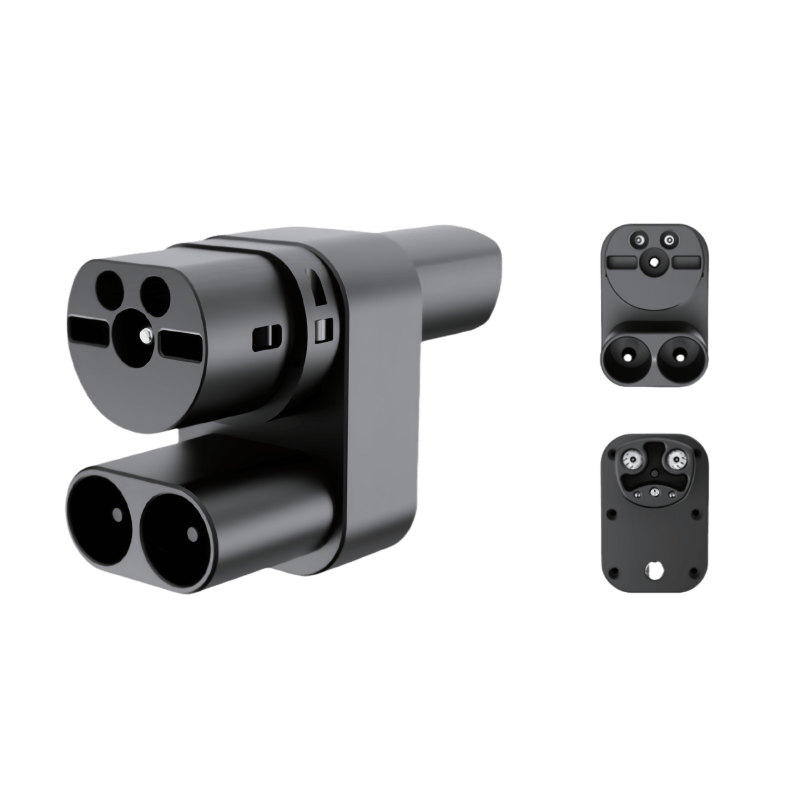
Os fornecedores de renome conseguem apresentar dados térmicos medidos à corrente nominal, indicar o grau de proteção contra a penetração de água e poeira, acompanhado de um relatório de ensaio, e explicar como o adaptador desliga de forma segura quando ocorre alguma avaria.
Intensidade nominal e conceção térmica
Solicite os valores do aumento de temperatura medidos à corrente nominal, e não apenas o valor da corrente em si. A norma IEC 62196-1 estabelece limites para o aumento de temperatura nos terminais durante os ensaios de tipo, e um fornecedor de confiança disporá do valor medido por um laboratório acreditado. Procure opções de conceção que decorram desses dados: secção transversal adequada dos contactos, espessura do revestimento indicada na ficha técnica e, ou um sensor de temperatura no invólucro, ou uma curva de redução de potência documentada para temperaturas ambientes elevadas.
Proteção contra a penetração e qualidade de fabrico
Os adaptadores são utilizados ao ar livre, em ambientes com poeira e à chuva. As classificações IP são importantes, mas a classificação indicada na etiqueta só tem valor se tiver sido emitida por um laboratório. Pergunte qual é o material da vedação, como é fixado o prensa-cabos e quais são as classificações do material da caixa em termos de retardância de chamas e resistência aos raios UV.
Interbloqueio e lógica de segurança
Um adaptador bem concebido só será alimentado quando o trinco estiver encaixado e interrompe a alimentação se o trinco se soltar ou se for ultrapassado um limiar de temperatura. Pergunte como isso é implementado e se foi testado em condições de falha, e não apenas em condições normais de funcionamento.
| Verificar | Por que é importante | Como é uma boa resposta |
| Aumento da temperatura à corrente nominal | Prevê a vida útil | Um valor medido por um laboratório acreditado |
| Índice de proteção contra a penetração | Determina a fiabilidade em ambientes exteriores | A classificação, juntamente com o número do relatório de ensaio |
| Especificações de revestimento por contacto | Gera resistência ao longo do tempo | Espessura indicada e material de base |
| Vida útil do ciclo da lingueta | Prevê falhas no terreno | Uma contagem de ciclos resultante de ensaios mecânicos |
| Redução da potência nominal em condições de temperatura ambiente elevada | Protege contra avarias no verão | Uma curva publicada ou dados de ensaio |
Certificações e conformidade com os requisitos
Encare a certificação como uma análise de documentos, e não como uma verificação do logótipo. Peça o relatório de ensaio, o número do certificado e o nome do laboratório emissor e, em seguida, confirme se o certificado abrange exatamente o modelo que está a comprar.
É bastante comum encontrar adaptadores com a marca CE ou uma certificação de segurança sem o relatório correspondente, pelo que vale a pena dedicar dez minutos a verificar isso. Os certificados são emitidos por modelo, e um fornecedor que apresente um certificado relativo a um produto diferente ou é desorganizado ou está à espera que não verifique.
| Mercado | O que é normalmente exigido | O que perguntar ao fornecedor |
| União Europeia | Marcação CE ao abrigo das diretivas relativas à baixa tensão e à compatibilidade eletromagnética (EMC), bem como das diretivas RoHS e REACH | A declaração de conformidade e o relatório em que se baseia |
| Reino Unido | Marcação UKCA | Se existe documentação do Reino Unido separadamente |
| América do Norte | UL 2251 para acopladores, UL 2202 para equipamento de carregamento | O número do processo e se a lista está atualizada |
| China | Conformidade com a norma GB/T e certificação CCC, quando aplicável | Qual foi a revisão da norma nacional utilizada? |
| Referência internacional | Séries IEC 62196 e IEC 61851 | Que versões e edições foram testadas |
As normas ambientais também são importantes. As declarações devem acompanhar a remessa, e as regras de embalagem variam consoante o destino. Um fornecedor que já tenha efetuado envios para o seu mercado irá providenciar tudo isto sem que seja necessário pedir duas vezes.
Fabrico e controlo de qualidade para verificar
Pergunte onde é fabricado o adaptador, quem é o proprietário do equipamento de moldagem e que testes são realizados em cada lote. Um fornecedor que possua o seu próprio equipamento de moldagem e realize testes por lote consegue resolver um problema. Um fornecedor que recorra a um molde partilhado, normalmente, não consegue.
OEM, ODM e propriedade do equipamento de produção
A propriedade das ferramentas determina o que acontece quando algo corre mal. Se o fornecedor for o proprietário de um molde exclusivo, uma alteração ao projeto dá origem a uma conversa. Se o produto for fabricado a partir de um molde partilhado, o seu adaptador será idêntico ao de todos os outros, e um defeito afetará todos os compradores desse molde de uma só vez. Pergunte quem pagou pelas ferramentas e se o projeto está registado.
Aspetos essenciais da auditoria à fábrica
Uma auditoria não tem de ser demorada. Confirme se as linhas de produção correspondem à morada indicada no certificado, verifique se foi realizada a inspeção à entrada dos contactos e dos cabos e verifique se o equipamento de ensaio está calibrado. Peça para ver o registo do último lote expedido, e não uma amostra preparada para a visita.
Ensaios de tipo e ensaios por lote
Os ensaios de tipo comprovam a conformidade de um projeto uma única vez. Os ensaios por lote detetam desvios na produção. Um fornecedor fiável de adaptadores de carregamento rápido realiza ambos os tipos de ensaios e mantém registos que pode solicitar. Qualquer avaliação de um fornecedor de adaptadores de carregamento para veículos elétricos deve concluir-se com um acordo por escrito sobre o que é testado em cada lote e o que acontece quando um lote não cumpre os requisitos.
Categorias de produtos e como combiná-las
Primeiro, associe a categoria ao caso de utilização e, em seguida, compare os fornecedores dentro dessa categoria. Um fornecedor com forte presença no segmento dos adaptadores de corrente contínua não é, automaticamente, forte no segmento das unidades portáteis, uma vez que os modos de falha são diferentes.
Adaptadores de carregamento rápido CC
Estes são os que conduzem a corrente mais elevada e apresentam maior risco. Os adaptadores que ligam dois tipos de conectores requerem uma análise especial, uma vez que o percurso da corrente passa por uma peça que nunca fez parte do projeto original do conector.
Adaptador de carregador rápido para automóvel, para utilização no interior do veículo
Esta categoria abrange os dispositivos que se ligam a uma tomada de baixa tensão e alimentam telemóveis, tablets e computadores portáteis. Os níveis de potência são mais baixos, mas a lógica de compra mantém-se. Verifique a versão do protocolo, confirme se a potência de saída é negociada em vez de fixa e analise como o dispositivo lida com o calor num painel de instrumentos durante o verão.
Carregadores rápidos portáteis
As unidades portáteis sacrificam a potência em prol da conveniência. As questões que se colocam aqui são a vida útil do cabo flexível, a fixação dos conectores e se a caixa de controlo está vedada de acordo com a classificação que alega ter.
| Categoria | Classificação típica | Utilização principal | O que verificar em primeiro lugar |
| Adaptador de carregamento rápido em corrente contínua | Até 500 A CC | Locais de carregamento em corrente contínua (CC) públicos e para frotas | Aumento da temperatura e bloqueio de engate |
| Adaptador de carregador rápido para automóvel | Saída de baixa tensão, dezenas de watts | Carregamento de dispositivos no interior do veículo | Versão do protocolo e corte térmico |
| Carregador rápido portátil | Alguns quilowatts | Cópias de segurança e utilização em dispositivos móveis | Índice de proteção IP e vida útil do cabo flexível |
Como avaliar e auditar um fornecedor antes de efetuar uma encomenda
Siga sempre a mesma sequência: primeiro os documentos, depois as amostras, em seguida a fábrica e, por fim, uma pequena encomenda de teste antes de se comprometer com a produção em grande escala.
Lista de verificação para a análise de amostras
Teste as amostras, por conta própria ou através de uma entidade externa, à corrente nominal, num ambiente quente e ao longo de ciclos repetidos de acoplamento. Registe a temperatura da caixa. Realize o mesmo teste em duas amostras concorrentes lado a lado, pois a comparação fornece mais informações do que qualquer resultado isolado.
Visita à fábrica e auditoria
Vá ver a linha de produção ou contrate alguém da região para o fazer. Peça para assistir ao teste de um lote. Pergunte o que acontece a uma unidade que não passe no teste. Um fornecedor que tenha uma resposta clara a essa pergunta costuma ter um sistema de qualidade eficaz.
Negociação da quantidade mínima de encomenda (MOQ) e do prazo de entrega
Tanto a quantidade mínima de encomenda (MOQ) como o prazo de entrega estão relacionados com o equipamento de produção. O equipamento de produção personalizado implica uma MOQ mais elevada, enquanto os produtos de catálogo têm uma MOQ mais baixa. Pergunte qual a percentagem do prazo de entrega que corresponde à produção e qual a que corresponde aos testes e à certificação, pois é nesta segunda parte que os prazos costumam sofrer atrasos.
Sinais de alerta que indicam um fornecedor pouco fiável
Tenha cuidado com um fornecedor que não consiga apresentar um relatório de ensaio quando solicitado, que indique uma intensidade nominal sem dados relativos à temperatura ou que envie a mercadoria a partir de uma morada que não corresponda à indicada no certificado.
Há outros sinais que merecem destaque. O produto tem as mesmas dimensões que o de um concorrente. A ficha técnica enumera certificações sem indicar números. O preço cotado desce drasticamente assim que se faz uma contraproposta. As amostras chegam sem qualquer tipo de documentação. Nenhum destes sinais, por si só, prova que um fornecedor seja mau. Mas dois ou três, em conjunto, costumam ser suficientes para o provar.
Custo, quantidade mínima de encomenda (MOQ) e custo total de propriedade
Compare os fornecedores com base no custo por ano de funcionamento, e não no custo por unidade. Antes de tomar uma decisão, acrescente ao preço unitário a taxa de avaria, os custos de gestão da garantia e o custo de uma remessa atrasada ou rejeitada.
| Fator de custo | O que o move | Como comparar fornecedores |
| Preço unitário | Material de contacto, revestimento, tipo de ferramenta | Compare com base nas mesmas especificações, não na mesma fotografia |
| Taxa de falhas e devoluções | Concepção térmica, ensaios por lotes | Solicitar dados de campo numa linha comparável |
| Certificação e conformidade | Cobertura de mercado que o fornecedor já detém | Verifique se os certificados existentes abrangem o seu mercado |
| Risco de prazo de entrega | Profundidade dos testes, aquisição de componentes | Pergunte qual é a percentagem do tempo de execução correspondente aos testes |
| Garantia e assistência pós-venda | Peças sobressalentes e processo de assistência técnica | Peça para lhe apresentarem as condições por escrito antes de fazer a encomenda |
Um fornecedor cujo custo por unidade é mais elevado, mas cujo custo anual é mais baixo, é a melhor opção de compra. Chegar a esse valor exige algum trabalho inicial, e é esse trabalho que impede que o primeiro contentor se torne o último.
Perguntas frequentes
Como posso verificar se as certificações de um fornecedor de adaptadores de carregamento rápido são autênticas?
Peça três coisas em conjunto: o certificado, o relatório de ensaio subjacente e o nome do laboratório emissor. Em seguida, verifique se o modelo indicado no certificado corresponde ao produto que está a comprar. A maioria dos laboratórios acreditados mantém diretórios online onde pode pesquisar pelo número do certificado. Se o fornecedor enviar apenas uma imagem do certificado, sem relatório nem número, considere isso uma resposta incompleta e não uma rejeição.
Qual é a quantidade mínima de encomenda que devo esperar para os adaptadores de carregamento rápido?
Depende se comprar um produto de catálogo ou se encomendar o desenvolvimento de ferramentas. Os adaptadores de catálogo têm normalmente um MOQ mais baixo, porque o molde já existe e a linha de produção já está configurada. Os designs personalizados têm um MOQ mais elevado para cobrir os custos do molde e da configuração da linha de produção. Peça ao fornecedor para separar as duas opções e pergunte se o MOQ diminui em encomendas repetidas, uma vez que o molde tenha sido pago.
É possível que um único fornecedor abranja tanto a gama de adaptadores de CA como a de CC?
Alguns conseguem, mas as competências nem sempre se sobrepõem. O carregamento rápido em corrente contínua (CC) exige uma maior capacidade de gestão de corrente, um design térmico mais rigoroso e testes de protocolos mais complexos. Os adaptadores de corrente alternada (CA) são mais simples, mas continuam sujeitos a normas relativas aos conectores e à segurança. Se um fornecedor afirmar que cumpre ambos os requisitos, solicite relatórios de testes para cada linha separadamente, em vez de aceitar um certificado como prova do outro.