Apertura di un Kit di prova per caricabatterie EV per la prima volta può sembrare un po' opprimente. Ci sono adattatori, cavi, spine di simulazione, forse un'unità di test principale e diversi accessori, il tutto racchiuso in una valigetta che sembra fare sul serio. Ma a cosa serve effettivamente ogni pezzo?
I contenuti variano naturalmente a seconda dei produttori e dei punti di prezzo. Un kit economico destinato a installazioni residenziali di base non conterrà gli stessi componenti di un kit professionale progettato per infrastrutture di ricarica commerciali. Tuttavia, la maggior parte dei kit condivide un insieme comune di componenti fondamentali che gestiscono le funzioni di test essenziali. Capire cosa c'è all'interno e a cosa serve ogni singolo pezzo fa la differenza tra l'utilizzo efficace di un kit di prova per caricabatterie EV e un semplice esercizio di routine.
Cosa c'è dentro un tipico kit di prova per caricabatterie EV
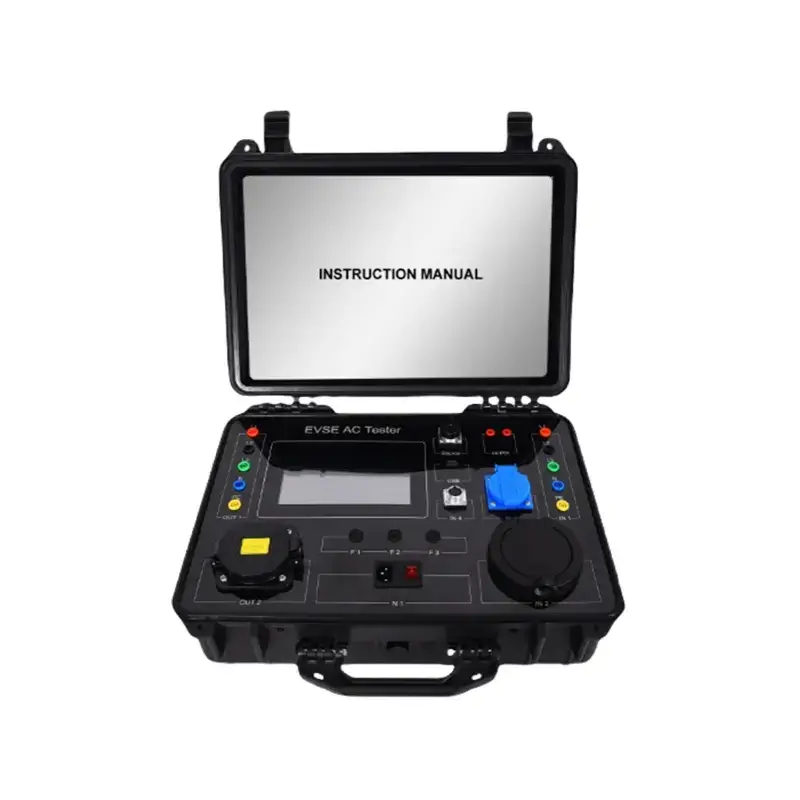
Il principale strumento di test
Ogni kit di prova per caricabatterie EV è incentrato su un dispositivo di prova principale. Si tratta del cervello dell'operazione: lo strumento che effettua le misurazioni, esegue sequenze di test automatizzate e visualizza i risultati. A seconda del kit, può trattarsi di un tester specifico per i veicoli elettrici o di uno strumento multifunzione con moduli di test per i veicoli elettrici inclusi.
L'unità principale gestisce tipicamente:
- Misura e analisi del segnale pilota di controllo
- Test RCD, compresa la verifica del tempo di intervento e della corrente di guasto CC
- Misura della continuità di terra e della resistenza di isolamento
- Monitoraggio della tensione e della frequenza di alimentazione
- Test dell'impedenza del loop
- Archiviazione e trasferimento dei dati alle piattaforme software
Alcuni produttori integrano tutto in un unico dispositivo portatile. Altri dividono le funzioni tra un'unità di base e un modulo adattatore EV separato. Nessuno dei due approcci è intrinsecamente migliore: si tratta più che altro della filosofia di progettazione e di come il produttore bilancia la portabilità con la profondità delle funzioni.
Adattatori e spine di simulazione
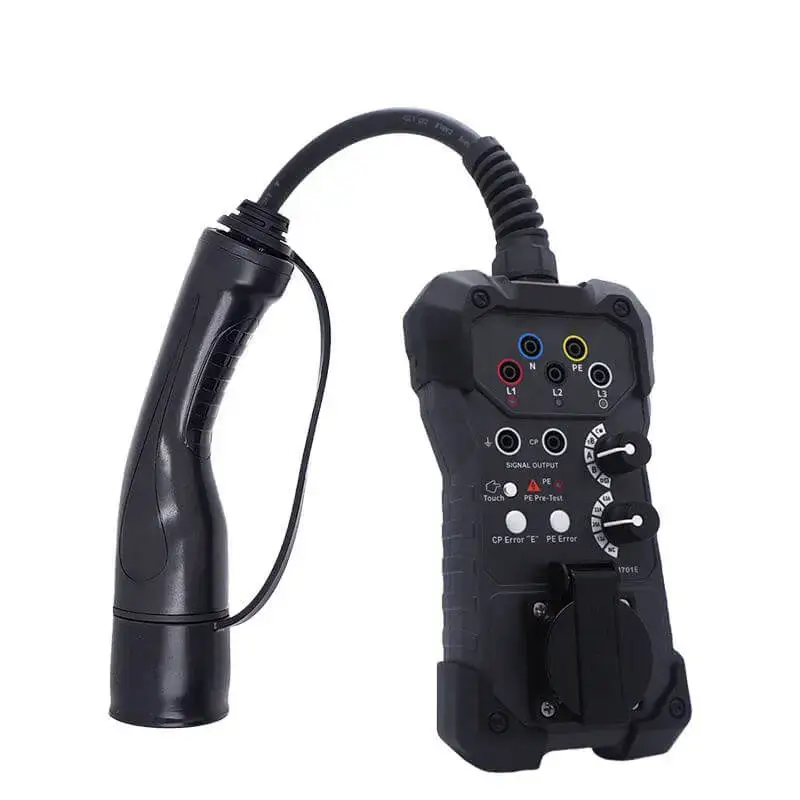
I componenti più caratteristici di ogni kit di prova per caricabatterie EV sono probabilmente gli adattatori per la simulazione del veicolo. Sono questi che separano i test specifici per i veicoli elettrici dal lavoro elettrico generale.
Un adattatore di simulazione si inserisce nel connettore del caricabatterie - di tipo 1 o 2, a seconda del mercato - e presenta al caricabatterie caratteristiche elettriche che imitano quelle di un veicolo connesso. Senza questo adattatore, non c'è modo di verificare il comportamento del caricabatterie durante una vera interazione di ricarica.
La maggior parte dei pacchetti di kit di prova per caricabatterie per veicoli elettrici include almeno un adattatore di simulazione di tipo 2 per i mercati europeo e australiano, anche se i kit venduti in Nord America o in Giappone possono invece includere adattatori di tipo 1. I kit di fascia più alta a volte includono entrambi.
Conduttori di test e accessori
Oltre allo strumento principale di un tester portatile per EVSE e i suoi adattatori di simulazione, gli accessori di supporto sono più importanti di quanto si creda. Il contenuto tipico di un kit professionale comprende:
Puntali standard per misure di sicurezza elettrica
Clip a coccodrillo per collegamenti sicuri alla continuità di terra
Adattatore per spina di rete per testare i caricabatterie portatili in modalità 2
Custodia per il trasporto - di solito una custodia rigida o semirigida per la protezione sul campo
Certificato di calibrazione e documentazione
Cavo USB o connettività wireless per il download dei dati
Batterie di ricambio o cavo di ricarica per le unità ricaricabili
Cosa può testare effettivamente un kit di prova per caricabatterie EV?
Verifica della sicurezza elettrica
| Funzione di test | Cosa verifica | Criteri di superamento tipici |
|---|---|---|
| Continuità terrestre | Integrità del conduttore di protezione | < 0,3Ω da fine a fine |
| Resistenza all'isolamento | Isolamento tra parti in tensione | > 1MΩ a 500V CC |
| Impedenza del loop | Adeguatezza del percorso della corrente di guasto | Varia in base alla potenza del circuito |
| Tempo di intervento dell'interruttore differenziale (CA) | Risposta di protezione di tipo A | ≤ 300 ms a IΔn |
| Tempo di intervento dell'interruttore differenziale (CC) | Tipo B o rilevamento interno della corrente continua | ≤ 300 ms a 6 mA CC |
| Tensione di alimentazione | Erogazione corretta della tensione | Nominale ±10% |
Segnale pilota e verifica del protocollo
Questo è davvero il cuore di ciò che rende specializzato un kit di prova per caricabatterie EV. L'analisi del pilota di controllo verifica il protocollo di comunicazione tra il caricabatterie e il veicolo, una conversazione che avviene interamente attraverso livelli di tensione analogici e un segnale PWM a 1 kHz.
Il processo di test segue il modello di stato IEC 61851:
- Verifica dello stato A - pilota a ±12V senza veicolo collegato
- Transizione dello stato B - l'adattatore si collega, il pilota deve scendere a +9V
- Misura del ciclo di lavoro: conferma la corretta inserzione di corrente
- Transizione di stato C - il veicolo richiede alimentazione, il pilota scende a +6V
- Verifica del contattore - il caricabatterie deve dare tensione all'uscita
- Sequenza di ritorno - gli stati si invertono attraverso B per tornare ad A
- Arresto di emergenza - verifica della capacità di spegnimento immediato
Limitazione di corrente e portata del cavo
Attraverso una simulazione pilota di prossimità, il kit di prova per caricabatterie EV verifica che il caricatore rispetti i valori di corrente nominale dei cavi. Questa funzione presenta diversi valori di resistenza al circuito di rilevamento di prossimità del caricabatterie, ciascuno corrispondente a uno specifico limite di amperaggio.
Il caricabatterie deve regolare la sua corrente di uscita massima in modo che corrisponda a quella indicata dal segnalatore di prossimità. Un caricabatterie che ignora questo segnale, o che lo legge in modo errato, rischia di creare condizioni di sovracorrente nel cavo di ricarica. Succede più spesso di quanto il settore voglia ammettere, in particolare con i caricabatterie economici, dove si tagliano le gambe allo sviluppo del firmware.
FAQ
Un kit di prova per caricabatterie EV può testare i caricabatterie veloci DC?
La maggior parte dei pacchetti standard di kit di prova per caricabatterie per veicoli elettrici si concentra sulla verifica della ricarica in c.a. - installazioni in modalità 2 e modalità 3 che utilizzano connettori di tipo 1 o tipo 2. La ricarica rapida in c.c. (Modalità 4) prevede i protocolli CCS o CHAdeMO che utilizzano una comunicazione digitale di alto livello oltre all'approccio analogico del segnale pilota. La verifica dei caricabatterie veloci CC richiede apparecchiature specializzate con analizzatori a livello di protocollo in grado di interpretare la comunicazione PLC o la messaggistica CAN bus.
Con quale frequenza deve essere sostituito il contenuto di un kit di prova per caricabatterie EV?
Lo strumento di test principale dura anni con una cura adeguata e una calibrazione regolare, in genere ogni 12 mesi. Gli adattatori di simulazione subiscono un'usura meccanica dovuta ai ripetuti inserimenti delle spine e possono richiedere la sostituzione ogni pochi anni, a seconda del volume di utilizzo. I puntali devono essere ispezionati prima di ogni utilizzo e sostituiti immediatamente se si riscontrano danni all'isolamento, conduttori esposti o connessioni allentate. Le batterie dell'unità principale seguono i normali cicli di sostituzione.
Esistono standard universali per i kit di prova dei caricabatterie EV?
La metodologia di test si allinea principalmente alla norma IEC 61851 per i requisiti del sistema di ricarica e alla norma IEC 62196 per le specifiche dei connettori. Esistono variazioni regionali: diversi Paesi adottano questi standard con modifiche locali o requisiti aggiuntivi. Il kit di prova dei caricabatterie per veicoli elettrici non ha un unico standard di certificazione universale, anche se gli strumenti più affidabili soddisfano gli standard generali delle apparecchiature di misura, come la norma IEC 61557 per le funzioni di prova della sicurezza elettrica.