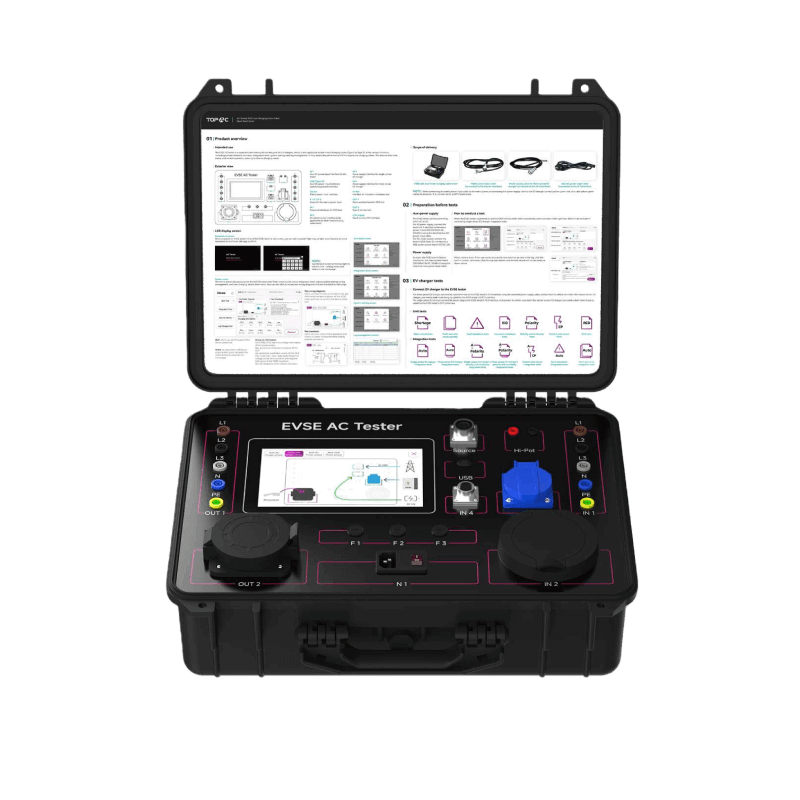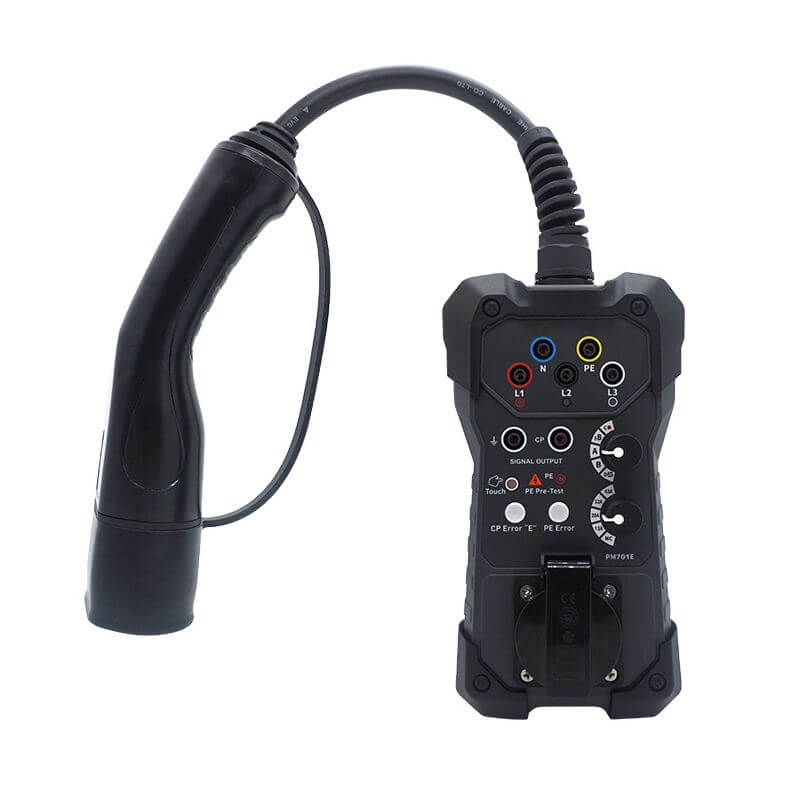
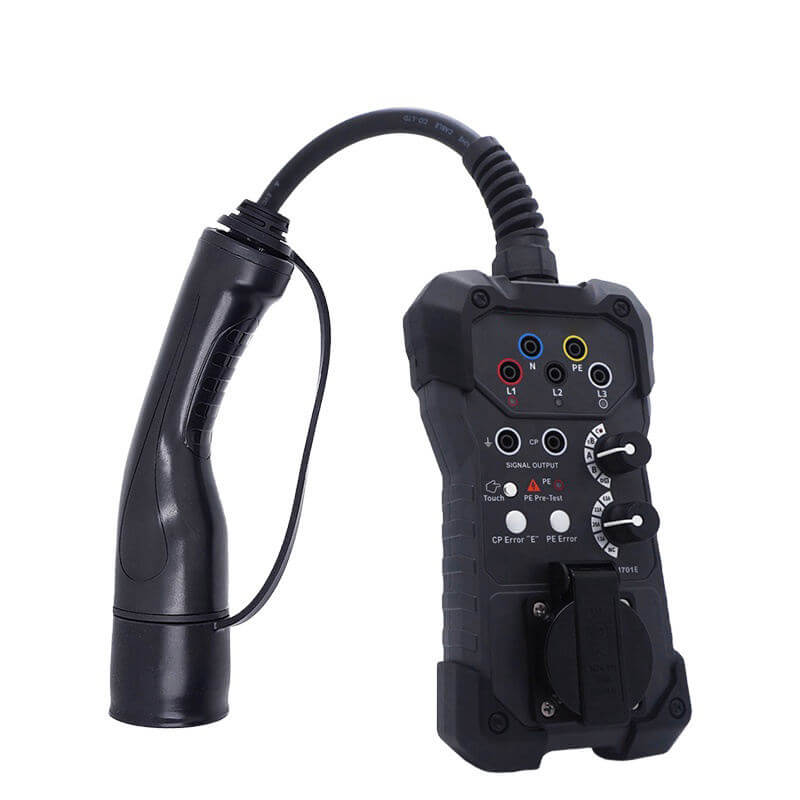
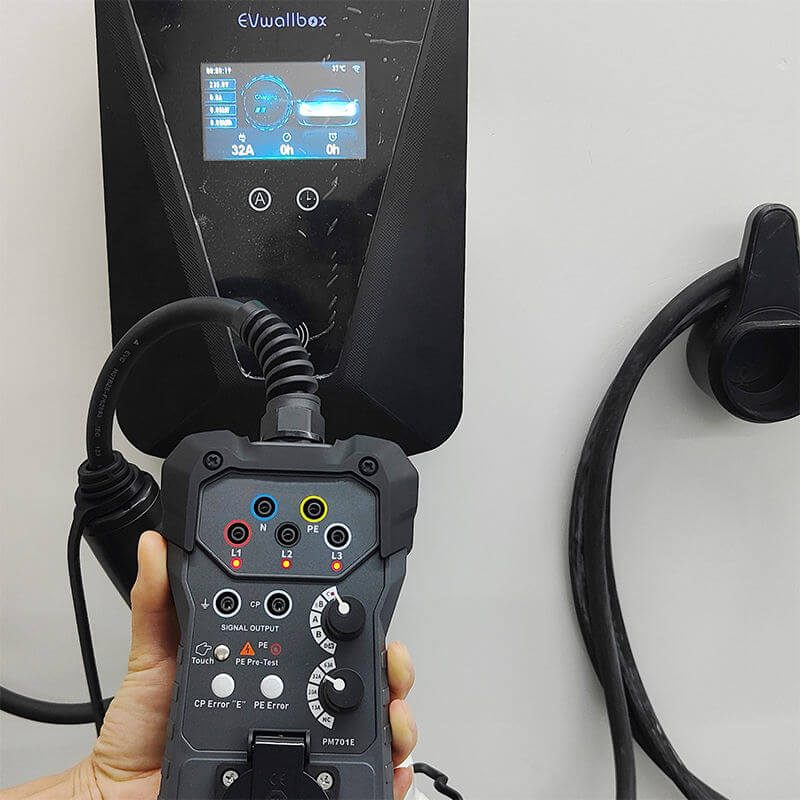
Tester portatile per EVSE - Tester per stazioni di ricarica (Tipo 1 e Tipo 2)
Il tester portatile EVSE è una soluzione completa per il test di sicurezza e di funzionamento delle stazioni di ricarica per veicoli elettrici in corrente alternata. Progettato per tecnici e installatori, questo strumento all-in-one simula vari stati del veicolo per garantire che i punti di ricarica (tipo 1 e tipo 2) funzionino in modo corretto, sicuro e conforme agli standard internazionali.
Sia che si tratti di manutenzione ordinaria, di ricerca guasti di una stazione difettosa o di ispezioni finali dell'installazione, questo robusto simulatore portatile fornisce un feedback immediato sugli stati del CP (Control Pilot) e del PP (Proximity Pilot), sulla protezione dalle perdite e sull'integrità del cablaggio.
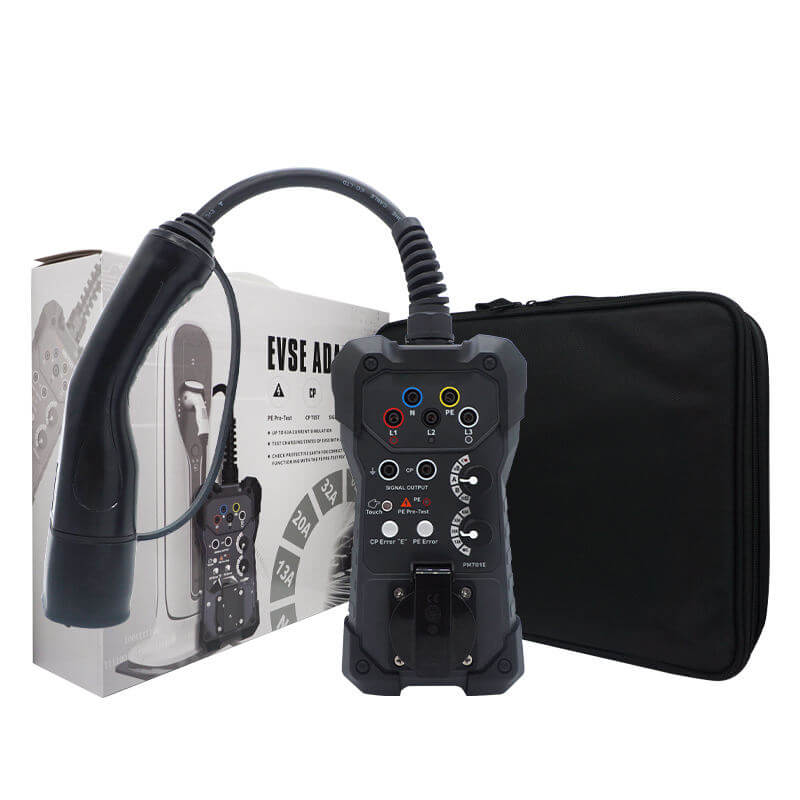
Caratteristiche principali del tester EVSE portatile (tipo 1 e tipo 2)
- Analisi completa del Control Pilot (CP): Il tester portatile EVSE consente ai tecnici di eseguire manualmente il ciclo Control Pilot per verificare che l'EVSE (Electric Vehicle Supply Equipment) risponda correttamente. Passando dagli stati A a D, è possibile verificare se la stazione blocca correttamente il cavo e avvia la sequenza di ricarica.
- Simulazione del pilota di prossimità (PP): Verifica che la stazione di ricarica rilevi correttamente la capacità di trasporto della corrente del cavo di ricarica. L'interruttore rotante consente di simulare diverse capacità del cavo (da 13A a 63A) per garantire che la stazione limiti la corrente come richiesto.
- Test di sicurezza e di errore: Simulare un "cortocircuito del diodo" o un "errore CP E" per verificare che la stazione di ricarica interrompa immediatamente l'alimentazione. Si tratta di un test di sicurezza fondamentale per garantire che l'EVSE protegga il caricabatterie di bordo del veicolo in caso di guasto di un componente.
Perché scegliere un tester EVSE portatile (tipo 1 e tipo 2)
A differenza dei multimetri di base, questo simulatore specializzato interagisce con la logica interna della stazione di ricarica. Elimina la necessità di portare un vero veicolo elettrico in un sito per verificare una nuova installazione, risparmiando tempo, riducendo i costi e garantendo che ogni stazione installata sia sicura per l'uso pubblico o privato.
Compatibilità universale
Supporta le interfacce di ricarica di tipo 1 (SAE J1772) e di tipo 2 (IEC 62196-2).
Simulazione dello stato del veicolo
Simula facilmente gli stati del veicolo: A (scollegato), B (collegato), C (in carica) e D (in carica con ventilazione).
La sicurezza prima di tutto
Include un pre-test PE (Protective Earth) e una simulazione di errore (CP Error "E" e Diode Short) per garantire che la stazione reagisca correttamente alle condizioni di guasto.
Test di tenuta e RCD
Capacità integrata di testare la funzionalità di sgancio RCD/GFCI per garantire la sicurezza dell'utente contro le scosse elettriche.
Feedback in tempo reale
Il chiaro display digitale fornisce letture istantanee di tensione, corrente e stato del segnale pilota.
Portatile e robusto
Design compatto e portatile con alloggiamento ad alta resistenza, perfetto per l'uso sul campo in varie condizioni atmosferiche.
Parametri del tester EVSE portatile (tipo 1 e tipo 2)
| Caratteristica | Specifiche |
|---|---|
| Tensione di ingresso | AC 110V / 230V (monofase) |
| Frequenza | 50Hz / 60Hz |
| Connettore di prova | Tipo 2 (presa/spina) e tipo 1 (adattatore) |
| Simulazione degli stati CP | A, B, C, D |
| Simulazione dello stato PP | Aperto, 13A, 20A, 32A, 63A |
| Simulazione dei guasti | Errore CP 'E', diodo in corto circuito |
| Test RCD | 30mA (test di intervento standard) |
| Temperatura di esercizio | Da -10 °C a 40 °C (da 14 °F a 104 °F) |
| Protezione dall'ingresso | IP54 (a prova di polvere e spruzzi) |
| Peso | Circa 1,2 kg (con cavi) |
Centro assistenza
FAQ
D: Quali tipi di stazioni di ricarica può controllare questo tester EVSE portatile?
R: Questo tester EVSE offre una compatibilità universale, supportando entrambi i principali standard di ricarica CA globali: Tipo 1 (SAE J1772, comune in Nord America e Giappone) e Tipo 2 (IEC 62196-2, standard in Europa e in molte altre regioni). Un unico strumento copre la maggior parte dei punti di ricarica CA pubblici, commerciali e residenziali.
D: Quali funzioni di sicurezza chiave verifica questo tester portatile per EVSE?
R: Questo tester completo per caricabatterie EV è costruito per la convalida della sicurezza. Esegue test critici, tra cui:
Continuità della terra di protezione (PE): Verifica il corretto collegamento a terra.
Test di intervento RCD/GFCI: Verifica che il dispositivo di protezione da correnti residue della stazione funzioni correttamente per evitare scosse elettriche.
Simulazione dei guasti: Simula attivamente errori critici come un "cortocircuito del diodo" o un "errore CP E" per confermare che la stazione interrompe immediatamente l'alimentazione come richiesto dagli standard di sicurezza.
D: EVSE Tester può testare la comunicazione tra il caricabatterie e un veicolo?
R: Assolutamente sì. Si tratta di una funzione fondamentale. Il tester portatile per EVSE simula tutti gli stati Control Pilot (CP) standard (A, B, C, D) per verificare che la stazione gestisca correttamente l'handshake di connessione, avvii/arresti la ricarica e comunichi i requisiti di ventilazione. Simula inoltre i segnali del pilota di prossimità (PP) per verificare se la stazione rileva e rispetta correttamente la corrente nominale del cavo.
D: Questo tester portatile per EVSE è adatto all'uso sul campo e in ambienti difficili?
R: Sì. Progettato come tester EVSE portatile, presenta un design compatto, robusto e portatile con un alloggiamento resistente. È costruito per resistere alle esigenze dell'uso quotidiano sul campo da parte dei tecnici in varie condizioni atmosferiche e di cantiere.
D: Chi è l'utente ideale per questo tester EVSE portatile (tipo 1 e tipo 2)?
R: Questo tester EVSE è uno strumento essenziale per:
Installatori ed elettricisti di stazioni di ricarica EV
Tecnici di manutenzione di strutture e flotte
Ingegneri addetti all'assistenza e alla messa in servizio
Ispettori di garanzia della qualità/conformità
Chiunque sia responsabile dell'installazione sicura, della funzionalità e dell'affidabilità continua dell'infrastruttura di ricarica CA trarrà vantaggio da questo tester portatile per EVSE.
Guide di cui potreste aver bisogno
Qual è la differenza tra i cavi di ricarica EV di tipo 1, 2 e 3?
Poiché i veicoli elettrici (EV) continuano a guadagnare terreno in tutto il mondo, gli accessori di ricarica per EV affidabili e standardizzati diventano essenziali. Un'area che spesso genera confusione, soprattutto per i nuovi proprietari di veicoli elettrici o di
Come scegliere un cavo di ricarica per veicoli elettrici?
Se siete passati di recente a un veicolo elettrico (EV), una delle prime cose di cui avrete bisogno è un cavo di ricarica EV affidabile. Con le numerose opzioni presenti sul mercato, è facile
Tutte le auto elettriche utilizzano lo stesso cavo di ricarica?
Con la diffusione dei veicoli elettrici (EV), i nuovi proprietari si trovano spesso di fronte a una domanda confusa: Tutti i veicoli elettrici utilizzano lo stesso cavo di ricarica? Poiché si tratta di un problema che si pone
Sicurezza dei cavi di ricarica EV: Cosa c'è da sapere per evitare danni e pericoli
I veicoli elettrici (EV) stanno cambiando il modo di concepire la mobilità. Ma la crescita del possesso di veicoli elettrici comporta una grave responsabilità: la ricarica sicura. Mentre molti si concentrano sulla batteria o