
Escolher o equipamento certo para manter a infraestrutura de carregamento tornou-se uma missão e tanto nos últimos tempos. Com a enorme variedade de estações que estão a surgir - desde garagens domésticas a enormes centros de auto-estradas - a necessidade de um Dispositivo de teste de carregador EV já não é apenas para os engenheiros eléctricos "hardcore". Trata-se de garantir a segurança, de verificar se os protocolos de comunicação estão a funcionar corretamente e de assegurar que ninguém tem uma surpresa desagradável quando se liga à corrente.
Para quem tem a tarefa de ativar ou manter estas unidades, o mercado oferece algumas opções interessantes. Já não estamos apenas a olhar para simples multímetros; estamos a olhar para kits especializados que simulam o comportamento de um automóvel para que não seja necessário arriscar um veículo real apenas para ver se uma porta está ativa. Sinceramente, é uma selva.
Porque é que não se pode utilizar apenas um multímetro
É fácil pensar: "Ei, é só eletricidade, certo?" e assumir que um verificador de tensão normal pode resolver o problema. Mas o EVSE (Electric Vehicle Supply Equipment) é um pouco mais temperamental. A estação nem sequer envia energia, a menos que "sinta" um veículo na outra extremidade.
É aqui que entra em ação um dispositivo de teste de carregador EV dedicado. Este dispositivo imita os sinais do Piloto de Proximidade (PP) e do Piloto de Controlo (CP). Essencialmente, engana a estação de carregamento, levando-a a pensar que um automóvel está ligado à corrente e a pedir energia. Sem essa simulação de aperto de mão, está basicamente a olhar para uma caixa de plástico que se recusa a fazer o que quer que seja.
Observando o sector ultimamente, parece que a segurança se tornou o maior impulsionador da compra destas ferramentas específicas. Um medidor genérico não lhe dirá se o RCD (Dispositivo de Corrente Residual) dispara com rapidez suficiente, e esse é o tipo de falha que mantém os gestores das instalações acordados à noite.
Principais caraterísticas a procurar
Antes de nos debruçarmos sobre as recomendações específicas, há alguns aspectos que parecem separar os brinquedos do equipamento profissional.
- Capacidades de simulação: Pode simular diferentes classificações de cabos? É possível simular um automóvel que necessita de ventilação?
- Portabilidade: Algumas destas unidades "portáteis" são de facto bastante pesadas. Se o trabalho implica atravessar um parque de estacionamento enorme, o peso é importante.
- Classificações de segurança: As classificações CAT III ou CAT IV não são negociáveis quando se lida com eletricidade da rede.
As 3 principais ferramentas recomendadas
Com base na utilidade geral e no que parece estar a funcionar para os técnicos no terreno, eis três tipos distintos de opções de dispositivos de teste de carregadores EV que cobrem a maioria das bases.
1. O testador portátil profissional de EVSE
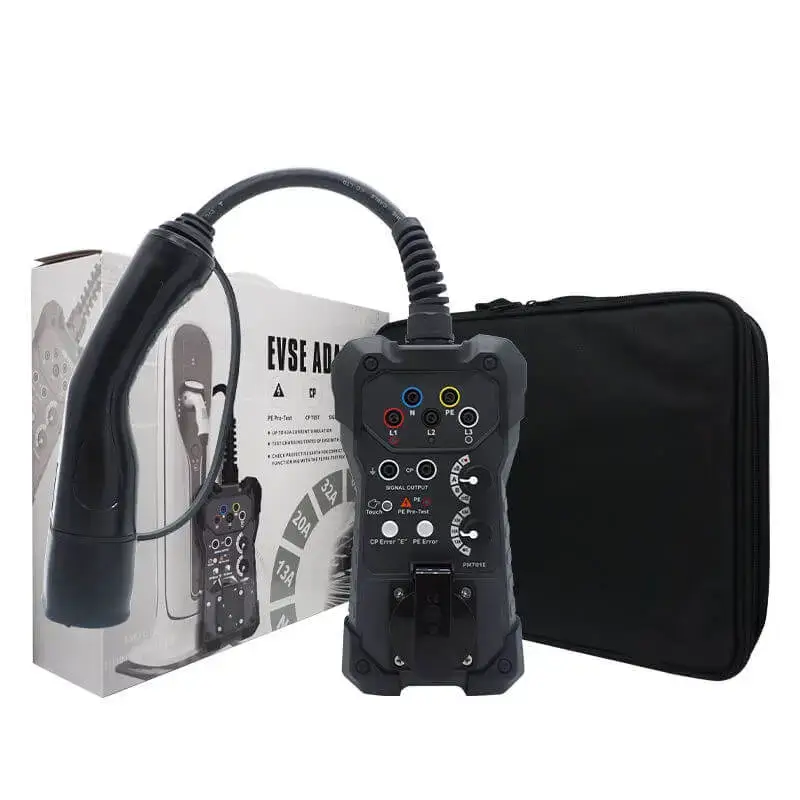
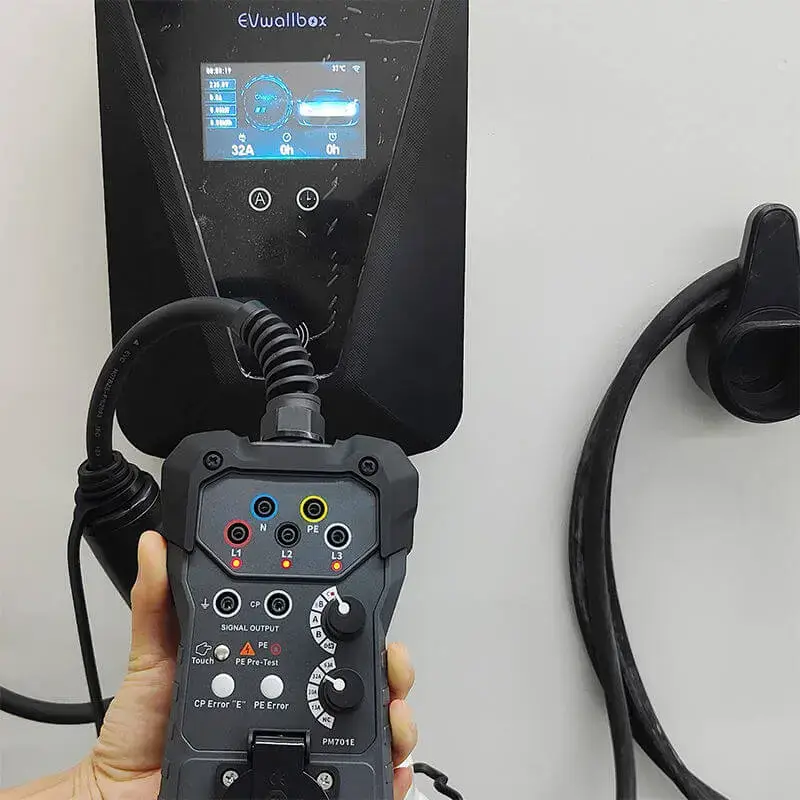
O primeiro é a variedade portátil. Este tipo de dispositivo de teste de carregador EV é normalmente compacto - algo que pode ser colocado numa mochila ou num pequeno saco de ferramentas sem pensar duas vezes.
O que é bom nos modelos portáteis profissionais é que, normalmente, eliminam a complexidade. Liga-se o aparelho, roda-se um botão para simular "Veículo ligado", roda-se outro botão para simular "Carga solicitada" e vê-se as luzes. É intuitivo. Não há necessidade de navegar em ecrãs tácteis complexos quando está a chover e só quer saber se a estação funciona.
2. A Caixa de Teste do Carregador EV
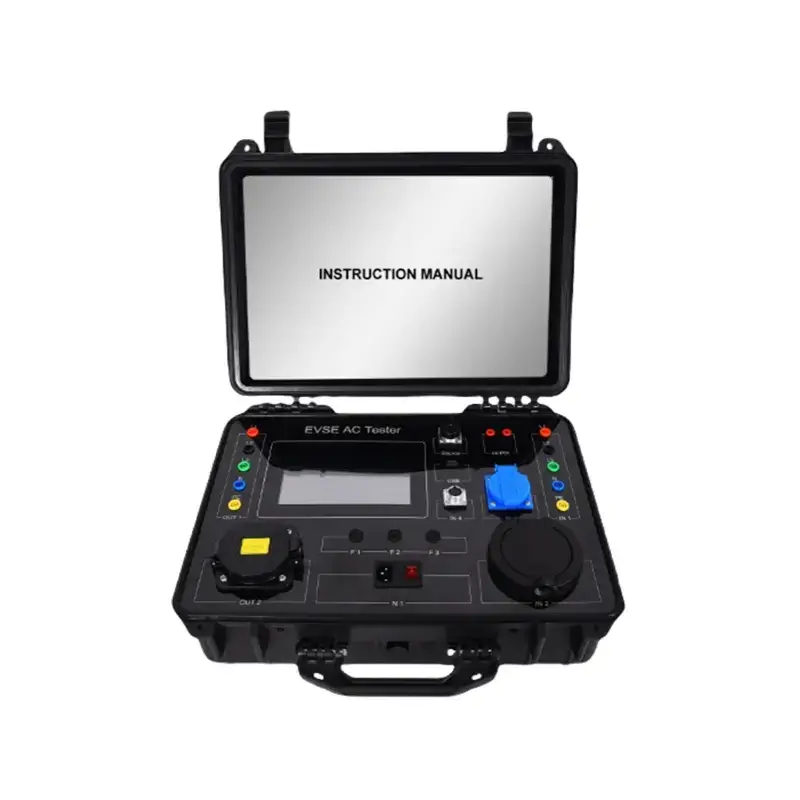
Subindo um degrau, temos o estilo "Tester Box". Estas são normalmente um pouco mais volumosas, assemelhando-se muitas vezes a uma pequena pasta ou a um contentor de plástico resistente.
A caixa de verificação do carregador de veículos eléctricos é normalmente concebida para o técnico que necessita de efetuar uma colocação em funcionamento abrangente. Não se trata apenas de "funciona?"; trata-se de "está a funcionar perfeitamente?”
Uma observação sobre essas caixas é que elas geralmente incluem terminais BNC dedicados. Isto permite-lhe ligar um osciloscópio para ver a onda quadrada PWM (Pulse Width Modulation) do sinal do piloto de controlo. Isto pode parecer um exagero para um principiante, mas quando um modelo de carro específico se recusa a carregar numa estação específica, ver essa forma de onda é a única forma de diagnosticar o problema. Parece mais substancial, mais como um laboratório de diagnóstico sério levado para o terreno.
3. Adaptador universal de EVSE para aparelhos de teste multifunções
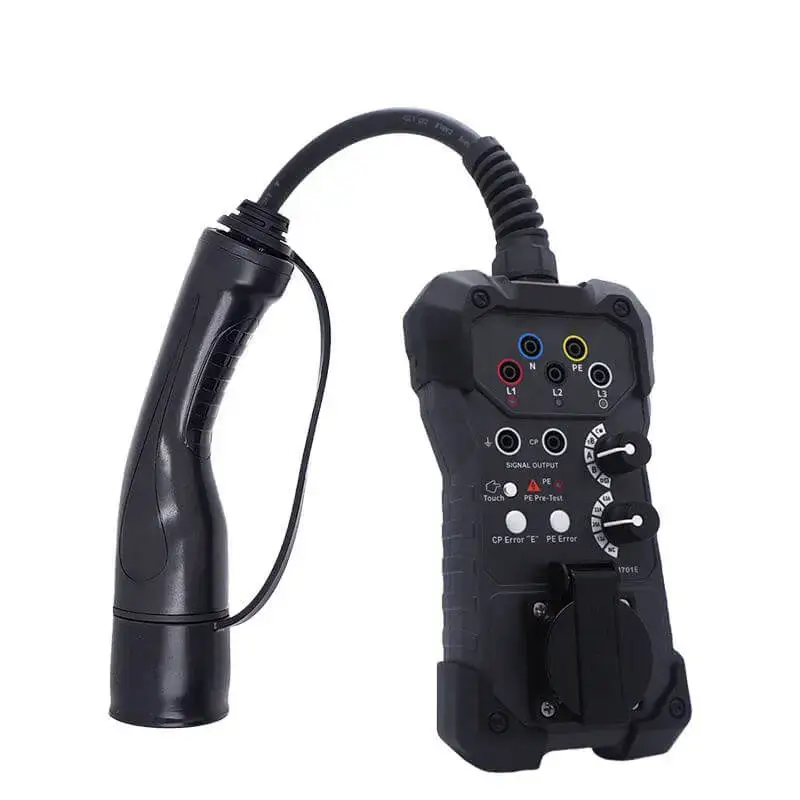
Esta é uma categoria inteligente. Em vez de ser um aparelho de teste autónomo, trata-se de um dispositivo de teste de carregador EV que funciona como uma interface. Liga-se à estação de carregamento de um lado e, do outro lado, tem entradas padrão para o seu verificador de instalações multifunções (MFT) existente.Se uma oficina já possui testadores de instalação Fluke ou Megger topo de gama, esta é frequentemente a compra mais inteligente. Poupa dinheiro porque não está a comprar um segundo ecrã ou processador; está apenas a comprar a parte do simulador.Comparação rápida de tipos de dispositivos
Para tornar as coisas um pouco mais claras, eis um resumo de como estas diferentes ferramentas se comparam umas às outras.Considerações práticas para utilização no terreno
Quando se utiliza um dispositivo de teste de carregador para veículos eléctricos, acontecem coisas que as especificações não nos dizem. Por exemplo, o comprimento do cabo. Algumas caixas de teste vêm com um cabo de ligação dolorosamente curto, o que significa que tem de segurar a caixa no ar enquanto testa carregadores montados na parede. Parece um pequeno aborrecimento, mas tente fazer isso durante vinte estações seguidas - os seus ombros vão odiá-lo.Outro aspeto a ter em conta é a qualidade dos interruptores selectores. Uma vez que a função principal destes dispositivos é alternar entre o estado A (Desligado), o estado B (Ligado) e o estado C (Carregamento), estes interruptores são muito utilizados. Os selectores de plástico frágeis tendem a ficar soltos após alguns meses de utilização intensa.| Caraterística | Testador portátil de mão | Caixa de teste do carregador EV | Adaptador universal |
|---|---|---|---|
| Utilização primária | Inspeção rápida, manutenção de rotina, verificação da funcionalidade básica | Diagnóstico exaustivo e resolução de problemas | Verificação da instalação e testes de certificação |
| Portabilidade | Alta (compacta, de bolso ou pequena bolsa) | Médio (mala portátil com pega) | Elevado (compacto, mas requer um instrumento de teste separado) |
| Acesso à forma de onda | Raramente disponível | Sim (portas BNC para ligação ao osciloscópio) | Depende do aparelho de teste multifunções (MFT) ligado |
| Nível de custos | Investimento de gama baixa a média | Investimento médio a elevado | Baixo (apenas interface de hardware) |
Uma nota sobre os protocolos de segurança
É necessário mencionar que a posse do dispositivo não torna o utilizador automaticamente seguro. Estes dispositivos permitem frequentemente expor condutores em tensão para efetuar testes.- Verificar sempre o pré-teste de educação física: A maioria dos bons aparelhos de teste tem um painel tátil para verificar se existem tensões perigosas na linha de terra. Não ignore esta função.
- Simulação de erro CP: Um bom dispositivo de teste de carregador EV deve ter um botão para simular um "CP Error". É necessário premir este botão para se certificar de que a estação corta imediatamente a alimentação. Se isso não acontecer, essa estação é um perigo.


 Portuguese
  English
  Spanish
  French
  Russian
  German
  Italian