Instalação de um estação de carregamento de nível 2 em casa parece bastante simples - até os pormenores começarem a acumular-se. A capacidade eléctrica, o local de montagem, as licenças e o próprio carregador desempenham um papel importante. O que parece ser um projeto de fim de semana pode tornar-se em algo mais complicado, dependendo da configuração da casa. Este guia apresenta os principais passos, os obstáculos mais comuns e algumas observações que podem poupar tempo e aborrecimentos.
O atrativo de uma estação de carregamento de nível 2 é claro: carregamento mais rápido, comodidade e a possibilidade de começar cada dia com a bateria cheia. Mas o caminho desde a ideia até ao carregador funcional envolve um pouco mais do que ligar algo. A preparação é importante, assim como a compreensão do lado elétrico das coisas.
Porquê escolher uma estação de carregamento de nível 2?
As tomadas normais funcionam em caso de necessidade, mas são lentas. Uma estação de carregamento de nível 2 fornece 240 volts, reduzindo significativamente os tempos de carregamento. Para os condutores diários, esta diferença é difícil de exagerar. A maior rapidez significa menos espera e mais flexibilidade - especialmente para famílias com horários imprevisíveis.
Os observadores notam que, muitas vezes, a atualização compensa rapidamente em termos de conveniência, mesmo que o custo inicial pareça elevado. O segredo é adequar a capacidade do carregador aos hábitos de condução actuais.
Lista de controlo de pré-instalação
Antes de encomendar equipamento ou de chamar um eletricista, há alguns aspectos que merecem atenção:
Capacidade do quadro elétrico: O painel existente pode suportar um novo circuito de 240 volts? Por vezes, as casas mais antigas precisam de ser actualizadas.
Local de montagem: As garagens são comuns, mas as entradas de garagem e os carports também funcionam. A proximidade do painel é importante.
Regras de licenciamento: Algumas áreas exigem licenças e inspecções. Saltar este passo pode causar dores de cabeça mais tarde.
Seleção de carregadores: As caraterísticas variam - Wi-Fi, programação, comprimento do cabo. Adapte a unidade às necessidades reais.
Uma avaliação rápida destes factores ajuda a evitar surpresas a meio do projeto.
Processo de instalação passo-a-passo
A instalação efectiva de uma estação de carregamento de nível 2 segue uma sequência bastante previsível, embora possam surgir peculiaridades específicas do local.
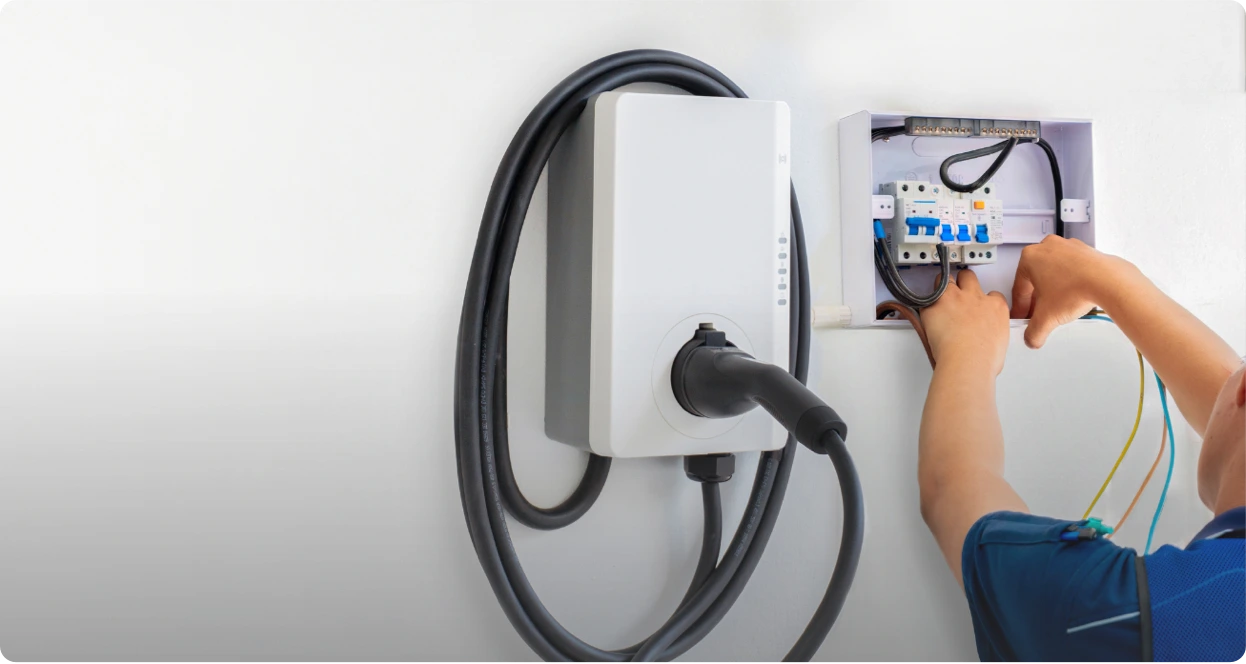
Avaliação do sítio: O eletricista avalia a capacidade do quadro e o percurso da cablagem.
Pedido de autorização: Apresentar os documentos necessários, se necessário, a nível local.
Instalação de circuitos: Novo circuito dedicado desde o painel até ao local do carregador.
Montagem: Unidade de carregamento fixada à parede ou ao pedestal.
Cablagem e ligação: O eletricista liga o carregador ao novo circuito.
Testes: Verificar o funcionamento correto e a segurança.
Inspeção: Se necessário, o inspetor local assina o trabalho.
O processo demora normalmente algumas horas a um dia inteiro, dependendo da complexidade. As actualizações de painéis ou longas extensões de cablagem aumentam o tempo.
Desafios comuns de instalação
| Desafio | Impacto | Solução possível |
|---|---|---|
| Painel na capacidade | Não é possível adicionar um novo circuito | Atualização do painel ou subpainel |
| Longa distância até ao painel | Custo de cablagem mais elevado | Otimizar a colocação do carregador |
| Instalação no exterior | Necessidades de impermeabilização | Caixa com classificação NEMA |
| Atrasos nas autorizações | Prolongamento do calendário do projeto | Candidatar-se cedo, fazer o acompanhamento |
| Cablagem antiga | Pode não cumprir as normas | Recolocação de cabos ou actualizações |
Estes desafios não são universais, mas surgem com frequência suficiente para justificar uma atenção precoce. Uma visita ao local por um eletricista licenciado pode revelar a maioria dos problemas logo à partida.
Escolher o eletricista certo
Nem todos os electricistas têm experiência na instalação de postos de carregamento de nível 2. Algumas perguntas ajudam a filtrar os candidatos:
- Já instalaram carregadores de veículos eléctricos antes?
- Estão familiarizados com os requisitos das licenças locais?
- Podem fornecer referências ou exemplos de trabalhos anteriores?
Os instaladores experientes tendem a detetar precocemente potenciais problemas, o que pode poupar tempo e dinheiro.
Dicas pós-instalação
Quando a estação de carregamento de nível 2 estiver a funcionar, alguns hábitos ajudam a manter o desempenho:
- Verificar periodicamente as ligações quanto a desgaste ou corrosão.
- Manter a zona de carga limpa e seca.
- Atualizar o firmware do carregador, se a unidade o suportar.
- Monitorizar a utilização de energia através da aplicação do carregador, se disponível.
Pequenos passos de manutenção prolongam a vida útil do equipamento e reduzem o risco de problemas no futuro.
Se quiser saber mais sobre a estação de carregamento de nível 2, leia O que é uma estação de carregamento de nível 2?
FAQ
Quanto tempo demora a instalação de uma estação de carregamento de nível 2?
A maioria das instalações demora entre algumas horas e um dia, consoante a complexidade.
Todas as casas precisam de uma atualização do painel?
Não, apenas se o painel existente não tiver capacidade para um novo circuito de 240 volts.
Uma estação de carregamento de nível 2 pode ser instalada no exterior?
Sim, com uma caixa à prova de intempéries com classificação NEMA e cablagem adequada.